
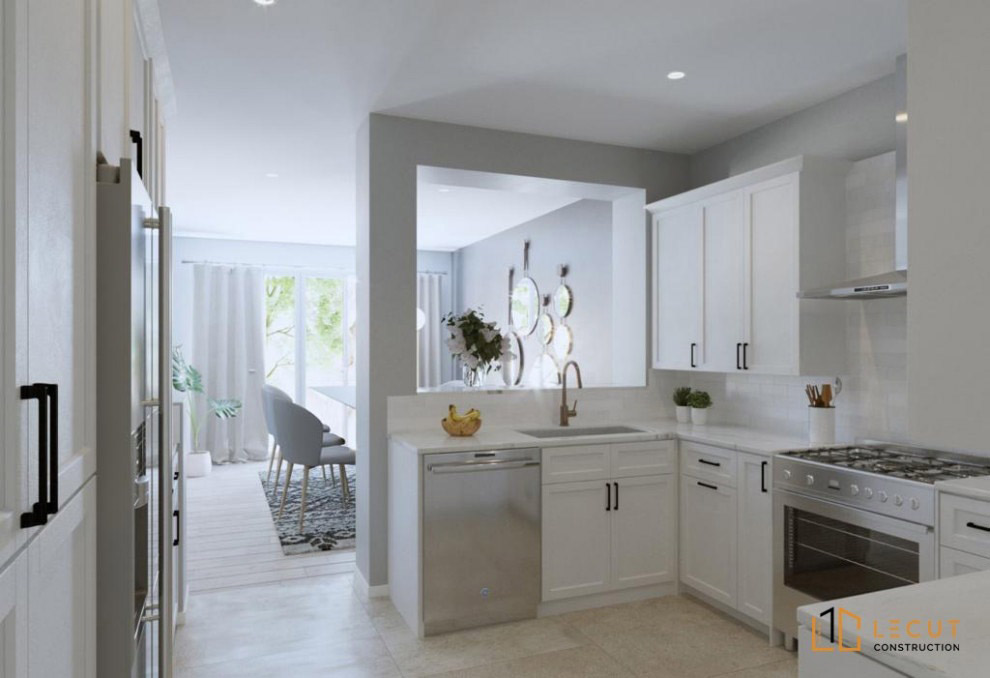
We know you want kitchen cabinets that look stunning and withstand daily life. After hundreds of Bay Area remodels, our team has learned that the single most impactful decision you will make is the combination of door style and material. It dictates everything from the room’s character to its durability and cleaning ease. The right choice can increase your home’s resale value by thousands of dollars while the wrong one leads to warping, peeling, or a dated look within three years. In 2026, the sweet spot for most families is a painted Shaker door made from solid wood or premium plywood frame with an MDF center panel. It gives you a timeless aesthetic, an easy-to-clean surface, and a moderate price point that typically ranges from 200 to 500 dollars per linear foot installed. If you prefer a sleek modern look, a full-access flat slab door in a durable laminate or matte thermofoil delivers the same longevity. Use our guide to cross-reference your home’s architecture, your cleaning habits, and your budget with the detailed style and material breakdowns below. Then schedule a free consultation with us, and we will tailor every detail to your San Francisco, Oakland, or San Jose home.
Table of Contents
Why Your Cabinet Door Choice Matters More Than You Think
Cabinet doors take up roughly 70 percent of the visual surface in a kitchen. They are the first thing a potential buyer notices, and they directly affect daily functionality. The wrong door profile collects dust in hard-to-reach crevices; the wrong material warps from the steam of a pasta pot. In our design-build firm, we have replaced brand-new kitchens because the homeowner chose a low-density fiberboard door that swelled after one season. We have seen glass doors transform a dark galley into an airy space, and we have witnessed heavy solid-wood slab doors slowly pull screws loose from cabinet frames because the hinges were not specified for the weight. Your decision links structure, safety, and aesthetics. We want you to understand every variable before you spend a dollar.
Popular Cabinet Door Styles: From Classic to Contemporary
Each door style carries a distinct personality and a set of practical considerations. We categorize them by construction, not just appearance, because the joinery method determines long-term performance.
Shaker Style Doors
Shaker doors feature a five-piece construction: four frame rails and stiles surround a recessed flat center panel. This clean, square-edged profile originated with the Shaker religious communities that prized utility and simplicity. Today, it is the most popular kitchen door in the United States, appearing in 53 percent of kitchen renovations according to the 2024 Houzz Kitchen Trends Study.
-
Best for: Transitional, craftsman, and modern farmhouse kitchens.
-
Practical advantage: Minimal grooves mean less dust collection; the recessed panel is shallow and easy to wipe.
-
Our insight: Specify a solid wood frame with an MDF center panel for a painted finish. The MDF panel will not expand and contract, so painted joints never crack. We use this combination on 80 percent of our white Shaker projects.
Flat Panel (Slab) Doors
Slab doors are exactly what they sound like: a single flat piece of material with no framing. They define minimalist, contemporary, and mid-century modern spaces. Because there is no frame to hide, the material quality must be exceptional. Any warp or imperfection is immediately visible.
-
Best for: Modern, European, and urban loft kitchens.
-
Hardware requirement: Slab doors almost always demand a wide, long handle bar or a push-to-open mechanism. Knobs can look lost on a large slab.
-
2026 update: We are installing more textured slab doors—micro-ribbed or fluted surfaces—in wood veneer and matte laminate. They add tactile depth without breaking the flat plane.
Raised Panel Doors
This traditional style has a center panel that is slightly elevated and often contoured, framed by wider stiles and rails. A classic raised panel features an arched or cathedral top; a simpler square raised panel suits colonial and Victorian homes.
-
Best for: Formal, traditional, and old-world kitchens.
-
Our caution: The ornate details trap cooking grease and dust. Unless you are committed to weekly detailing, consider a simpler raised profile or reserve this style for a butler’s pantry.
-
Material note: We build these exclusively from solid wood or veneered hardwood plywood. The contoured panel needs the structural integrity of real wood to hold its shape through humidity changes.
Beadboard Doors
Beadboard doors incorporate vertical grooves, or beads, that mimic the look of individual tongue-and-groove planks. They bring instant cottage, coastal, or farmhouse charm.
-
Best for: Beach houses, country kitchens, and furniture-style islands.
-
Cleaning reality: The narrow grooves require a brush attachment or a damp microfiber cloth pressed into each channel. In a heavy-use kitchen, we suggest limiting beadboard to an island or a hutch accent rather than perimeter cabinets.
Glass-Front Doors
Glass doors replace the solid center panel with a pane of glass, often framed by mullions. They lighten the visual weight of a bank of upper cabinets and allow you to display curated dishware.
-
Glass options: Clear, frosted, ribbed, seeded, or leaded. In the Bay Area, we lean toward low-iron glass for a crisp, colorless transparency.
-
Our design rule: Glass-front doors work best on upper cabinets that flank a window or a range hood. Avoid them above a greasy cooktop. Use dimmable interior cabinet lighting to make the contents glow at night.
Louvered Doors
Louvered doors consist of horizontal wooden slats set into a frame, allowing air circulation. They are traditionally used on shutters and in laundry or utility rooms.
-
Best for: Pantry cabinets, appliance garages, or mid-century-modern retro kitchens.
-
Warning: They are dust catchers. We rarely spec full kitchen louvered doors unless a client explicitly wants the ventilation for linens or electronics.
Open Shelving & Frameless Options
While not a door, open shelving is the ultimate “no-door” decision. In 2026, we see a hybrid approach: a few open shelves for everyday plates and glassware, with closed base cabinets for storage. This reduces the need to constantly style a shelf and keeps clutter hidden. Frameless full-overlay cabinets with no visible face frame offer a sleek alternative that maximizes interior space.
Cabinet Door Materials: The Foundation of Durability and Aesthetics
The material substrate determines how your door responds to moisture, impact, and time. The finish layer—paint, stain, or laminate—adds protection, but the core counts.
Solid Hardwood
Species like maple, cherry, oak, walnut, and hickory bring natural grain, warmth, and unmatched repairability. You can sand and refinish a solid wood door multiple times.
-
Our go-to species: Hard maple for painted doors (tight grain, minimal telegraphing), walnut for stained contemporary doors, and quartersawn white oak for its ray fleck pattern in modern organic designs.
-
Drawback: Wood moves. Wide solid panels can expand and contract seasonally, which may cause hairline cracks in painted joints at the panel edge. We mitigate this by using a five-piece construction with a floating panel that is never glued in place.
Plywood
Cabinet-grade hardwood plywood is composed of thin wood veneer layers glued under heat and pressure with a stable core. It is lighter than solid wood, resists warping, and holds screws exceptionally well. We use ¾-inch plywood for all our cabinet boxes. For slab doors, a veneered plywood panel delivers a consistent, stable surface without the risk of cupping.
-
Certification: We specify plywood with a CARB Phase 2 or EPA TSCA Title VI compliant core for low formaldehyde emissions, critical for indoor air quality in tightly sealed Bay Area homes.
Medium-Density Fiberboard (MDF)
MDF is an engineered product made from wood fibers, wax, and resin binder pressed into dense, flat panels. It has a completely uniform surface with no grain, making it ideal for painted finishes. Our design-build team regularly uses a moisture-resistant MDF for Shaker door center panels and for custom routed door profiles that would be impossible to achieve in solid wood.
-
Important: Standard MDF swells irreversibly when saturated. Never use it on sink base doors unless it is a specifically rated moisture-resistant board and the edges are fully sealed. We seal all six sides of an MDF panel before installation.
Thermofoil
Thermofoil doors are fabricated by vacuum-pressing a thin PVC vinyl layer over an MDF or engineered wood core. The result is a seamless, smooth surface that mimics paint but resists chipping and is incredibly easy to clean.
-
Advantage: Perfect for high-gloss modern slab doors at a fraction of the cost of lacquered wood. It cleans with a damp cloth.
-
Risk: Heat delamination. A self-cleaning oven cycle or a nearby toaster oven that vents directly against the door edge can cause the foil to bubble. We never install thermofoil doors adjacent to wall ovens without a heat shield.
Laminate
Laminate doors consist of layers of kraft paper saturated with melamine resin and fused under heat and pressure onto a particleboard or MDF core. Horizontally applied laminate creates a durable, scratch-resistant surface available in hundreds of colors, woodgrains, and even concrete textures.
-
2026 trend: Ultra-matte, fingerprint-resistant laminates such as Fenix NTM are surging in our contemporary projects. They self-heal micro-scratches with the application of heat.
Glass Inserts
Cabinet door glass inserts are not structural. They sit within a wooden or metal frame. We source tempered or laminated glass for safety, especially in homes with young children. When clients want a leaded or stained glass look without the expense, we apply a custom film over clear glass.
Metal (Stainless Steel, Aluminum)
Metal doors deliver an industrial edge and extreme durability. Stainless steel is hygienic and heat-resistant, often found in professional kitchens. In residential settings, we use aluminum-framed doors with glass or laminate inserts for a slim, modern profile.
-
Our note: Metal doors show fingerprints unless specified with an anti-smudge coating. Brushed or textured finishes help.
Side-by-Side Material Comparison Table
Use this table to prioritize what matters most for your household.
| Material | Typical Cost per Square Foot (Material Only) | Durability | Moisture Resistance | Best Finish | Our Longevity Rating (1-5) | Ideal Application |
|---|---|---|---|---|---|---|
| Solid Hardwood (Maple, Oak) | 25 – 50 dollars | Very High | Moderate (requires sealing) | Stain, paint | 5 | Perimeter doors, islands |
| Veneered Plywood (Birch, Walnut) | 15 – 30 dollars | High | Good (stable core) | Clear coat, stain | 4 | Slab doors, wide panels |
| MDF (Moisture-Resistant) | 10 – 20 dollars | Moderate | High when sealed | Paint | 3.5 | Painted Shaker panels |
| Thermofoil | 12 – 25 dollars | Moderate | High (seamless) | Gloss, matte PVC | 3 | Slab doors, away from heat |
| Laminate (HPL) | 15 – 35 dollars | High | Excellent | Matte, woodgrain, solid color | 4 | Slab doors, pet-friendly |
| Glass Insert (Tempered) | 20 – 40 dollars per piece | Variable | Excellent | Clear, frosted | 4 | Upper wall cabinets |
| Metal (Stainless Steel) | 40 – 70 dollars | Very High | Excellent | Brushed, textured | 5 | Accent doors, industrial |
How to Match Styles and Materials to Your Home and Lifestyle
A beautiful door in a showroom can feel entirely wrong in your home if the architecture and your daily habits clash. We walk through these factors on every first consultation.
Architectural Harmony
Your home’s bones should guide the door profile. A 1920s Spanish Revival in Oakland calls for a different language than a 2025 new-build in San Jose.
-
Victorian and Edwardian homes: Raised panel or beadboard doors in painted wood honor the era.
-
Mid-century modern: Flat slab walnut or laminate doors with horizontal grain.
-
Craftsman bungalow: Five-piece Shaker doors in quartersawn oak with a natural stain.
-
Contemporary glass box: High-gloss thermofoil or metal-framed slab doors with integrated handles.
We always look at existing trim, window casings, and the home’s exterior material. The kitchen should feel like an evolution, not a transplant.
Budgeting Without Sacrificing Quality
The door material and finish represent about 30 to 40 percent of your total cabinet cost. We advise clients to invest in the door fronts that are touched and seen daily and save on internal box material.
-
Entry-level solution (200 – 300 dollars per linear foot): Painted MDF Shaker doors on plywood boxes. You get the popular look with a stable painted surface.
-
Mid-range upgrade (300 – 500 dollars per linear foot): Painted hard maple frame with MDF center panel Shaker doors, or a premium laminate slab door. This is our most common specification.
-
Premium custom (500 – 800+ dollars per linear foot): Walnut or white oak solid wood slab doors with a custom stain, or metal and glass combinations. These last a lifetime when properly cared for.
Daily Wear and Tear: A Practical Look
Do you have young children who will smack toy cars into base cabinets? A laminate slab door will shrug off impacts that would dent a painted MDF door. Do you cook with turmeric and olive oil daily? Choose a door with minimal grooves and a high-quality factory-applied finish that resists staining. We’ve seen satin painted wood clean up beautifully if the finish is a catalyzed conversion varnish, while a cheap lacquer yellows and degrades.
2026 Design Trends We Are Seeing in the Bay Area
From our design studio, we track what clients ask for and what we specify most. Here is what is driving decisions this year.
-
Warm minimalism: Replacing stark white with creamy off-white or warm greige painted cabinets. Slab and Shaker doors with subtle wood accents.
-
Fluted and ribbed textures: On island fronts and select upper doors. We achieve this with routed MDF or solid wood panels.
-
Mixed materials on one elevation: A wall of walnut slab base cabinets, painted Shaker uppers, and a glass-front coffee bar.
-
Satin brass and matte black hardware: Slim finger pulls on slab doors; knobs and cup pulls on Shaker.
-
Sustainability-first materials: FSC-certified plywood, low-VOC finishes, and reclaimed wood doors for statement pantries.
Our Unique Contractor’s Insights: What Homeowners Often Overlook
After decades of design-build work across the Bay Area, we have accumulated lessons that no catalog will tell you.
The Impact of Door Weight on Cabinet Hinges
A heavy solid wood door, especially a large pantry door or a wide slab, can exceed the load rating of a standard soft-close hinge. The result is a door that sags, fails to close fully, or strips its mounting screws within a year. We calculate the door weight and specify hinges rated for that load. For example, a 36-inch by 30-inch solid walnut slab door weighs over 20 pounds and demands three heavy-duty hinges with deep thread screws. We also use Blum or Salice soft-close hinges with integrated side-to-side adjustment so we can realign doors as the house settles—common in hillside homes.
Moisture Management in Coastal Microclimates
San Francisco, Pacifica, and coastal parts of Marin experience high humidity and salty air. A poorly sealed door edge will absorb moisture and swell. We specify a sealed back and all edges for every painted door, not just the face. In fog-belt homes, we prefer exterior-grade plywood cores for slab doors and we never use unsealed MDF panels. We also recommend a small continuous fan in the kitchen to manage steam during winter months when windows stay closed.
Resale Value: The One Upgrade That Always Pays Off
Kitchen renovations recoup 52 to 71 percent of their cost at resale, according to the 2025 Cost vs. Value Report. The cabinet door style is the leading indicator of a “dated” versus “renovated” kitchen for appraisers. A neutral Shaker door in a high-quality painted finish consistently helps appraisers mark a home as updated. We advise clients planning to sell within five years to avoid ultra-trendy colors and hardware. Instead, choose a classic door style and invest in a beautiful backsplash and quartz countertop. The cabinets act as the backdrop that lets the whole room feel current.
LeCut Construction: Your Partner in a Flawless Kitchen Transformation
We are LeCut Construction, a family-owned and operated design-build contracting firm rooted in the San Francisco Bay Area. Our specialty is kitchen and bathroom remodeling, whole-home renovations, and custom additions where every detail is executed with meticulous workmanship. The cabinet door selection process with us is never a rushed showroom visit. We bring full-size door samples to your home, test them under your actual lighting, and help you select the perfect hinge, pull, and finish combination. Our core values—quality, integrity, accountability, and respect—mean we will steer you away from a beautiful door that will fail in your specific environment. From the initial design consultation through the final walkthrough, we prioritize clear communication and attention to detail. The majority of our business comes from client referrals because we deliver reliability and satisfaction. We are fully licensed and insured and serve homeowners in San Francisco, Oakland, San Jose, and across the Bay Area. Call us at (408) 816-3688 to schedule your free design consultation. Let us help you choose cabinet doors that will bring you joy every time you walk into your kitchen.
Frequently Asked Questions About Cabinet Doors
What cabinet door style is most timeless?
The Shaker door, with its clean five-piece frame and recessed center panel, consistently ranks as the most timeless style. It has been in continuous use since the mid-19th century and seamlessly adapts to both traditional and modern interiors. In our experience, a painted Shaker door in a neutral color offers the safest, longest-lasting appeal.
Is MDF or solid wood better for painted cabinets?
For painted doors, a hybrid construction works best: a solid wood frame (maple or poplar) with an MDF center panel. The MDF panel provides a perfectly smooth, grain-free surface that never telegraphs grain lines through the paint, and its dimensional stability prevents the painted joints from cracking. Solid wood panels in a painted door can expand and contract, leading to hairline fractures at the frame-panel junction over time.
How much do new cabinet doors cost?
Cost varies widely by material, style, and finish. For replacement doors only, expect to pay 60 to 200 dollars per square foot for a quality manufactured or custom door. A full kitchen cabinet replacement including boxes and installation typically ranges from 200 to 800 dollars per linear foot in the Bay Area, with our most common projects landing between 300 and 500 dollars per linear foot for premium painted Shaker kitchens with soft-close hardware and plywood construction.
Can I replace just the doors and keep the cabinet boxes?
Yes, refacing—also called cabinet door replacement—involves installing new doors, drawer fronts, and veneer or paint on the existing cabinet boxes. This approach saves 30 to 50 percent compared to a full replacement, provided the boxes are structurally sound, made of plywood, and have no water damage. We inspect the boxes carefully; if the shelves are particleboard and sagging, a full replacement often makes more financial sense.
What door profile works best for a small kitchen?
In small kitchens, choose a door that maximizes light and reduces visual bulk. Flat slab doors in a light, reflective finish (soft white or pale gray laminate) help the kitchen feel larger. Glass-front upper doors also open up the space visually. Avoid heavy raised panel doors with thick frames that eat up limited visual breathing room. We also recommend full-overlay doors that cover the cabinet face frame completely, creating a seamless wall of cabinetry that enlarges the space.
How do I clean and maintain different cabinet door materials?
-
Painted wood and MDF: Wipe with a damp microfiber cloth and mild dish soap. Avoid abrasive pads. Immediately dry any standing water.
-
Laminate and thermofoil: Use a soft cloth with a non-abrasive all-purpose cleaner. Avoid products containing bleach or ammonia that can dull the surface over time.
-
Solid wood with clear coat: Dust first, then clean with a wood-specific cleaner. Apply a high-quality paste wax every six months to nourish the finish.
-
Glass inserts: Clean with a vinegar-water solution or glass cleaner sprayed onto a cloth, not directly onto the door, to avoid moisture seeping into the frame joint.
-
Metal doors: A microfiber cloth dampened with warm water and a drop of dish soap removes fingerprints. For brushed stainless steel, follow the grain direction.
Related Articles
Kitchen Remodeling Services in Santa Clara
Kitchen Remodeling Services in San Jose
San Jose Roofing Guide: Top Roof Types for Lasting Protection and Lower Energy Bills
How To Design A Cohesive Home With LeCut Construction In San Jose
How To Choose The Right Interior Door Style
People Also Ask
When choosing between inset and overlay cabinet doors, the primary difference is the door's position relative to the cabinet face frame. Inset doors sit flush inside the cabinet opening, creating a sleek, custom look that requires precise craftsmanship for a perfect gap. Overlay doors, which are the most common style, attach to the outside of the face frame. A standard overlay covers most of the frame, while a full overlay creates a contemporary, frameless appearance. For homeowners in San Jose, Santa Clara, or Sunnyvale, the decision often comes down to budget and aesthetic preference. Inset doors offer a high-end, traditional feel but are more expensive to install. Overlay doors are generally more affordable and easier to adjust. Lecut Construction can help you evaluate your kitchen's layout to determine which style best suits your design goals and functional needs.
There are several popular types of cabinet doors, each offering a distinct look. The most common are flat panel (slab), which is a simple, modern flat surface. Raised panel doors have a center panel that is elevated, creating a traditional, classic style. Shaker doors are a timeless choice, featuring a flat center panel with a square recessed frame. For hinges, the two main categories are concealed (or European) hinges, which are hidden when the door is closed for a clean, modern look, and exposed hinges, like butt hinges, which are visible and often used for a more traditional or rustic aesthetic. For expert installation of any style, Lecut Construction can help ensure your cabinet doors function perfectly and look their best.
When selecting flat panel cabinet door styles, the focus is on clean lines and a minimalist aesthetic. The flat center panel sits flush with the surrounding frame, creating a smooth, unified surface. This design works well in modern, contemporary, and transitional kitchens. Common variations include a simple recessed panel or a slab-style door with no frame at all. For a seamless look, consider matching the panel grain with the frame. For a professional installation that ensures precise alignment and finish, a company like Lecut Construction can provide expert guidance. The choice of wood species and paint grade also impacts the final appearance, with maple and MDF being popular for a sleek, durable result.