Skip to content Skip to footer

ADU Designing and Planning Services in Saratoga

Saratoga land is typically characterized by bigger parcels, established trees, topography effects, and heavy reliance on privacy and style regularity. Our team knows that the design and planning of ADU in Saratoga will have to deal with diverse terrain, shaded regions, and local climate consisting of warm dry summer, cooler evenings, more humidity around foothills, and the seasonal temperature drops. All these are important in influencing the manner in which ADUs are to be designed in order to be comfortable, durable and integrate smoothly.

In Saratoga, the planning at ADU usually depends on precision and not size. Even bigger sites still need close considerations regarding distance, access and the interaction of the ADU with daily activity on the site. The relationships of the new space with the existing home in terms of movement of people, preservation of privacy and the functionality of the ADU not feeling like it is out of place are the areas we are concentrating on. This solution enables the design to be purposeful, balanced, and useful as opposed to being oversized or underused.

ADU Design to Functional Comfort

An effective ADU is based on functional comfort. In Saratoga where houses are constructed with long term residence in mind comfort cannot be taken but has to be deliberate. Our team comes up with ADUs that sustain day-to-day activities as well as react to the environmental circumstances.

Small Space Thermal Balance

Plans will be made in layout to avoid heat accumulation during hot seasons and make the house warm during the cold evenings. Insulation and airflow measures are synergistic. The comfort is ensured without excessive dependence on the systems.

Logical Room Relationships

Space arrangement is made in a manner that favors natural motion and functionality. The living rooms, kitchen, and bedroom are conveniently located. This enhances the comfort in daily life.

Silence and Privacy Concerns

ADUs are constructed so as to reduce the effect of noise transfers and visual intrusion. Privacy also helps in comforting ADU and the main residence. Considered positioning is a difference.

The balanced designs produce ADUs that are deliberate. Space may be shared wisely and the usability will follow accordingly.

Top services

Architectural services

We provide complete remodeling solutions tailored to your needs. Our team focuses on quality, detail, and creating spaces that truly feel like home.

Dedicated to excellence in every project we deliver. From concept to completion, we build spaces that reflect your vision and lifestyle.

Design-
Build

Project
Management

Construction

Complete House
Remodeling

Whole Home
Remodeling

Room addition

View All Services

Structural ADU Design Coordination

Structural coordination would make the ADU design realistic and construction ready before the construction process takes place. Site conditions and property characteristics in the location of Saratoga make this step particularly important. Our planning team also plans the structures and design layouts.

  • Site and Foundation Alignment: Structural planning takes into consideration soil conditions and elevations. This promotes stability in the long term. Early coordination also eliminates subsequent changes.
  • Fitting In with Existing Structures: ADUs are to be structured to fit the mother house as much as possible. This enhances uniformity and put-together-ness. Organization will assist in permanency.
  • Material and Load Planning: Structural factors are chosen to deal with environmental stress. They are heat exposure and seasonal changes. Material decisions are made based on performance.
  • Build Sequencing Awareness: Structural planning takes into account the order and the accessibility of the construction site. This improves efficiency. Less conflicts are experienced during the build.

Coordination of structure minimizes risk. Projects proceed to a predictable direction when they are well-designed and structured.

Purpose-Driven ADU Design

The process of purpose-driven design begins with the definition of the way the ADU is being used in the long term. At Saratoga, the ADUs are usually used to fit changing needs such as family residence or guest housing. Our team is intentional in design and is not based on assumptions.

AFTER_b1

Purpose is also related to environmental response. The work areas, residential, and sleeping areas are arranged on the basis of light, shade, and air circulation. Purpose-driven design does not designate the role of function and comfort as independent variables.

Our Client Testimonials

Our Team Designs ADUs Tailored to Each Property

Our group handles each project at ADU as an individual planning problem. There are two properties in Saratoga that do not react in a similar way because of terrain, landscaping, and orientation. Each design is made to mirror these differences.

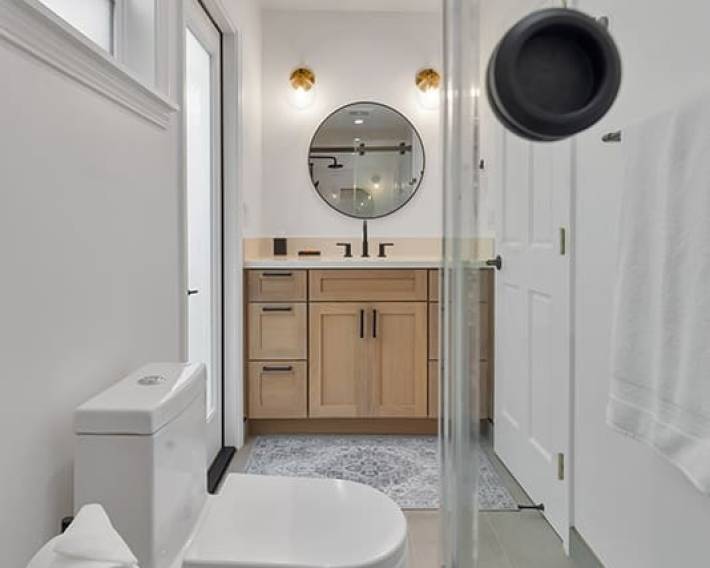
Bathroom & bedroom - Morgan Hill13

We develop ADUs with a sense of integrative strength and purpose by synchronizing layout choices, structural planning, and environmental response. The aspects of heat management, airflow, and usability are discussed jointly. This combined methodology promotes long term comfort and efficiency.

Outline Your ADU Direction

The majority of ADU problems commence way prior to the commencement of construction. Our team aids you in the process of determining points of pressure, limitations, and the long-term outcomes at a time when the changes can be made easily.
Consult us to make wise options prior to the project being chained by momentum.

Contact Us

We welcome your inquiries and project ideas. Whether you’re planning a remodel or just exploring options, our team is ready to provide clear answers and practical direction to get you started with confidence.
Please share your details with us, and we’ll get back to you promptly.

Related Articles

People Also Ask

The cost comparison between building an accessory dwelling unit (ADU) on-site versus buying a prefabricated model is complex and highly location-dependent. Generally, prefab ADUs can offer lower initial material and labor costs due to factory efficiency and reduced construction time, potentially making them the cheaper upfront option. However, a traditional stick-built ADU might provide more customization and potentially higher long-term value, especially if integrating seamlessly with an existing property's architecture. Key factors influencing cost include local permitting fees, site preparation expenses (like foundation and utility connections), and finish selections. A detailed cost analysis from local contractors and prefab companies is essential, as site-specific challenges can significantly alter the final price for either option.

Building an accessory dwelling unit (ADU) involves navigating complex regulations, which leads to common mistakes. A major error is failing to secure proper permits from the local planning department, which can result in fines or orders to demolish the structure. Homeowners often underestimate costs for utilities, foundation work, and compliance with zoning laws for setbacks and height. Choosing cheap, non-compliant materials or an inefficient layout that wastes space are frequent construction errors. Another critical oversight is neglecting to plan for separate utility meters or sewer connections, creating long-term complications. Thorough research, a detailed budget with contingency, and working with experienced architects and contractors familiar with local ADU codes are essential to avoid these pitfalls.

The cost comparison between adding an extension to a main house and building a separate Accessory Dwelling Unit (ADU) depends heavily on specific project conditions. Generally, a well-planned ADU can be more cost-effective per square foot due to simpler systems and potentially fewer structural tie-ins to the existing home. However, a basic bump-out addition might have a lower total cost if it's very small. Key factors include site conditions, foundation requirements, utility connections, and local permit fees. An ADU often offers a better long-term return on investment through rental income or increased property value. A detailed cost analysis with a professional contractor, considering both construction and soft costs, is essential for an accurate comparison for your specific property.

Yes, you can design your own Accessory Dwelling Unit (ADU), but it requires careful planning and a strong understanding of local building codes, zoning ordinances, and construction principles. While owner-design is possible, professional guidance is highly recommended to navigate complex requirements for setbacks, utility connections, energy efficiency, and accessibility. A successful DIY design must integrate seamlessly with the primary residence and site. For homeowners in the area, understanding specific local regulations is crucial; our detailed resource, Accessory Dwelling Unit Services in Fremont, provides essential insights into Fremont's unique ADU planning process. Ultimately, a well-designed ADU, whether self-created or professionally drafted, must balance personal vision with strict compliance to ensure safety, functionality, and legal occupancy.

Lecut Construction provides comprehensive ADU designing and planning services in Saratoga, focusing on maximizing property value and livable space. Our process begins with a detailed consultation to understand your goals, followed by a site evaluation to assess zoning regulations, setback requirements, and utility connections specific to Saratoga. We then create custom architectural designs that blend functionality with aesthetic appeal, ensuring compliance with all local building codes. Our planning services include navigating permit applications, budgeting, and project scheduling. We emphasize clear communication and professional project management to transform your vision into a permitted, build-ready plan for a seamless construction phase.

The Saratoga Planning Department is a key municipal body responsible for overseeing land use, development, and long-term growth within its jurisdiction, often in a city like Saratoga, California. Its primary functions include reviewing development proposals, ensuring compliance with zoning codes and the city's general plan, and facilitating community planning initiatives. For construction professionals and developers, engaging with this department early in the project lifecycle is crucial. This involves understanding specific local ordinances, environmental guidelines, and design review processes unique to Saratoga. Successful navigation often requires preparing thorough applications and participating in public hearings to secure necessary permits and approvals aligned with community standards.

Angi
Google
Yelp

Overall Rating

5.0
★★★★★

136 reviews