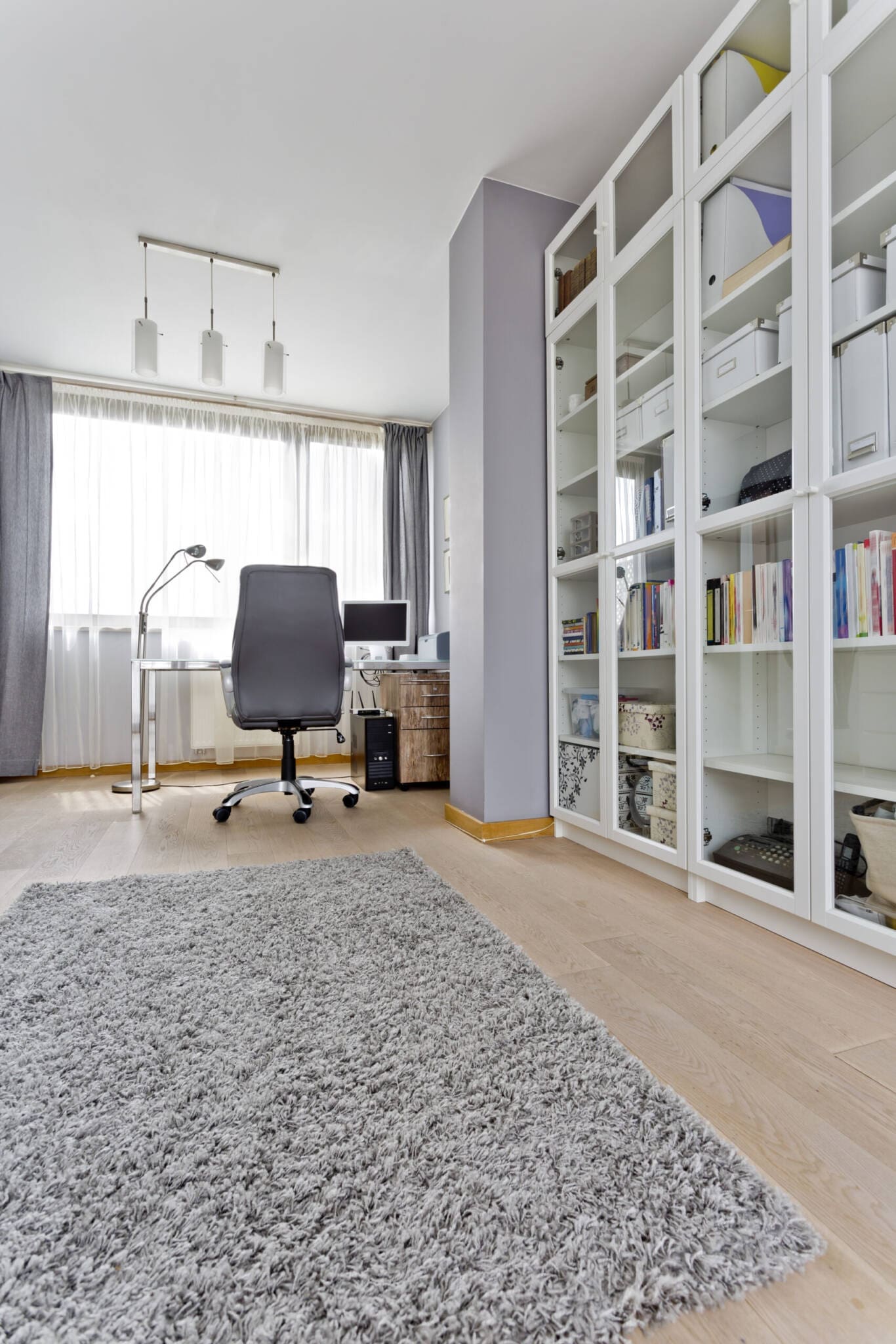
A custom library wall does far more than hold books. It becomes the architectural soul of a room, instantly banishes clutter, and can increase your home’s perceived value by creating a permanent, high-end feature that buyers actively seek out. We have designed and built dozens of these transformations across the San Francisco Bay Area, and every single one solved a unique combination of storage, display, and spatial challenges that no freestanding furniture could ever address. Whether you need to organize a 2,000-volume collection, carve a quiet reading nook out of an open-plan living area, or create a stunning Zoom background that reflects your personality, a thoughtfully designed built-in bookshelf wall is the definitive answer.
Table of Contents
Why a Custom Bookshelf Wall Remains the Smartest Design Investment in 2026
The way we live at home has permanently shifted. Dedicated home libraries are surging in demand, with the National Association of Realtors repeatedly highlighting built-in storage and organization as top features that influence a purchase decision. A custom wall unit blends function with the kind of bespoke character that mass-produced furniture cannot replicate. It frames a room, draws the eye upward to make ceilings feel taller, and provides the exact mix of open shelving, closed cabinetry, and media space your household needs right now. We have seen clients recoup a significant portion of their investment at resale because a well-executed library wall reads as an integrated part of the architecture, not a temporary add-on.
Designing for Your Space, Not a Catalog
The single biggest advantage of working with a design-build team is that every inch serves your daily routine. We begin each project by analyzing traffic flow, natural light patterns, and how you actually use the room. Do you need bottom cabinets deep enough for board games and kids’ art supplies? Should the middle section incorporate a pull-out desk that disappears when guests arrive? Are you building around a piano, a fireplace, or a media console? These questions shape a layout that feels inevitable, as if the house was always meant to have that wall of books.
Key Dimensions That Transform a Shelving Wall from Awkward to Inviting
General guidelines bring comfort and longevity to a design, but they must be tweaked to your specific collection. We always start from these proven measurements.
-
Shelf depth: 10 to 12 inches for standard hardcovers and decorative objects. Reduce to 8 inches for paperback-only sections, and bump up to 15 to 18 inches for art books, large-format volumes, or concealed storage bins.
-
Shelf span: No more than 36 inches between vertical supports when using 3/4-inch plywood or solid wood to prevent sagging over time. For a span of 48 inches, we reinforce with a hardwood nosing or switch to a thicker material.
-
Vertical clearance: 10 to 12 inches between shelves accommodates most novels and non-fiction. Reserve at least 14 inches for coffee table books and 16 inches for art portfolios or oversized encyclopedias. We often mix heights in a single column for a rhythmic, curated look.
-
Bottom cabinet depth: 16 to 24 inches to store items like vinyl records, file boxes, or electronics, while providing a substantial counter surface above.
Material Selection and Real-World Cost Breakdown
The finishes you choose determine not only the aesthetic but also durability and budget. Below is the cost range we quote for Bay Area custom millwork in 2026, including design, fabrication, and installation. Prices reflect a built-in library wall 8 feet high and 12 feet wide with a combination of open shelves and base cabinets. All figures are in United States dollars.
| Material and Construction | Estimated Cost Range (Installed) | Pros | Cons | Best For |
|---|---|---|---|---|
| Premium paint-grade maple plywood with poplar face frames | 6,500 dollars – 9,000 dollars | Smooth finish, takes paint beautifully, very stable | Requires skilled spraying for a flawless look | Modern, transitional, and craftsman interiors where color matters |
| Stained white oak or walnut plywood with solid wood edges | 10,000 dollars – 14,000 dollars | Warm, rich grain, no need for paint, hides wear gracefully | Higher material cost, demands careful grain matching | Mid-century and organic modern homes, visible wood libraries |
| MDF with thermofoil or laminate | 5,000 dollars – 7,500 dollars | Budget-friendly, consistent factory finish, easy to clean | Cannot be sanded or refinished, susceptible to moisture swelling | Kids’ playrooms, home offices with heavy daily use |
| Solid hardwood throughout (walnut, cherry, or rift-sawn white oak) | 15,000 dollars and above | Heirloom quality, can be refinished multiple times | Significant cost, expands and contracts with humidity | Formal libraries and historic homes where authenticity is paramount |
These ranges include standard crown molding, baseboard integration, and soft-close hinges on doors. Adding LED lighting, a rolling ladder, or a hidden door increases the investment but dramatically elevates the experience.
Built-In Versus Modular Shelving: A Quick Comparison
We often meet homeowners who wonder if a less expensive modular system will deliver the same effect. There is a clear dividing line.
-
Seamless integration: A built-in wall hugs every irregularity of your walls and ceiling. Modular units leave gaps at the sides and top that collect dust and break the illusion of permanence.
-
Perceived value: Appraisers and buyers consistently view a real built-in as part of the home’s square footage appeal. A modular unit is treated as furniture you will take with you when you move.
-
Customization: Only true millwork allows you to incorporate a window seat, a concealed media cabinet with ventilation, or an arch top that mirrors existing doorways.
-
Longevity: Factory-made particleboard shelves will sag under heavy books within a few years. Our plywood and solid wood installations carry loads effortlessly for decades.
Lighting and Electrical Integration That Changes Everything
Integrated lighting is the single most transformative upgrade you can add to a library wall. We design electrical plans early so wiring disappears into the framing. A few approaches we use regularly:
-
Warm-dimming LED tape lights recessed into the underside of each shelf to wash light down onto the spines below. This creates a museum-quality glow and makes finding a title effortless.
-
Picture lights mounted on the face frame to highlight art or collectibles placed on dedicated display shelves.
-
Sconces flanking a reading chair, hardwired into the bookcase itself, eliminating exposed cords.
-
Under-cabinet task lighting over a built-in desk so the work surface is fully illuminated without shadows.
We always specify LEDs with a color temperature of 2700 K to 3000 K for living spaces, ensuring the light feels warm and inviting rather than clinical. Planning for outlets inside cabinets also lets you charge devices out of sight, keeping visual clutter to zero.
2026 Trends That Make Your Library Wall Uniquely Yours
Our clients are pushing beyond basic shelving and asking for multi-purpose features that blur the line between furniture and architecture.
-
Hidden doors and secret rooms: A bookcase that swings open to reveal a home office, wine cellar, or powder room. This requires precision engineering, a heavy-duty pivot hinge, and careful clearance planning. We have built several where the trigger is a specific book, and the thrill never gets old.
-
Two-toned finishes: The exterior frame in a deep charcoal or moody blue with the interior shelf backs painted a warm off-white or lined in grasscloth wallpaper. This adds depth and makes objects pop.
-
Integrated dog or cat zones: A lower cabinet converted into a cozy pet bed with a removable cushion and a discrete ventilation grille. Your pet feels part of the room, and the mess is contained.
-
Vertical display slits: Narrow, floor-to-ceiling open compartments just 6 to 8 inches wide for displaying tall vases, rolled yoga mats, or even a guitar collection.
-
Biophilic bookcases: Shelves designed with deeper sections that hold potted plants with integrated grow lights and drip trays, bringing living greenery into the structure.
What You Must Know When Building in California
Our Bay Area projects demand additional considerations that off-the-shelf solutions ignore. Seismic anchoring is non-negotiable. We secure every tall bookcase to wall studs with heavy-duty L-brackets and structural screws, and for units over 9 feet, we engineer a positive connection to the ceiling structure as well. In regions prone to moisture, such as homes near the coast in Pacifica or Half Moon Bay, we select plywood with waterproof adhesives and recommend a sealed finish to resist swelling. We also navigate the local permitting landscape; if your library wall involves new electrical circuits or reconfigures a load-bearing wall, we handle the engineering and permit process so you never have to worry about compliance.
Our Proven Process: From First Sketch to Final Shelf
We follow a step-by-step path that eliminates surprises and keeps the project on schedule.
-
In-home consultation and measurement: We assess your space, discuss your collection, and capture precise as-built dimensions, noting any out-of-square walls or floor slopes.
-
3D design and material selection: You receive a detailed rendering showing every shelf, drawer, and light fixture. We review door styles, finishes, and hardware together.
-
Engineering and permit acquisition: If required, our structural engineer drafts the necessary details, and we submit for permits.
-
Off-site precision fabrication: Every component is cut, sanded, and finished in our controlled shop to minimize dust and disruption in your home.
-
Installation and final trim: Our team delivers the components and installs them in typically 3 to 7 days. We integrate baseboards, crown molding, and any adjacent flooring transitions for a flawless built-in-place look.
-
Walkthrough and touch-up: We walk the wall with you, adjust doors and drawers to perfection, and ensure every light works exactly as you imagined.
How to Keep Your Library Wall Looking Brand New for Decades
We advise all our clients to treat their built-in with the same simple care you would give fine furniture. Dust shelves and books with a microfiber cloth every two weeks to prevent grit from scratching surfaces. Avoid chemical sprays; a barely damp cloth with mild soap is enough for occasional cleaning. In California’s dry summers, maintain indoor humidity between 35 percent and 50 percent to minimize wood movement. If you ever notice a minor scratch in a painted finish, touch-up kits we provide at project completion make repair invisible in minutes. And if you decide 10 years from now to convert an open shelf into a cabinet, the underlying structure makes retrofit straightforward.
Frequently Asked Questions About Custom Library Walls
We answer these questions almost weekly during our design consultations.
How much does a custom library wall cost in the San Francisco Bay Area?
For a painted 8-foot-high by 12-foot-wide installation with base cabinets and open shelving, expect to invest between 6,500 dollars and 14,000 dollars fully installed, depending on wood species and finish complexity. Adding lighting, ladders, or hidden doors can bring the project to 20,000 dollars or more. The final price reflects the craftsmanship, materials, and the engineering required to anchor the unit permanently.
Can I build a library wall myself?
Skilled DIYers can construct a simple built-in using pre-primed boards and stock cabinets, but achieving a truly seamless, sag-resistant result that attaches safely to the wall and ceiling is extremely challenging. Our clients who attempted DIY projects often call us to fix gaps, crooked shelves, and inadequate seismic anchoring. Professional millwork pays for itself in safety, longevity, and a flawless finish.
How long does the process take from design to installation?
Design and material selection usually take 2 to 3 weeks. Fabrication requires another 3 to 5 weeks. On-site installation typically lasts 3 to 7 days, depending on size and detail. We plan each phase so your daily life is minimally disrupted, and we leave the site clean every evening.
Will a built-in bookshelf wall work in a small room?
Yes, and it often makes the room feel larger. By drawing the eye upward and eliminating the visual clutter of separate furniture pieces, a floor-to-ceiling wall of shelves can add perceived square footage. We use lighter paint colors, strategic lighting, and a mix of open and closed storage to keep the room feeling airy.
Can you match my existing cabinetry or trim style?
Absolutely. We routinely match existing profiles, door styles, and finishes. Whether your home features classic shaker doors, ornate Victorian molding, or sleek slab fronts, our millwork is custom-made to complement your home’s architectural language.
What kind of bookshelf is best for heavy books?
We recommend 3/4-inch furniture-grade plywood with a hardwood nosing for maximum strength. For spans under 36 inches, this material easily handles a full shelf of art books without sagging. For very heavy loads, we reduce the span to 30 inches or specify 1-inch-thick solid wood shelves with reinforced brackets.
Do I need a permit for a built-in bookcase?
If you are simply anchoring a unit to the wall and adding low-voltage LED lighting, permits are generally not required in most Bay Area jurisdictions. If the project involves new electrical circuits, moving walls, or structural changes, we pull the necessary permits and handle the entire process on your behalf.
Bring Your Vision to Life with LeCut Construction
A custom bookshelf or library wall is one of the most personal and lasting improvements you can make to your home. As a family-owned and operated design-build firm serving the entire San Francisco Bay Area, LeCut Construction brings meticulous craftsmanship and genuine accountability to every project. We specialize in kitchen and bathroom remodeling, whole-home renovations, and custom millwork like the library walls we have been describing. Our core values of quality, integrity, accountability, and respect guide every saw cut and brush stroke. Because the majority of our business comes from client referrals, we stake our reputation on your complete satisfaction from initial design through final walkthrough. We are fully licensed and insured, serving homeowners in San Francisco, Oakland, San Jose, and beyond. If you are ready to transform your space with a built-in that fits your books, your aesthetic, and your life, call us at (408) 816-3688 to schedule your free design consultation.
Sources and Further Reading
-
National Association of Realtors. Remodeling Impact Report: Outdoor Features and Interior Projects. nar.realtor
-
This Old House. How to Build a Built-In Bookcase. thisoldhouse.com
-
Houzz. 2025 U.S. Kitchen and Bathroom Trends Study. houzz.com
-
Fine Homebuilding. Building Built-Ins: Tips for Custom Shelving. finehomebuilding.com
-
APA – The Engineered Wood Association. Load and Span Tables for Plywood Shelving. apawood.org
Related Articles
Building A Built-in Bookcase Into A Wall In San Jose
DIY Built-in Bookshelves For San Jose Homeowners
People Also Ask
For homeowners in San Jose, Santa Clara, or Sunnyvale, designing a home library involves balancing aesthetics with structural integrity. You can find inspiration by focusing on lighting, shelving depth, and material durability. A key consideration is ensuring your built-in shelves are properly anchored to wall studs, especially if you plan to store heavy books. For a professional approach to custom shelving, we recommend reviewing our internal article titled DIY Built-in Bookshelves For San Jose Homeowners. This guide covers specific design layouts and load-bearing tips for local homes. Lecut Construction advises that any custom library design should include a mix of open shelving for display and closed cabinetry for storage to maintain a clean, organized look.
For homeowners considering a built-in bookshelf wall, the key to a professional finish lies in precise planning and execution. Start by measuring your wall space accurately, accounting for any electrical outlets or uneven floors. A successful project requires a sturdy frame, often using plywood for the carcass and solid wood for face frames and shelves to prevent sagging. For a seamless look, ensure your design incorporates crown molding and baseboard returns that match your existing trim. If you are tackling this in San Jose, our internal article titled DIY Built-in Bookshelves For San Jose Homeowners provides detailed guidance on materials and local building considerations. Lecut Construction recommends using a level for every step to avoid costly mistakes, and always prime and paint before installation for the best finish.
Designing a home library requires balancing aesthetics with function, focusing on proper lighting, comfortable seating, and adequate shelving. For a cohesive look, consider built-in units that maximize vertical space and reduce dust accumulation. When planning, measure your wall space carefully and choose a layout that accommodates both books and display items. For San Jose homeowners, a popular approach is to integrate a reading nook with natural light. For detailed guidance on creating custom storage, you can refer to our internal article titled DIY Built-in Bookshelves For San Jose Homeowners, which offers step-by-step advice for local homes. Lecut Construction recommends using sturdy materials like hardwood to ensure longevity and a polished finish.
Designing a mini library within a classroom requires careful planning to foster a love for reading while maximizing limited space. A dedicated corner with low, accessible shelving is essential for easy browsing. Soft seating, such as floor cushions or a small rug, creates a comfortable, inviting atmosphere. Organize books by genre or reading level using clear labels to encourage independent selection. Incorporate a display shelf for featured books to spark curiosity. For durability and safety, choose furniture with rounded edges. Lecut Construction specializes in creating custom, built-in shelving and reading nooks that integrate seamlessly into classroom layouts, ensuring the space is both functional and engaging for students. Proper lighting is also key to reduce eye strain during reading time.