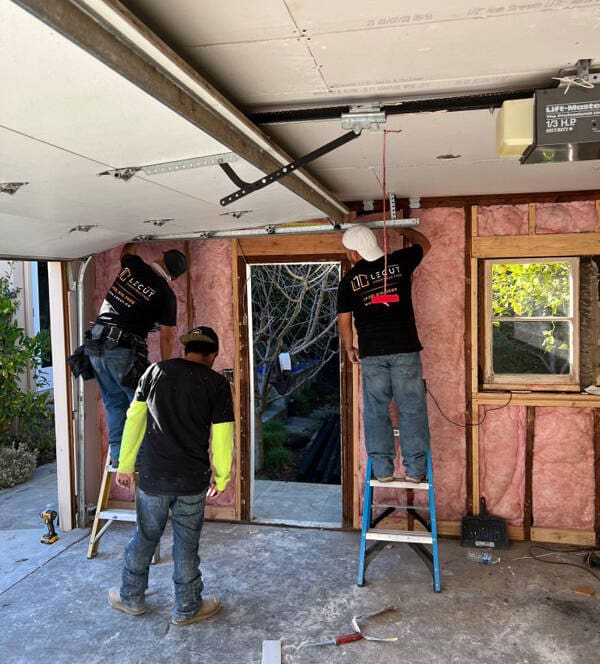

Ever stared at your home and felt a strange mix of love and… intense negotiation? We get it. One minute you’re admiring the character, the next you’re side-eyeing that kitchen layout from 1987 or dreaming of a bathroom that doesn’t feel like a time capsule. Deciding to remodel is exciting, but let’s be real—figuring out the how, the who, and the “oh wow, what’s the cost?” can feel like trying to solve a Rubik’s cube in the dark. Well, take a deep breath. We’re here to chat, as fellow home enthusiasts who’ve seen it all from the other side of the blueprint.
Table of Contents
Your Blueprint for Sanity: Planning is Everything (Seriously)
We know, we know. Planning sounds about as fun as watching paint dry. But trust us, skipping this step is where dreams of a beautiful full home remodel meet the harsh reality of change orders and budget overruns. Think of planning as your project’s insurance policy.
First, Let’s Talk Vision vs. Reality
We love a good Pinterest board—who doesn’t? But the key is translating that “Farmhouse Industrial Zen” vision into something that actually works for your life in San Jose. Do you need a dedicated home office for your Silicon Valley grind? More space for a growing family? Or just to finally make your backyard usable? Define the why before you pick a single tile.
The Budget Talk: No Ghosting, Please
Here’s where we get blunt. You need a number, and it needs to be realistic. A common pitfall is only budgeting for the fun stuff (hello, quartz countertops!) and forgetting about the unseen heroes—like plumbing, electrical, or permitting fees in cities like Campbell or Saratoga. Getting a clear scope from a professional is the only way to get a true price picture. FYI, a good renovation contractor will help you understand where to splurge and where to save.
The Cast of Characters: Picking Your Dream Team
You wouldn’t let just anyone perform surgery on you, right? Your home deserves the same care. The term “contractor” gets thrown around a lot, but the team structure matters.
The General Contractor: Your Quarterback
This is your most critical hire. A true general contractor manages the entire circus—subcontractors, schedules, permits, inspections, and the daily mess. They’re the buffer between you and the stress. When you search for “the best remodeling company near me,” you’re really looking for a stellar GC. Companies like ours, Lecut Construction right here in San Jose, live for this role. We orchestrate the symphony so you don’t have to conduct the chaos.
Specialists vs. Generalists: Who Does What?
Sometimes you need a specialist, and sometimes a generalist is perfect.
- For a intricate, plumbing-heavy master suite: You might want a dedicated bathroom remodeler.
- For a whole-house overhaul involving structural changes, a new roof, and a kitchen: You need a house remodeling contractor with broad general remodeling expertise.
Here’s a quick cheat sheet we often share with clients:
| Project Type | Recommended Pro | Why? |
|---|---|---|
| Single-Room Update (e.g., painting, flooring) | Handyman or Specialty Installer | Cost-effective for contained, non-structural work. |
| Complex Kitchen or Bath | Specialized Remodeler or GC | Requires deep knowledge of plumbing, electrical, and cabinetry in one trade. |
| Whole-House Gut Job | Experienced General Contractor | Essential for coordinating multiple trades, timelines, and complex permitting. |
| Home Additions & Exterior Remodeling | Licensed General Contractor | Non-negotiable. Involves foundation work, structural engineering, and tying into existing home systems. |
The Not-So-Secret Sauce: Communication & Contracts
This is the part that separates a dream project from a nightmare. A clear contract isn’t a sign of distrust; it’s the blueprint for a successful partnership.
What Makes a Contract Your Best Friend?
A good contract details everything: scope, price, payment schedule, timeline, and specific materials (brand, model, color). It should also outline how changes are handled. IMO, the most important clause is one that makes the project abortable under clear, fair terms for both parties. It’s not about planning to quit, but about knowing there’s a respectful exit strategy if something goes fundamentally wrong. This protects everyone.
Weekly Check-Ins Are a Game-Changer
Set a standing weekly meeting with your GC. It’s 15 minutes to review progress, address questions, and make small decisions before they become big delays. This simple habit is the number one thing our Lecut Construction clients thank us for—it eliminates the “what’s happening?!” anxiety.
Surviving the Mess: Living Through a Remodel
Let’s cut to the chase: it will be dusty, noisy, and disruptive. But with a few tricks, it’s totally survivable, and maybe even a little fun :).
- Create a Sanctuary: Seal off the work area with plastic zip walls. Keep one bathroom and a kitchenette (even a microwave and mini-fridge) completely off-limits to the crew.
- Embrace the Chaos: Accept that dust is a temporary roommate. Cover what you can’t move and invest in a good air filter.
- Plan for Pets & Kids: The site is dangerous. Arrange for daycare or keep them safely away from the work zone.
And remember, a little humor goes a long way. Found a weird relic from the 70s behind a wall? That’s a story for the grandkids. Unexpectedly had to replumb the entire house? Okay, that’s less funny—but a pro like a general contractor should have contingency plans for these hidden surprises.
Why Local Knowledge Isn’t Just a Buzzword
When you’re looking for “home remodeling services near me,” there’s a huge reason to choose local. Building codes and permit processes vary wildly from Santa Clara to Los Gatos to Fremont. A general contractor who knows the inspectors and the specific requirements in Milpitas or Cupertino can navigate that maze efficiently, saving you weeks of headache. We’ve built relationships from Morgan Hill to Sunnyvale, and that local insight is something you just can’t Google.
Your Questions, Answered (No Fluff)
1. How much should I budget for a remodel?
There’s no one-size-fits-all answer, but a good rule of thumb for a full home remodel in our area is to start thinking in terms of cost per square foot, plus a 10-20% contingency for the “unknowns.” For a more accurate picture, the only way is to get a detailed bid based on your specific plans. Talking to a few reputable firms like Lecut Construction for a consultation will give you a real-world range.
2. How long will my project take?
A complex bathroom remodel might take 4-8 weeks. A whole-house renovation could be 4-6 months. Home additions and exterior remodeling often have longer timelines due to engineering and weather. Your GC should provide a detailed schedule upfront and keep you updated on any shifts.
3. Should I be home during the work?
If you can avoid it, yes. It’s less stressful for you and often allows the crew to work more efficiently. If you must be home, establish clear work-hour rules and that sanctuary zone we talked about.
4. How do I handle disagreements with my contractor?
Communication first! Address issues calmly and directly during your weekly check-ins. A good contract will have a dispute resolution clause. The goal is to solve the problem, not win an argument. A professional remodeling company values a happy client and will work to find a solution.
So, there you have it. Remodeling is a journey—a messy, sometimes loud, but ultimately incredibly rewarding one. It’s about more than just new walls and floors; it’s about creating a space that truly works for your life here in the South Bay. If your vision is starting to feel a bit more real and a lot less scary, that’s the whole point. And if you’re ready to turn that vision into a plan, you know who to talk to. We’re just a call away, ready to build something amazing, together.
Related Articles
People Also Ask
The general rule of thumb for gutter sizing is that the gutter should be at least 5 inches wide for most residential homes, with a downspout for every 600 to 800 square feet of roof area. This ensures proper water flow during heavy rain. A key standard is that the gutter pitch, or slope, should be about 1/4 inch for every 10 feet of gutter length to prevent standing water. For homes in areas like San Jose, Santa Clara, or Sunnyvale, CA, where seasonal rains can be intense, following this rule helps avoid overflow and foundation damage. Lecut Construction always recommends checking local building codes to confirm these standards for your specific roof design.
A little known trick for gutters is to install a slight, continuous downward pitch of about one-quarter inch for every ten feet of gutter run, rather than relying solely on standard slope guidelines. This precise adjustment prevents water from pooling and reduces the risk of overflow during heavy rain. Additionally, using hidden hangers with a built-in screw system can secure gutters without visible brackets, improving both function and appearance. For homes in San Jose, Santa Clara, and Sunnyvale, CA, where seasonal rains can be intense, this approach helps maintain proper drainage. Lecut Construction recommends this method to extend gutter lifespan and minimize clogs, ensuring your system handles water efficiently without common issues like sagging or leaks.
For most residential homes, 6-inch gutters are generally considered the better choice. They handle significantly more water volume than 5-inch gutters, which is crucial in areas with heavy rainfall or steep roofs. While 5-inch gutters can be adequate for smaller, simpler rooflines, 6-inch gutters reduce the risk of overflowing during storms and require less frequent cleaning. The larger size also allows for a more seamless appearance with fewer downspouts. If you are looking for a durable and effective solution, a professional installation by a company like Lecut Construction can ensure your gutter system is properly sized for your specific home.
Yes, replacing 20-year-old gutters is often a wise decision. Most gutter systems have a lifespan of 15 to 25 years, depending on material and maintenance. At the 20-year mark, common issues like rust, cracks, sagging, or poor drainage can compromise your home's foundation and siding. If you notice leaks, peeling paint near the roofline, or water pooling around your home's base, replacement is likely needed. Upgrading to modern seamless gutters with proper downspout placement can improve water diversion and reduce future maintenance. For homeowners in San Jose, Santa Clara, or Sunnyvale, CA, evaluating the condition of your gutters is a practical step to protect your property from weather-related damage.
For a 6-inch gutter, the standard downspout size is typically 3 by 4 inches rectangular or a 4-inch round pipe. This combination efficiently handles the increased water volume from a larger gutter, preventing overflow during heavy rain. Proper sizing is crucial to avoid water damage to your foundation and landscaping. At Lecut Construction, we recommend matching downspout capacity to your roof's square footage and local rainfall intensity. Ensure downspouts are securely fastened and direct water at least 5 feet away from the house. Regular cleaning of both gutters and downspouts maintains optimal performance.
To calculate gutter and downspout sizes, you must first determine the roof area that drains to each gutter section. Measure the length and width of each roof slope, then multiply to get square footage. For a standard residential roof in areas like San Jose, a common rule is that one square inch of downspout cross-section can handle about 100 square feet of roof area. For example, a 2x3 inch downspout (6 square inches) can serve up to 600 square feet. Gutter size typically follows: a 5-inch K-style gutter works for roofs up to 5,500 square feet, while 6-inch is better for larger areas. Always factor in local rainfall intensity. For precise sizing, consult a professional like Lecut Construction to ensure your system handles heavy storms without overflow.
For standard residential gutters, the maximum recommended distance between downspouts is typically 30 to 40 feet. This ensures proper drainage and prevents overflow during heavy rain. However, the exact length depends on factors like roof pitch, rainfall intensity, and gutter size. A 5-inch K-style gutter can usually handle up to 40 feet, while a 6-inch gutter may extend slightly further. If your home is in San Jose, Santa Clara, or Sunnyvale, CA, local weather patterns and building codes should be considered. Lecut Construction recommends consulting a professional to evaluate your specific roofline and downspout placement for optimal performance and to avoid water damage.
For residential homes, the most common gutter downspout sizes are 2x3 inches and 3x4 inches. The 2x3 size works well for smaller roofs and standard rainfall, while the 3x4 downspout is recommended for larger roof areas or regions with heavy rain. Round downspouts are typically 3 or 4 inches in diameter. Choosing the correct size is critical to prevent overflow and water damage to your foundation. At Lecut Construction, we always assess your roof's square footage and local rainfall intensity to recommend the proper downspout size. A professional installation ensures that water is efficiently channeled away from your home, protecting your landscaping and structural integrity.