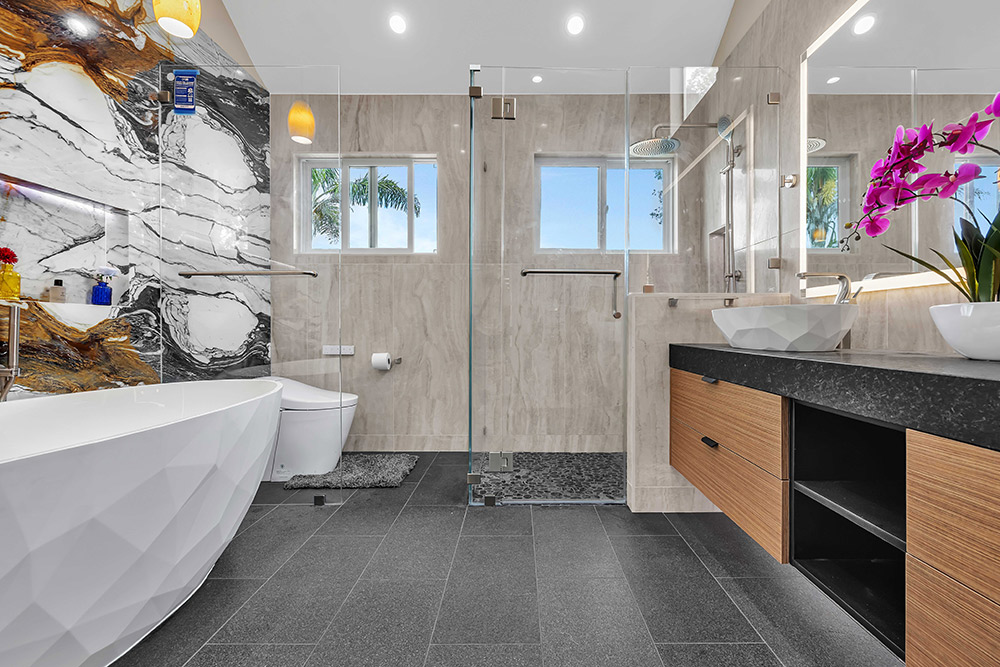
For the vast majority of Bay Area homeowners remodeling a primary bathroom in 2026, a spacious, curbless walk-in shower will add more daily luxury, better accessibility, and higher resale appeal than a standard bathtub. We recommend keeping at least one bathtub in the home—preferably in a hall bathroom or children’s suite—if resale to families is a priority. Below, we share our on-the-ground experience, cost comparisons, and the specific remodel choices that now yield the strongest return on investment across San Francisco, Oakland, San Jose, and surrounding communities.
What Bay Area Buyers and Homeowners Actually Want in 2026
We remodel hundreds of bathrooms each year through LeCut Construction, and the pattern is unmistakable: homeowners are stripping out seldom-used tub-shower combos and replacing them with glass-enclosed, zero-threshold showers. According to the 2025 U.S. Houzz Bathroom Trends Study, 4 in 5 renovating homeowners enlarge the shower during a primary bathroom remodel, and two-thirds remove the bathtub entirely. The National Association of Realtors’ 2025 Remodeling Impact Report confirms that a bathroom renovation with a walk-in shower recoups roughly 67 to 71 percent of its cost at resale in the Pacific region—making it one of the smartest mid-range projects you can undertake today (source: NAR 2025 Remodeling Impact Report).
A walk-in shower converts a purely functional space into a personal spa, and that emotional payoff now translates directly to buyer preference. Multiple Bay Area real estate agents we collaborate with tell us that a sleek walk-in shower in the primary suite photographs better, feels more modern, and helps a listing stand out in the competitive 2026 market. When you add features like a linear drain, built-in bench, and large-format tile, the perceived value climbs even further.
That said, the “no tub at all” decision still carries nuance. Homes with zero bathtubs can alienate young families—our agents report that approximately 30 percent of buyers with children will eliminate a property without a single tub. Our advice: if you have another full bathroom with a tub, convert the primary bath to a walk-in shower without hesitation. If you only have one full bath, consider a deep soaking tub with a shower combination, or a hybrid design that preserves the tub while dramatically upgrading the shower experience.
The Real Cost of Walk-In Showers vs. Bathtubs in 2026 (Detailed Table)
The table below reflects our actual project averages across San Francisco, Oakland, and San Jose in the first half of 2026. All figures are in US dollars and represent mid-to-high-end finishes typical of LeCut Construction’s design-build standard.
All cost ranges reflect a full design-build process with licensed, insured trades, high-quality waterproofing systems, and custom tile work. Your specific price will depend on the size of the bathroom, material selections, and any unforeseen structural repairs.
From a purely financial standpoint, the walk-in shower’s higher cost is offset by its stronger buyer appeal and lower daily water usage, which is especially relevant as California water rates continue to rise. The 2026 California State Water Board tiered pricing means a household that eliminates a 60-gallon tub fill several times per week can save 150 to 200 dollars annually on water and water heating.
Accessibility and Aging‑in‑Place: The Shower Advantage No One Should Ignore
We have designed dozens of bathrooms for clients planning to stay in their forever homes, and this is where the walk-in shower delivers its most decisive victory. A curbless entry with a minimum 36‑inch wide opening (we often go to 48 inches) allows a wheelchair or walker to roll straight in. Adding a fold-down teak seat, a handheld shower wand on a slide bar, and blocking behind the walls for future grab bars costs a fraction of the overall remodel but future-proofs the bathroom for decades.
In contrast, even a “low-profile” soaking tub requires a step over 14 to 20 inches, which becomes a genuine fall risk after age 65. The CDC reports that over 235,000 people visit emergency rooms annually due to bathroom-related injuries, with tub transfers being a primary culprit. By installing a zero-threshold shower today, you are making a safety investment that also happens to be the most coveted design feature in 2026.
Our in-house design team often combines a curbless shower with a linear drain that runs along the back wall, subtle mosaic floor tile for slip resistance, and a recessed niche that eliminates sharp corners. The result is a space that meets all ADA guidelines without looking institutional. This combination alone has helped several of our clients age in place while their homes appreciated well above neighborhood averages.
The Family Bathroom Equation: When the Bathtub Still Wins
We will be the first to admit that a bathtub isn’t obsolete—it just belongs in a different bathroom. For young families, bathtime is a nightly ritual. Pregnant homeowners or those with toddlers consistently tell us that a deep tub in the hall bath is non-negotiable. When we remodel a family home, we often leave the hall bath with a high-quality tub-shower combo featuring a curved shower rod, low-maintenance acrylic walls, and a thermostatic valve that prevents scalding. Meanwhile, the primary suite gets the luxury walk-in shower.
If you are renovating a single-bathroom condo in San Francisco’s Noe Valley or a bungalow in Willow Glen, the decision becomes more nuanced. In these cases, we recommend an extra-deep soaking tub with a glass enclosure and a rain shower head above—what we call the “spa combo.” You maintain resale flexibility while delivering a far better daily experience than a standard 60‑inch alcove tub. We also install a tub with a wide, flat deck that serves as a seat and a shelf, effectively blending accessibility with function.
Space Planning and Layout: Getting More Out of Every Square Foot
Walk-in showers let you reclaim visual space. Without the solid mass of a tub, even a small bathroom feels significantly larger. Our design team uses large-format porcelain panels (48 inches by 110 inches) with minimal grout lines to amplify the effect. In a 5‑foot by 8‑foot bathroom, converting a tub to a 48‑inch by 36‑inch shower frees up enough floor area for a linen cabinet or a make-up vanity, additions that our clients say they appreciate every day.
We often relocate the shower controls to the entry wall so you can turn on the water without getting wet, a small ergonomic luxury that tubs rarely accommodate. By utilizing a wall-hung toilet and a floating vanity, we create an open, unbroken floor that makes the bathroom safer and far easier to clean. This layout strategy has become our signature approach for small-space remodels in older San Francisco and Oakland homes.
Why the 2026 Shower Trends Are All About Spa Wellness
Today’s walk-in shower is not the fiberglass stall of decades past. The 2026 homeowner wants a wellness experience at home. We incorporate:
-
Steam generators behind a waterproof vapor barrier, turning the shower into a steam room that boosts circulation and recovery.
-
Chromotherapy LED lighting systems that adjust color temperature to match the time of day.
-
Thermostatic digital valves with preset temperatures and rainfall, waterfall, and body-spray combinations.
-
Heated flooring that extends seamlessly into the shower floor, eliminating the cold tile shock.
-
Smart mirrors with anti-fog and integrated voice assistants for news and music during the morning routine.
None of these features integrate naturally with a bathtub. A standalone tub can sit nearby, but the shower becomes the command center of daily wellness. In the luxury segment of the Bay Area market, we have seen these features push resale value 5 to 8 percent above comparable homes without a spa shower, according to data shared by local Compass agents.
Maintenance Reality: Which Option Consumes Less of Your Weekend?
We level with every client: a frameless glass walk-in shower requires daily squeegeeing to keep water spots at bay, especially with the hard water in many East Bay municipalities. We mitigate this by treating the glass with a hydrophobic coating during installation and recommending a whole-house water softener or a point-of-use filter. With that system in place, maintenance drops to a quick 30-second wipe after the last shower of the day.
A bathtub, particularly a freestanding tub surrounded by open floor space, collects dust and needs to be wiped down before each use. Jet systems in whirlpool tubs need monthly cleaning cycles to prevent mold buildup—a task many owners neglect. Overall, a walk-in shower with coated glass and large-format tile actually demands less deep-cleaning time than a tub-shower combo with grout lines and a curtain.
We provide every client with a custom maintenance guide detailing the exact cleaning products (pH-neutral, no bleach) and tools to preserve the finishes, and we offer an annual maintenance checkup that includes re-sealing grout and inspecting waterproofing. This aftercare program keeps the shower looking new for a decade, which directly supports its resale value.
The LeCut Construction Advantage: From First Sketch to Final Tile
As a family-owned design-build firm serving the entire Bay Area, we eliminate the friction that homeowners dread. You never juggle separate designers, plumbers, electricians, and tile setters—our in-house team handles everything. We start with a free design consultation where we measure your space, discuss how you truly use your bathroom, and produce a 3D rendering so you can see the difference between a walk-in shower and a tub layout in your exact home.
Our core values—quality, integrity, accountability, and respect—mean we show up on time, protect your home with floor and dust containment systems, and communicate daily. Because the majority of our business comes from client referrals, every project must be finished to the standard that makes you eager to recommend us. We are fully licensed and insured (California General B License), and we back our work with a multi-year workmanship warranty that covers water penetration and tile adhesion—areas where many remodelers cut corners.
Whether you are in San Francisco, Oakland, San Jose, or a surrounding community, we can help you decide between a walk-in shower and a bathtub with no pressure, only data and design expertise. Call us at (408) 816-3688 or visit lecut.co to schedule your free design consultation.
Frequently Asked Questions
Does removing the bathtub hurt resale value in the Bay Area?
In a primary bathroom, no—removing the tub to install a walk-in shower often increases buyer appeal and can raise offers. As long as the home retains at least one other bathtub, the net effect on resale value is positive. For single-bathroom homes, we recommend keeping the tub or installing a deep soaking tub-shower combo to avoid alienating families.
How much does a walk-in shower remodel cost compared to a new bathtub in 2026?
A complete walk-in shower conversion with curbless entry, high-end tile, and frameless glass typically ranges from 18,000 to 32,000 dollars in our market. Replacing a tub-shower combo with new fixtures, tile, and a quality bathtub averages 14,000 to 24,000 dollars. A freestanding soaking tub added to an existing bathroom runs 9,000 to 16,000 dollars. These figures include design, demolition, plumbing, electrical, waterproofing, tile, and finishes.
Can we add a walk-in shower if we only have a small 5‑foot by 8‑foot bathroom?
Absolutely. We specialize in small-space design and routinely convert standard alcove tubs into generous walk-in showers in compact bathrooms. By using a curbless linear drain, a wall-hung toilet, and large-format tile, we make the room feel twice its actual size. You can even include a narrow bench and a niche for toiletries without crowding the footprint.
What waterproofing method does LeCut Construction use?
We use a full surface-applied liquid membrane system coupled with a bonded flange drain for curbless showers, or a sheet membrane system (Schluter Kerdi) for traditional installations. Every shower pan undergoes a 24-hour flood test before tile installation, ensuring zero leakage. This exceeds California building code requirements and is a standard we never compromise on.
How long does a walk-in shower remodel take from start to finish?
Our typical timeline for a complete primary bathroom conversion to a walk-in shower is 3 to 5 weeks, depending on the complexity of plumbing relocation and the tile pattern. We provide a detailed milestone schedule at the start of the project and update you daily via our client communication portal.
Should we go curbless even if we are not planning to age in place?
Yes. A curbless entry not only future-proofs the bathroom but also makes daily cleaning easier and gives the room a high-end, European aesthetic. It also becomes a major selling point whenever you do decide to list. The incremental cost to recess the subfloor and install a linear drain is generally 1,500 to 3,000 dollars over a standard curb, a modest amount relative to the total project budget and the long-term benefit.
Can we install a bathtub later if we change our mind?
Structurally, yes, but it would require significant rework. We always recommend making a decision that accounts for your 10-year horizon. If you anticipate having children or grandchildren in the home, we can design a layout that keeps plumbing accessible for a future tub conversion without sacrificing the walk-in shower’s footprint.
The Bottom Line for 2026 Bay Area Homeowners
We have built our reputation on guiding homeowners to the decision that serves both their daily happiness and long-term equity. In 2026, the walk-in shower is the clear winner for primary bathrooms, delivering a blend of luxury, safety, water efficiency, and resale magnetism that a standard tub cannot match. By preserving a bathtub in a secondary bath and working with a design-build team that sweats the details, you get the best of both worlds. Let us show you exactly what is possible in your home during a free, no-obligation consultation.