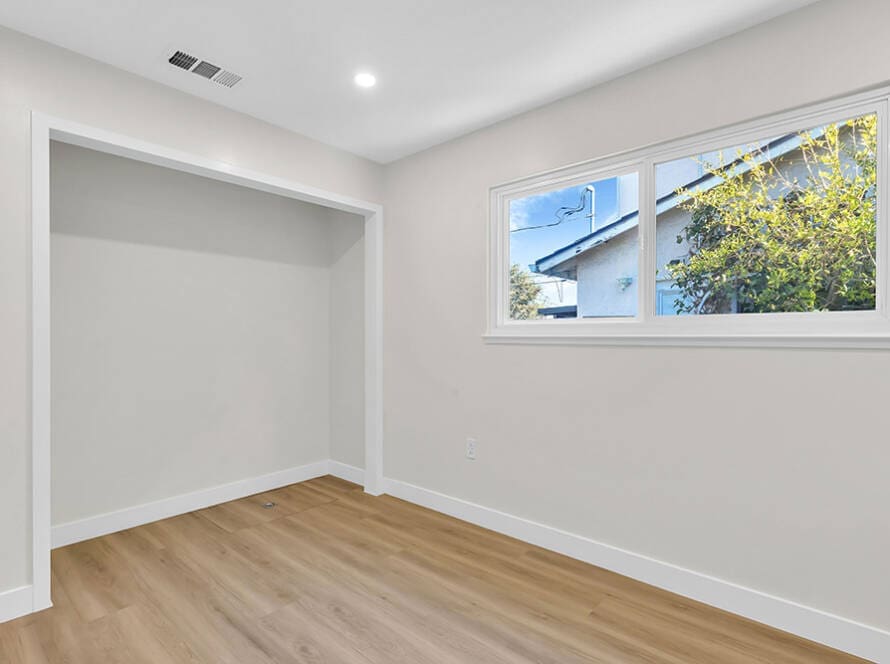

Let’s be honest: trim molding is one of those things you don’t think about until you’re staring at a bare wall in a 1970s San Jose ranch house, wondering why the floor meets the wall like they’re in a bad relationship. No cap, no shoe, just drywall meeting hardwood with an awkward gap. That’s when you start Googling molding profiles at 10 PM on a Tuesday, and suddenly you’re three hours deep into a rabbit hole about cove vs. ogee.
We’ve been there. We’ve installed enough miles of trim to wrap around the San Jose Municipal Rose Garden a few times over. And after years of working in homes from Willow Glen to the hills above Alum Rock, we’ve formed some strong opinions about what actually works in this climate, what looks good, and what’s a waste of money. So let’s cut through the noise.
Key Takeaways
- The right molding profile isn’t just about looks—it affects how your room handles dust, light, and even seasonal wood movement.
- In San Jose’s dry-summer climate, material choice matters more than most homeowners realize.
- You don’t need a dozen different profiles to make a room look finished. Two or three well-chosen ones do the job.
- Crown molding is often oversold for smaller rooms. Sometimes a simpler profile works better.
- Professional installation, especially for outside corners, is where the real value shows up.
Table of Contents
Why Your Trim Choice Matters More Than You Think
Most people walk into a lumberyard or big-box store and grab whatever baseboard is on sale. That’s a mistake. Trim is the frame around your room’s story. It hides gaps, protects walls from vacuum cleaners and errant mops, and it’s the first thing your eye catches when you walk into a space. Bad trim is like a crooked picture frame—you might not notice it consciously, but something feels off.
In San Jose, we deal with a specific set of challenges. Our summers are bone-dry, and our winters can bring dampness from the Pacific. That seasonal swing means wood expands and contracts. If you pick the wrong profile or the wrong material, you’ll end up with gaps, splits, or corners that pop open by February. We’ve seen it happen. A lot.
The Profiles We Actually Reach For
Baseboard Profiles: The Foundation of Every Room
Baseboard is the workhorse. It takes the most abuse, so it needs to be practical first, beautiful second. Here’s what we see most often in San Jose homes:
Colonial (Ranch) Profile
This is the classic. Flat top, a simple curved step, and a straight bottom. It’s clean, it’s unpretentious, and it works in almost any style home from a 1950s Eichler to a 1990s suburban build. The flat top is great for cleaning—dust doesn’t collect in complicated grooves. It’s also forgiving if your walls aren’t perfectly straight, which is common in older San Jose neighborhoods like Rose Garden or Naglee Park.
Ogee Profile
This one has an S-curve at the top. It’s more decorative, more traditional. We tend to recommend ogee for homes with higher ceilings or more formal living areas. The downside? Those curves collect dust. If you have allergies or just hate dusting, think twice. Also, the ogee profile requires a precise miter cut on outside corners. A bad miter on an ogee baseboard looks like a train wreck.
Beaded Profile
Beaded baseboard has a small rounded bead running along the top edge. It’s a Victorian detail that shows up in older San Jose homes near downtown or the Hensley Historic District. It’s charming, but it’s also a pain to paint because the bead creates a shadow line that catches every brush stroke. If you’re going beaded, spray finish is the only way to get a clean look.
Crown Molding: When to Use It and When to Skip It
Crown molding is the most overhyped trim in residential construction. Everyone thinks it makes a room look expensive. Sometimes it does. Sometimes it makes a 10×12 bedroom look like a jewelry box that’s too small for its own lid.
Spring Angle Crown
This is the standard 52/38 degree crown that most houses use. It sits at an angle against the wall and ceiling. The problem is that it’s a bear to install on anything but perfectly flat drywall. In San Jose, where many homes have textured ceilings or slightly wavy walls, spring angle crown can leave gaps that are almost impossible to caulk cleanly.
Flat Crown (Cornice)
Flat crown sits flush against both the wall and ceiling. It’s simpler, less fussy, and actually looks more modern. We’ve started using flat crown in mid-century homes and contemporary builds. It’s easier to install, easier to paint, and it doesn’t collect cobwebs the way spring angle crown does.
When to Skip Crown Altogether
If your ceiling is under 8 feet, skip crown. It will make the room feel shorter. Instead, use a simple picture rail or a shadow gap trim at the ceiling line. That gives you a visual break without eating up vertical space.
Chair Rail and Picture Rail: Not Just for Dining Rooms
Chair rail used to be strictly for protecting walls from chair backs. In San Jose, we see it used more as a decorative element to break up tall walls. But there’s a trick: the height matters. We’ve walked into homes where the chair rail is installed at 36 inches, which looks awkward unless you have 9-foot ceilings or higher. A better rule of thumb is to install it at one-third the wall height, not a fixed number.
Picture rail is making a comeback, especially in older homes. Instead of drilling holes for hanging art, you use hooks on the rail. It’s practical and it avoids patching nail holes every time you rearrange your living room. We’ve installed picture rail in several Victorian homes in the Shasta-Hanchette neighborhood, and it’s a game-changer for renters or people who change their art frequently.
Material Realities: Wood, MDF, or PVC?
This is where experience separates theory from practice. Here’s what we’ve learned the hard way:
| Material | Best For | Drawbacks | Our Take |
|---|---|---|---|
| Solid Wood (Pine, Poplar) | Historic homes, stain-grade finishes | Expensive, moves with humidity, prone to splitting | Worth it for high-end work or if you’re staining. Not great for bathrooms. |
| MDF (Medium-Density Fiberboard) | Most modern homes, paint-grade work | Hates water, can swell if not sealed properly | Our go-to for 80% of jobs. Cheap, stable, paints beautifully. |
| PVC (Cellular Vinyl) | Bathrooms, basements, exterior applications | Limited profile options, can look plastic | The only choice for wet areas. Accept the look or paint it. |
| Polyurethane (Resin) | Curved walls, complex profiles | Brittle, expensive, hard to cut cleanly | Only use for curved sections. Not worth it for straight runs. |
A note on MDF: We’ve had customers insist on MDF for their bathroom remodel. We talked them out of it. One leaky toilet and that MDF baseboard turns into a sponge. Use PVC in bathrooms and laundry rooms. It’s not as pretty, but it won’t rot.
Common Mistakes We See All the Time
Mistake 1: Matching profiles across every room. You don’t need the same baseboard in the living room and the laundry room. Use a taller, more detailed profile in public spaces and a simpler, shorter profile in utility areas. It saves money and looks intentional.
Mistake 2: Ignoring the floor thickness. We’ve installed baseboard that was too short because the homeowner picked the profile before the flooring was installed. If you’re adding hardwood or tile, the baseboard needs to account for the new floor height. Otherwise, you end up with a gap at the bottom that no amount of shoe molding can fix gracefully.
Mistake 3: Cutting inside corners wrong. Inside corners should be coped, not mitered. A mitered inside corner will open up as the wood moves. A coped joint—where you cut the profile of one piece to fit over the other—stays tight for years. It takes more time, but it’s the difference between a job that looks good for a month and one that looks good for a decade.
Mistake 4: Over-caulking. Caulk is not a substitute for a bad fit. We see trim jobs where the installer slathered caulk over every gap. It looks fine for a year, then the caulk shrinks, cracks, and looks worse than the gap ever did. Fit the trim tight. Use caulk only where the trim meets the wall or ceiling, not between trim pieces.
When DIY Makes Sense (and When It Doesn’t)
If you’re handy with a miter saw and have a few weekends to spare, you can absolutely install baseboard in a single room. We’ve seen homeowners do beautiful work in their own homes. But there are limits.
DIY-friendly: Straight runs of baseboard in a rectangular room. Inside corners that can be coped with practice. Simple colonial or flat profiles.
Call a pro: Crown molding on anything but perfectly square walls. Outside corners on ogee or beaded profiles. Any trim installation in a room with wavy plaster walls—common in older San Jose homes near Kelley Park or the historic districts. Also, if you’re working with poplar or oak that needs to be stained, one bad cut costs you $50 in materials. A pro will waste less wood.
We’ve done enough repair work on DIY jobs to know that the money you save on labor often gets spent on materials you ruined and the frustration of a weekend project that turns into a month-long ordeal. There’s no shame in calling someone like LeCut Construction in San Jose, CA to handle the tricky parts. We’ve seen it all, and we’d rather do it right the first time than fix it later.
The Climate Factor: San Jose Specifics
San Jose sits in USDA hardiness zone 9b, but that doesn’t tell the whole story. We get hot, dry summers where indoor humidity can drop to 20%. Then winter rolls in with rain and fog, and humidity spikes to 70% or more. That 50% swing is brutal on solid wood trim.
We’ve seen 6-inch-wide pine baseboard shrink enough in August that you can see daylight through the joints. By February, those same joints are tight again. If you use solid wood, you have to acclimate it in the house for at least a week before installation. And you have to leave a small gap at every joint for expansion. Some homeowners don’t like the look of that gap, but it’s better than a split board.
MDF handles this swing better because it doesn’t expand and contract as much. That’s one reason we recommend MDF for most San Jose homes, especially in rooms that aren’t climate-controlled.
Final Thoughts: Keep It Simple
After all these years, the best advice we can give is to keep your trim selection simple. Pick one or two profiles that work with your home’s style and your practical needs. Don’t try to cram crown, chair rail, picture rail, and wainscoting into a single room. It looks busy, and it’s a nightmare to keep clean.
Your trim should be the frame, not the painting. Let the walls, the furniture, and the people in the room be the focus. A clean, well-installed baseboard and a simple door casing will do more for your home than a dozen fancy profiles that fight each other.
And if you’re in San Jose and you’re staring at that bare wall, wondering where to start, give us a call. We’ve installed trim in every corner of this city, from the Eichlers in the Willows to the Victorians in the Vendome. We know what works here. And we’re happy to share what we’ve learned.