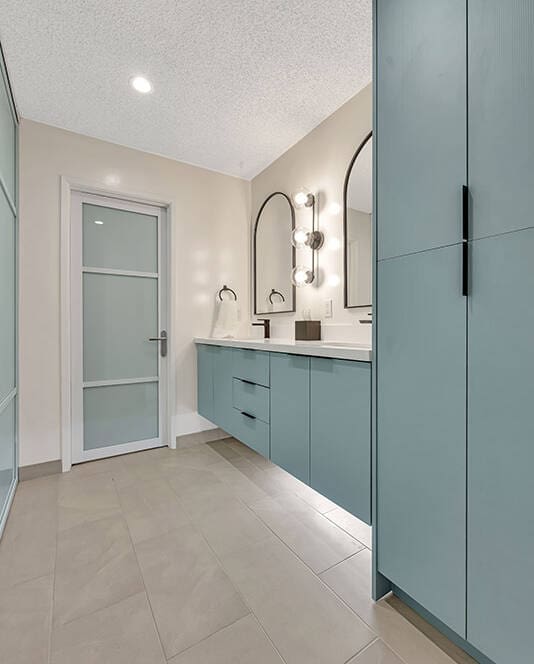

Most people don’t think about built-in furniture until they’re staring at an awkward corner in their living room or a wall that somehow eats up square footage without offering anything back. We’ve walked into enough San Jose homes to know that the frustration is real. The good news? Built-ins solve that problem better than almost any standalone piece of furniture ever could. They turn dead space into function, add character to otherwise forgettable rooms, and—if done right—actually increase your home’s value.
Key Takeaways
- Built-in furniture is one of the highest-ROI investments for custom homes in San Jose, especially in older neighborhoods with non-standard wall dimensions.
- The best designs prioritize function first, then style—not the other way around.
- Local climate and construction codes matter more than most homeowners realize when choosing materials and installation methods.
- A professional build almost always outperforms a DIY approach in terms of longevity, fit, and resale value.
Table of Contents
Why Built-ins Make Sense for San Jose Homes
San Jose has a housing stock that’s all over the map. You’ve got mid-century Eichlers in Willow Glen, Victorians near downtown, and modern infill builds popping up in Berryessa. Each comes with its own set of quirks—sloping floors, plaster walls that aren’t plumb, ceilings that vary by three inches from one end of the room to the other. Off-the-shelf furniture from a big-box store was never designed to handle that.
Built-ins solve that because they’re fabricated to the actual dimensions of your space. They close the gap between the wall and the cabinet, literally and figuratively. We’ve seen homeowners try to wedge a standard bookshelf into a recessed nook only to end up with a half-inch gap that collects dust and looks unfinished. A custom built-in eliminates that entirely.
There’s also the question of material longevity. San Jose’s climate swings between damp winter mornings and dry, hot afternoons. Solid wood and high-quality plywood handle that thermal cycling better than particleboard or MDF, which tend to swell and delaminate over time. That’s not something you think about when you’re shopping at IKEA, but it matters five years down the road when your cabinet doors start sticking.
The Real Cost of Going Custom
Let’s talk numbers for a second, because nobody wants to be surprised. A typical built-in project in San Jose—say, a wall-length entertainment center with lower cabinets and open shelving—runs anywhere from $4,500 to $12,000 depending on materials, complexity, and finish. That’s a wide range, but here’s what drives the price up:
- Wood species. Walnut and white oak cost more than poplar or birch. They also look better and last longer, so it’s usually worth the premium.
- Finish quality. Sprayed lacquer or conversion varnish is more durable than brushed-on paint. It’s also more expensive.
- Lighting. Integrated LED strips with dimmers add cost but make the piece feel high-end.
- Hardware. Soft-close hinges and full-extension drawer slides aren’t optional in our book, but they do add to the bill.
We’ve had clients ask why they can’t just buy a ready-made cabinet and call it a day. The honest answer is that you can—if your walls are perfectly square, your floor is perfectly level, and you don’t mind the piece looking like it was dropped into the room rather than designed for it. Most people who try that route end up calling us within a year to fix the gaps.
When DIY Actually Makes Sense
There are some situations where a homeowner with decent woodworking skills can pull off a built-in without professional help. A simple window seat with storage underneath, for example, is a straightforward project if you’ve got a table saw and some experience with pocket screws. Same goes for a basic set of floating shelves in a home office.
But we’ve also seen the other side. A client in the Rose Garden neighborhood tried to build a floor-to-ceiling library wall themselves. They got the framing wrong, the shelves sagged under the weight of hardcover books, and the whole thing had to be torn out. That’s not a cheap mistake. Sometimes the cost of materials plus your own labor adds up to more than hiring someone who knows what they’re doing.
Design Approaches That Actually Work
We’ve developed a few rules of thumb over the years that tend to produce the best results. None of them are revolutionary, but they’re consistently overlooked.
Start With What You’re Storing
The biggest mistake people make is designing a built-in around how it looks rather than what it holds. If you’ve got a collection of oversized art books, your shelves need to be at least 14 inches deep and spaced to accommodate them. If you’re storing board games and blankets, deep lower cabinets with pull-out bins are better than fixed shelves.
We always ask clients to measure their actual belongings before we start drafting. It sounds obvious, but you’d be surprised how many people design a media console without checking whether their soundbar will fit in the center opening.
Think About Sightlines
In an open-plan home—which is common in newer San Jose construction—a built-in needs to look good from multiple angles. That means paying attention to the side panels, the crown molding, and how the piece terminates at the ends. A cabinet that looks great from the front but has exposed raw plywood on the sides will stick out like a sore thumb in a living room that flows into the kitchen.
Don’t Forget About Base Molding
This is one of those details that separates a professional job from an amateur one. A built-in should sit on a toe-kick base that matches the height of your existing baseboards. If you just set the cabinet directly on the floor, you’ll end up with a gap at the bottom that looks unfinished and collects dirt. We always build a plinth base that matches the surrounding trim, then scribe it to the floor so there’s no visible gap.
Material Choices That Hold Up in This Climate
San Jose doesn’t have the extreme humidity of a coastal city, but we still see enough moisture to cause problems for the wrong materials. Here’s a quick breakdown of what we recommend and why:
| Material | Best For | Drawbacks | Typical Cost |
|---|---|---|---|
| Solid white oak | High-use areas, visible surfaces | Expensive, can warp if not properly acclimated | $$$ |
| Baltic birch plywood | Cabinet boxes, painted finishes | Requires good paint prep; not for natural finish | $$ |
| MDF with veneer | Budget-friendly painted projects | Heavy, prone to swelling if wet | $ |
| Reclaimed wood | Accent pieces, rustic looks | Inconsistent dimensions, harder to work with | $$$ |
We lean toward Baltic birch for most cabinet boxes because it’s stable, takes paint well, and doesn’t have the voids you find in cheaper plywood. For visible surfaces, solid white oak or walnut is hard to beat if the budget allows.
Common Mistakes We See Repeatedly
After a decade of doing this work, we’ve noticed patterns. Here are the ones that come up most often:
Ignoring the ceiling height. Standard cabinets are 84 inches tall. If your ceiling is 9 feet, that leaves a 24-inch gap on top that collects dust and looks awkward. A true custom built-in goes all the way up, or at least incorporates a crown molding that bridges the gap gracefully.
Forgetting about accessibility. Lower cabinets that require you to crawl on the floor to reach the back are a design failure. Pull-out shelves, lazy Susans, or drawer bases solve this.
Skipping the lighting plan. A built-in without task lighting is a missed opportunity. Even a simple strip of LED tape under the shelves transforms the piece from functional storage into a design feature.
Overloading the shelves. We’ve seen shelves bow under the weight of books, records, and heavy decor. The fix is simple: use 3/4-inch plywood or solid wood, and keep spans under 36 inches unless you add a center support.
When a Built-in Isn’t the Right Answer
Not every space needs a built-in. If you’re planning to move within three years, the investment might not pay off in resale value. A high-quality freestanding piece can go with you. Also, if your walls are structurally compromised—lath and plaster that’s crumbling, for example—you’ll want to address that before adding any heavy cabinetry.
We’ve also had clients who wanted built-ins in rooms that were already too small. A floor-to-ceiling cabinet in a 10×10 bedroom can make the space feel like a closet. Sometimes the better solution is a low-profile credenza or a wall-mounted shelf system that keeps the room feeling open.
The Installation Reality
Installing a built-in is rarely as simple as sliding a cabinet into place and screwing it to the wall. In older San Jose homes, floors are often out of level by half an inch or more. Walls are rarely plumb. That means every piece has to be scribed and shimmed to fit perfectly.
We use a combination of laser levels, scribe tools, and custom shims to get everything dialed in. It’s time-consuming, but the result is a piece that looks like it grew out of the wall. If you’re doing this yourself, budget extra time for fitting and don’t be surprised if you have to make multiple trips to the hardware store.
One thing we always do is anchor the built-in to the wall studs with structural screws. In earthquake country, that’s not optional. A heavy cabinet that isn’t secured can tip over during a tremor, and that’s a safety hazard we won’t compromise on.
Making the Final Decision
If you’re on the fence about whether to go custom, start by identifying the one space in your home that bothers you the most. Maybe it’s the living room wall that’s too narrow for a sofa but too wide for a single chair. Maybe it’s the home office where your desk floats in the middle of the room because there’s nowhere to put storage. That’s where a built-in will make the biggest difference.
At LeCut Construction located in San Jose, CA, we’ve seen how a well-designed built-in can transform a room from frustrating to functional. The key is to plan carefully, choose materials that suit your lifestyle, and be honest about whether your skill set matches the complexity of the project. If it does, go for it. If it doesn’t, there’s no shame in calling in someone who’s done it before.
A built-in should feel like it belongs. When it’s done right, it will. When it’s done wrong, you’ll notice every single day.