
We needed a ground-floor room addition in Almaden Valley for my aging mother. Lecut gave us a clear, itemized quote upfront with no surprise fees. The project manager kept us informed every morning, and the new space passed city inspection on the very first try.


With kids growing up, we desperately needed a playroom, so we booked Lecut for a garage conversion in Willow Glen. They started three days after our initial call, kept to the exact quote without hidden costs, and wrapped up early.

Lecut replaced our worn hardwoods in Los Gatos in two days for the exact upfront price quoted.

Building a detached ADU in Cupertino was seamless with Lecut handling all permits and construction. Their strict schedule meant I had a tenant paying rent two weeks earlier than projected.

Booking our kitchen remodeling consultation online took under two minutes. The crew showed up at 8 AM sharp in Sunnyvale, stuck to the itemized estimate down to the penny, and finished the installation ahead of deadline.


Adding a second story addition to our Santa Clara home felt risky until we signed with Lecut. They locked in our contract price before breaking ground, eliminating cost overruns. Their crew worked efficiently, completing structural framing ahead of schedule while keeping the job site spotless.

Our rotting porch in Palo Alto was unsafe, but Lecut completed a new composite deck building job in four days flat.
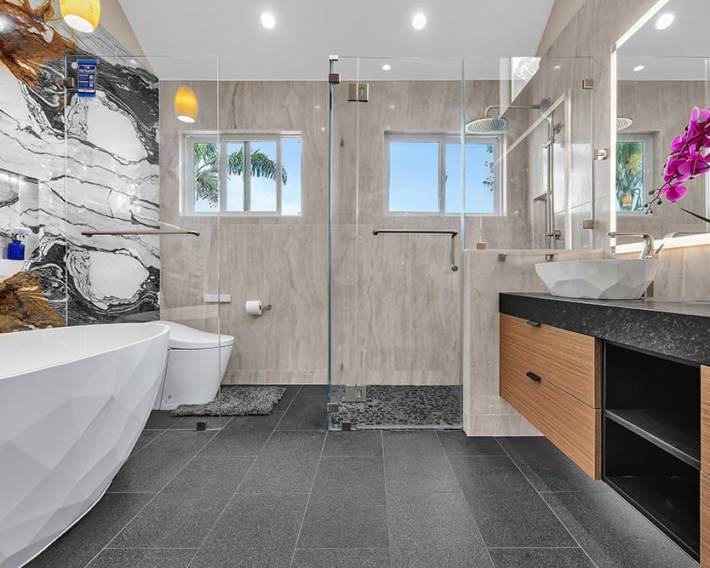
We had a great experience working with Lecut and Yari on our bathroom remodel. Yari was very responsive and easy to communicate with throughout the entire project, and Lecut did a great job with the installation and finishing work.
They were professional, reliable, and always willing to come back and take care of small details when needed. We're very happy with how everything turned out and really appreciate their hard work and attention to detail.



People Also Ask
There are four common types of project managers, each with a distinct focus. The first is the Traditional Project Manager, who follows a linear, plan-driven approach like Waterfall, emphasizing strict timelines and budgets. The second is the Agile Project Manager, who facilitates iterative, flexible workflows and team collaboration, often seen in software development. The third is the Construction Project Manager, who oversees physical builds, managing subcontractors, safety, and materials on site. The fourth is the Portfolio or Program Manager, who coordinates multiple related projects to achieve broader strategic goals. For a construction project in San Jose, understanding these roles helps clients choose the right leadership approach. At Lecut Construction, we apply a blend of these methods to ensure efficient and high-quality results.
The 5 C's of project management are a framework used to ensure project success: Communication, Collaboration, Commitment, Clarity, and Consistency. Communication ensures all stakeholders are informed and aligned. Collaboration fosters teamwork and shared responsibility. Commitment drives dedication to project goals and deadlines. Clarity involves defining roles, objectives, and expectations clearly from the start. Consistency maintains steady progress and quality standards throughout the project lifecycle. For a deeper understanding of how these principles are applied in real-world scenarios, you can refer to our internal article Project Management. At Lecut Construction, we integrate these 5 C's into every project to deliver reliable results for our clients in San Jose, Santa Clara, and Sunnyvale.
The seven commonly recognized types of project management include: 1) Waterfall, a linear sequential model; 2) Agile, which focuses on iterative development and flexibility; 3) Scrum, a subset of Agile using sprints; 4) Kanban, a visual workflow management method; 5) Lean, aimed at minimizing waste; 6) Six Sigma, which reduces defects through data-driven processes; and 7) PRINCE2, a process-based method for effective project governance. For construction projects, such as those managed by Lecut Construction, a hybrid approach blending Waterfall for planning with Agile for on-site adjustments often proves most effective. This ensures strict adherence to timelines and budgets while allowing for necessary adaptations.
A project manager provides oversight for every phase of a construction project, from initial planning and budgeting to scheduling and final inspection. They coordinate subcontractors, manage material procurement, and ensure all work meets local building codes and safety standards. Effective communication between the client and the field team is a primary responsibility, as is resolving any unforeseen issues that arise on site. For a detailed breakdown of these responsibilities, please refer to our internal article Project Management. At Lecut Construction, we emphasize that strong project management is essential for keeping a renovation or build on time and within budget.