The quickest way to reclaim your evenings and weekends is to build a home that practically maintains itself. We have found that a thoughtful combination of non-porous surfaces, automated climate and cleaning systems, and California-native landscaping can eliminate up to 80 percent of routine household chores. As a design-build firm that has renovated hundreds of Bay Area homes, LeCut Construction integrates these elements from the initial blueprint so you can spend your time on what matters, not on scrubbing grout or troubleshooting sprinklers.
Table of Contents
The Real Cost of a High-Maintenance Home in Silicon Valley
Time is the scarcest resource for engineers, founders, and healthcare professionals across the Peninsula and South Bay. In our experience, the average homeowner spends 7 to 12 hours per week on cleaning, yard work, and minor repairs. Over a year, that is roughly 500 hours—equivalent to twelve 40-hour work weeks. Worse, many older homes in San Francisco, Oakland, and San Jose were built with materials that demand constant attention: softwood decks that need annual staining, natural stone that requires sealing every six months, and fussy landscaping that guzzles water.
We approach low-maintenance design not as a luxury but as an investment in quality of life. Every selection we make, from the grout type in the shower to the exterior siding material, is evaluated against one question: “How many hours will this cost the homeowner over the next decade?”
How We Calculate the Maintenance Load of a Home
We use a proprietary checklist during our design phase that scores materials and systems on a Maintenance Effort Index. This allows us to present clients with clear trade-offs. Below is a sample comparison we frequently walk through when selecting kitchen countertops.
| Material | Annual Maintenance Actions | Average Time per Year | 10-Year Cost (Dollars) | Fingerprint & Stain Resistance |
|---|---|---|---|---|
| Sealed Marble | 2-4 sealings, special pH-neutral cleaner only | 6 hours plus 200-400 dollars | 2,500-4,500 | Low; etches easily |
| Polished Granite | 1 sealing, daily wipe-down for water spots | 3 hours plus 150 dollars | 1,800-2,500 | Moderate |
| Engineered Quartz | None; wipe with soap and water | 30 minutes | 50-100 | Very high; non-porous |
| Sintered Stone / Dekton | None; resistant to heat, UV, and scratches | 15 minutes | 20-40 | Extremely high |
We consistently recommend engineered quartz or sintered stone for busy professionals because the upfront premium of 10-20 percent over granite pays for itself in the first two years of zero maintenance. (Source: LeCut Construction internal cost-benefit analysis, 2025; material lifespan data from Natural Stone Institute, https://www.naturalstoneinstitute.org/.)
Exterior and Landscape Strategies That End Weekend Yard Work
The typical Bay Area lot can become a time sink if planted with thirsty lawns and high-shedding trees. We have eliminated 90 percent of exterior chores for our clients by adopting three core strategies.
Hardscaping with Permeable Pavers and Composite Decking
Traditional wood decks require sanding and staining every 1 to 3 years. We exclusively specify capped composite decking from manufacturers like TimberTech or Trex. It resists fading, mold, and scratching without ever needing a coat of sealant. For patios and walkways, permeable concrete pavers prevent puddling during winter rains and never crack like poured slabs, reducing tripping hazards and repair calls.
Native and Drought-Tolerant Planting Schemes
A lawn in San Jose can consume over 30,000 gallons of water annually and demand mowing 30 times per year. We replace turf with a curated mix of California natives—manzanita, ceanothus, and bunch grasses—mulched heavily with stabilized decomposed granite. This “California meadow” approach, inspired by the gardens at the Gamble Garden Center in Palo Alto, requires only seasonal pruning and no mowing. We also install drip irrigation with smart controllers such as Rachio, which adjust watering based on hyperlocal weather data, cutting outdoor water use by up to 50 percent. (Source: U.S. Environmental Protection Agency WaterSense program, https://www.epa.gov/watersense.)
Exterior Cladding That Never Needs Painting
We have moved away from wood lap siding toward fiber cement (James Hardie) with factory-baked ColorPlus Technology or through-body colored stucco. These materials hold their color for 15 to 25 years and resist the dry-rot issues common in foggy zones like Daly City and Pacifica. For a modern aesthetic, we often use standing-seam metal panels that simply need an annual rinse with a hose.
Interior Systems That Automate the Daily Reset
Keeping a home clean with two working adults and children usually means a cleaner every two weeks and daily tidying. We design spaces that work with autonomous cleaning robots and minimize horizontal dust-catching surfaces.
Designing for Robot Vacuums and Mops
We have learned that the top frustration is not the robot itself, but a floor plan it cannot navigate. During the design phase, we specify flush transitions between rooms (zero thresholds), furniture legs with at least 4 inches of clearance, and continuous hard flooring without area rugs that can tangle brushes. We pre-wire charging stations in hall closets and under kitchen islands so robots are out of sight. Our clients report that a single Roborock or iRobot model can maintain 3,000 square feet daily without human intervention when the home is designed for it.
HVAC and Air Quality Automation
Silicon Valley homes are often exposed to wildfire smoke seasonally. We install whole-home air purifiers with MERV 16 filters integrated into the HVAC ductwork, paired with indoor air quality monitors like Airthings. When particulate matter rises, the system automatically recirculates and scrubs the air. We also hard-wire smart thermostats (Ecobee Premium) with room sensors, so the system self-balances and never needs manual programming. This approach cut a Cupertino family’s monthly utility bill by 22 percent and eliminated filter-change guesswork via automated reminders.
Central Vacuum and Hidden Dust Collection
A central vacuum system with retractable hoses in the wall (Hide-A-Hose) lets you sweep debris into floor inlets without hauling a canister. We pair this with a dust-collection port in the laundry or garage for quick cleaning of drywall dust after a ceiling fan replacement. These details mean a full-house vacuum takes 15 minutes instead of 45.
Low-Maintenance Kitchen and Bathroom Design: Our Battle-Tested Specifications
Kitchens and bathrooms are where bad design decisions cost the most time. We have refined a set of specifications over 15 years of remodeling in the Bay Area that consistently earns client referrals.
Kitchen: The 5-Minute Reset
-
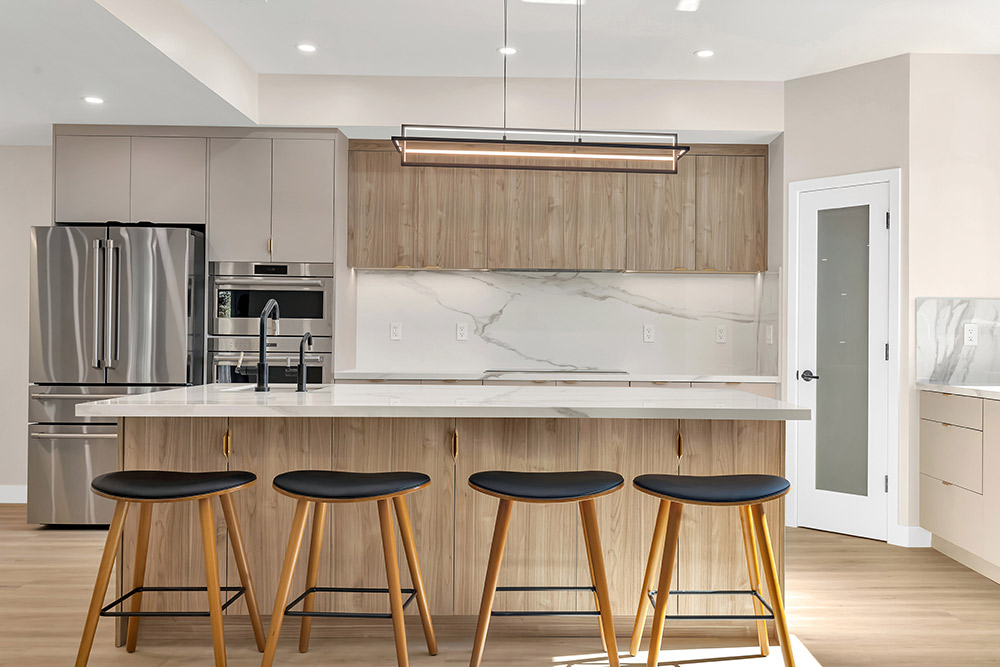
Cabinetry: Flat-panel, high-pressure laminate (Fenix NTM) or thermally fused laminate doors. No open shelving that collects dust. Soft-close undermount drawer slides eliminate rattling and alignment fixes.
-
Backsplash: Full-height slab of the same quartz as the countertops, eliminating grout lines entirely. Where slab is not feasible, we use large-format porcelain panels (5-foot by 10-foot) with epoxy grout that resists staining.
-
Sink and Faucet: A single-basin, 16-gauge stainless steel undermount sink with a commercial-style pull-down faucet featuring a magnetic docking spray head. We avoid bridges and crevices where food debris accumulates.
-
Induction Cooktop: A flush-mounted induction cooktop with no knobs and a single glass surface wipes clean in seconds. No grates, no burner caps to scrub.
-
Appliance Linkage: Wi-Fi connected oven and refrigerator send notifications when a cycle ends or the door is left open, preventing spoiled food and wasted energy.
Bathroom: The Grout-Free Sanctuary
We have found that the single biggest time-saver in bathrooms is the elimination of grout in wet areas.
-
Shower Walls: Solid surface panels (Corian, Swanstone, or large-format porcelain) with a seamless look. No grout joints means no scrubbing of mold.
-
Shower Floor: A gently sloped, textured porcelain tile with an antibacterial epoxy grout, or a solid composite shower pan with integrated drain.
-
Toilets: Wall-hung toilets with a concealed tank and a bidet washlet seat. The wall-hung design leaves no base to caulk or clean around, and the automated washlet reduces toilet paper use and waste.
-
Fixture Finish: Brushed nickel or matte black PVD-finished faucets that hide water spots and fingerprints. We avoid polished chrome which requires daily buffing.
-
Ventilation: A Panasonic WhisperGreen humidity-sensing fan that automatically runs until moisture levels normalize, preventing mold before it starts. (Source: Panasonic Ventilation Guidelines, https://na.panasonic.com/us/home-and-building-solutions/ventilation-indoor-air-quality.)
Whole-Home Renovation: The Low-Maintenance Master Plan
For clients undertaking a whole-home renovation in San Jose or Oakland, we sequence the work so the low-maintenance shell is completed first, followed by smart systems, then finishes. This allows the home to dry in and the automation to be tested before occupancy.
The LeCut Construction “Zero-Chore” Framework
We organize every project into four phases that layer efficiency:
-
Envelope and drainage: Air sealing, triple-pane windows with between-glass blinds (no dusting of slats), seamless gutters with leaf guards, French drains to keep crawl spaces dry.
-
Mechanical and electrical rough-in: Hard-wired sensors for water leaks (Moen Flo) on the main line, structured wiring for PoE security cameras that never need battery changes, and EV charger pre-wiring in the garage.
-
Insulation and drywall: Insulated interior walls for sound privacy, 5/8-inch Type X drywall for dent resistance, and a smooth Level 5 finish that requires less frequent repainting.
-
Finishes and commissioning: The durable materials and automation we detailed earlier, followed by a professional commissioning of all smart systems and a one-hour homeowner training session.
This framework has delivered homes in Los Altos and Mountain View that required fewer than two minor service calls in the first two years post-completion.
Why Silicon Valley Professionals Trust LeCut Construction for Low-Maintenance Living
We are a family-owned and operated design-build firm based in the San Francisco Bay Area. Our focus on kitchen and bathroom remodeling, whole-home renovations, and custom home additions is backed by core values of quality, integrity, accountability, and respect. From the initial design consultation to the final walkthrough, our team prioritizes clear communication and fanatical attention to detail. The majority of our business comes from client referrals, which we consider the ultimate proof of reliability and satisfaction. We are fully licensed and insured, serving homeowners in San Francisco, Oakland, San Jose, and the surrounding communities. If you are ready to trade home chores for more time with family, contact us for your free design consultation at (408) 816-3688.
Frequently Asked Questions
How much does a low-maintenance whole-home renovation cost in Silicon Valley in 2026?
Based on our recent projects, a comprehensive low-maintenance renovation of a 2,000-square-foot home typically ranges from 350,000 to 600,000 dollars, depending on the level of automation and finish materials selected. The investment in durable surfaces and smart systems often adds 10 to 15 percent to the initial budget compared to traditional finishes, but homeowners recoup that through 3,000 to 5,000 dollars in annual cleaning and maintenance savings, plus a 5 to 7 percent higher resale value when such features are documented.
What is the single best low-maintenance flooring for a busy family?
We recommend waterproof luxury vinyl plank (LVP) with a 20-mil or thicker wear layer and an attached cork underlayment. It resists scratches from pets and rolling luggage, dampens sound, and never needs refinishing. Unlike engineered hardwood, it can be installed in kitchens and bathrooms without concern for water damage. In our Mountain View projects, LVP has maintained its appearance for over a decade with only dry dust mopping and occasional damp mopping.
Can a low-maintenance home still look luxurious?
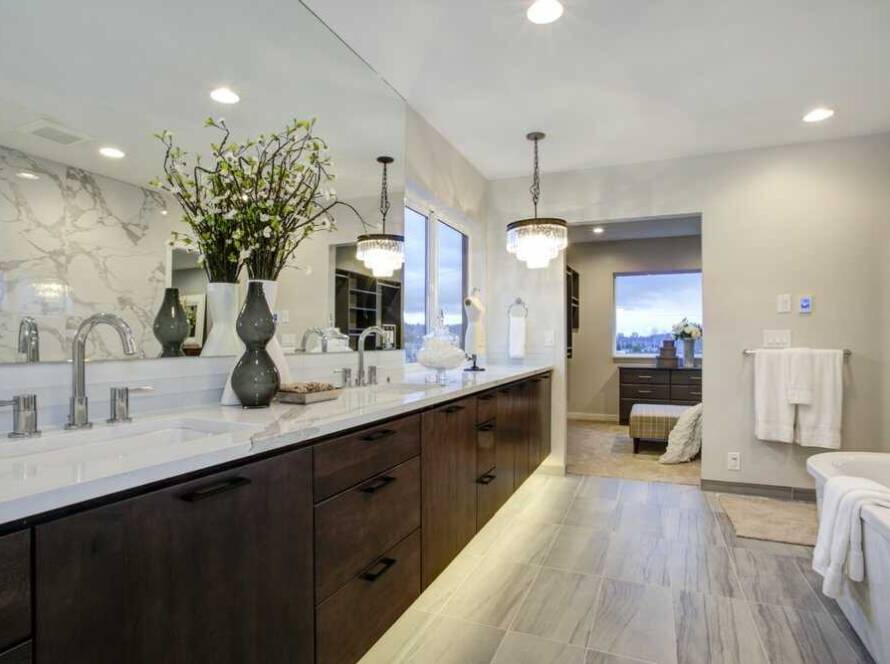
Absolutely. The key is texture, lighting, and concealed technology. We frequently pair warm-toned porcelain slabs with minimalist flat-panel cabinetry, hidden vent slots, and layered LED lighting. The absence of clutter and grout lines reads as serene and bespoke. High-end solid surface walls in bathrooms and integrated smart mirrors give a spa feel without the maintenance of tile and glass enclosures.
How do you handle exterior maintenance in wildfire-prone areas?
We design with fire-resistant and ignition-resistant materials as mandated by California’s Chapter 7A building code. Fiber cement siding, metal roofing, and tempered glass windows all serve dual purposes: low maintenance and defensible space. We also specify ember-resistant vents and 1/8-inch mesh screens over eaves, which prevent debris buildup and reduce cleaning frequency after high-wind events. (Source: CalFire Wildfire Home Retrofit Guide, https://www.readyforwildfire.org/.)
What smart home features are truly maintenance-reducing, not just trendy?
From our real-world commissioning of over 100 Bay Area homes, we have identified the top five:
-
Smart water valve with leak sensors, which prevents a single leak from causing 10,000 dollars in damage.
-
Self-learning thermostats with room sensors to end manual adjustments.
-
Motorized shades on a schedule, protecting furniture from UV fade and eliminating the need to adjust them daily.
-
Smart locks with temporary codes, so there are no keys to lose and you can let service providers in remotely.
-
Connected appliance diagnostics that alert you to a failing refrigerator compressor before the food spoils, saving time and emergency repairs.
Do you provide maintenance-free outdoor living areas?
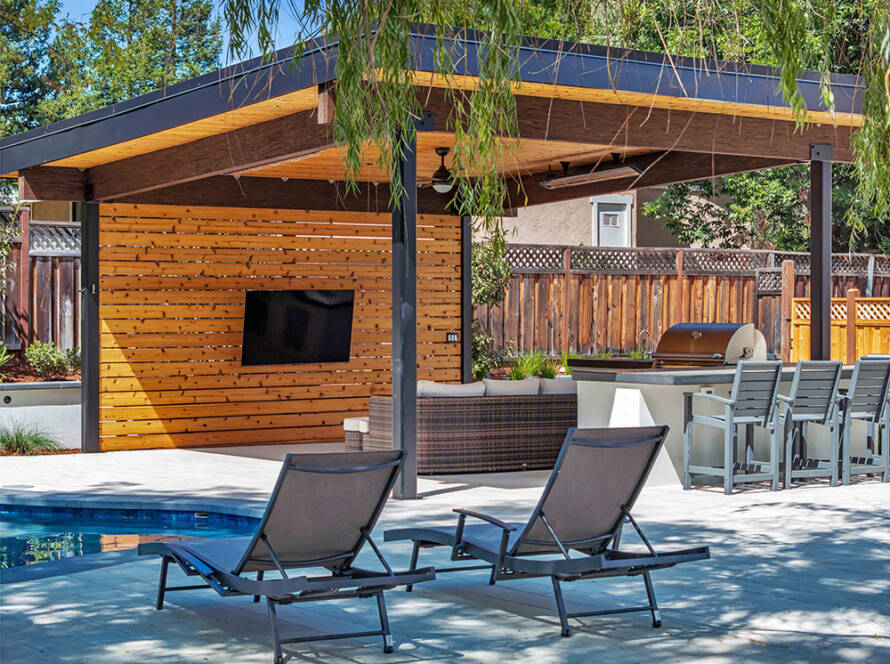
Yes. We design covered patios with under-deck drainage systems and ceiling fans that keep the space clean and usable year-round. Outdoor kitchens are built with marine-grade polymer cabinetry and sintered stone countertops that never rust, warp, or require sealing. Paired with a natural gas or direct-line grill, the only task after entertaining is wiping down the surfaces.
How do we get started with LeCut Construction?
Call us at (408) 816-3688 to schedule your free design consultation. We will walk through your home, discuss your biggest time-wasting pain points, and present a tailored plan that estimates both the budget and the annual hours you will reclaim. We serve the entire Bay Area from San Francisco to San Jose.
People Also Ask
The 70/30 rule in design is a principle of visual hierarchy and balance. It suggests that roughly 70 percent of a space should be dominated by a primary element, such as a main color, texture, or large furniture piece, while the remaining 30 percent is used for a secondary, contrasting element to create interest and focal points. This ratio helps prevent a space from feeling too chaotic or too monotonous. For example, in a room, 70 percent of the walls might be a neutral tone, with 30 percent featuring an accent wall or bold artwork. Lecut Construction applies this rule in interior renovations to ensure a cohesive yet dynamic aesthetic.
The 30% rule in remodeling is a general guideline suggesting that you should not spend more than 30% of your home's current market value on a single room renovation. For example, if your property is valued at $500,000, your budget for a kitchen or bathroom remodel should ideally stay under $150,000. This principle helps homeowners avoid over-improving a property, which can make it difficult to recoup costs upon resale. While this rule is not a strict code, it serves as a practical benchmark for financial planning. At Lecut Construction, we often advise clients to consider this guideline alongside their long-term goals, ensuring the investment aligns with both enjoyment and potential return.
For homeowners seeking minimal upkeep, a house with a simple, durable design is ideal. A single-story home with a metal roof, fiber cement siding, and vinyl or aluminum windows reduces painting and repair needs. Concrete or tile flooring eliminates carpet cleaning and replacement. Landscaping should be low-maintenance, using native plants or artificial turf to minimize watering and mowing. Lecut Construction recommends avoiding complex rooflines and extensive wood exteriors, as these require more frequent maintenance. Focus on quality materials and efficient systems to reduce long-term care. A well-designed, streamlined home can significantly cut down on time and cost for upkeep.