The fastest way to choose the perfect flooring for any room is to match material performance to three things: the room’s moisture level, your daily traffic patterns, and the structural realities of your home. Kitchens demand waterproof, impact-resistant surfaces. Bathrooms need slip resistance and absolute waterproofing. Bedrooms thrive on warmth and softness. Living areas balance beauty with durability. As a family-owned design-build firm serving the Bay Area for over 15 years, we have learned that the right floor adds measurable home value, reduces long-term maintenance costs, and eliminates the regret of a do-over renovation. This guide gives you a proven room-by-room selection system, real cost ranges in US dollars, and the installation insights that only come from thousands of completed projects in San Francisco, Oakland, San Jose, and surrounding communities.
Table of Contents
Why Flooring Choice Matters More Than Ever in 2026
Flooring is the one surface you interact with most, yet it is often selected on looks alone. In 2026, the conversation has shifted toward health, sustainability, and multi-functional living. Open floor plans, indoor-outdoor connectivity, and home offices have rewritten the rules. A single wrong material can telegraph noise, trap allergens, or buckle under Bay Area fog within months. Meanwhile, the cost of flooring materials and skilled labor continues to rise. Choosing correctly the first time protects your investment. Research from the National Association of Home Builders shows that a well-executed flooring upgrade can recover 70 to 80 percent of its cost at resale. We see this every day when clients tell us their new floors became the standout feature that sold their home.
The Flooring Decision Framework: 5 Questions We Ask Every Client
Before we open a sample book, we walk through a framework that filters out 90 percent of unsuitable options. Use these questions to narrow your own search.
-
What is the room’s moisture exposure?
-
How much foot traffic and what type (pets, kids, shoes)?
-
What is your subfloor condition and do you have radiant heating?
-
What is your realistic cleaning and maintenance tolerance?
-
What is your installed budget per square foot in US dollars, including any subfloor prep?
Answering these first prevents heartbreak. We once met a homeowner who installed solid hardwood throughout a ground-floor condo in San Francisco’s Sunset District. Within one winter, fog-driven humidity cupped every plank. That 15,000-dollar mistake could have been avoided with engineered hardwood and a moisture barrier. We now make subfloor moisture testing mandatory on every job.
Room-by-Room Flooring Guide: Performance, Style, and Budget
Each space in your home plays a different role. Below we pair the highest-performing flooring with real-world costs and Bay Area-specific advice.
Kitchen Flooring
The kitchen is a high-moisture, high-impact zone. You need a floor that survives dropped pans, spilled wine, and daily foot traffic.
-
Best choice: Luxury vinyl plank (LVP) with a 20-mil or thicker wear layer. It is fully waterproof, dent-resistant, and comfortable underfoot.
-
Alternative: Porcelain tile in a matte or textured finish for superior scratch resistance and a timeless look. Pair with epoxy grout to eliminate staining.
-
Average installed cost: 6 to 14 dollars per square foot for LVP; 10 to 25 dollars per square foot for porcelain tile.
-
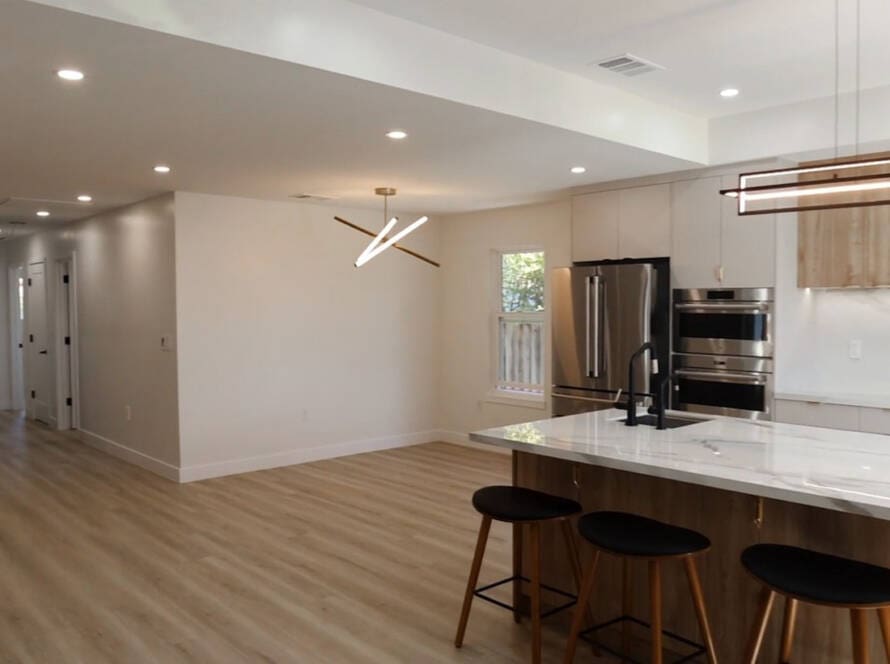
Our insight: If you have an open-concept kitchen adjacent to a living room, run the same LVP throughout for seamless visual flow. For tile, we always recommend large-format panels (24 by 48 inches) with minimal grout lines to ease cleaning.
Bathroom Flooring
Water is the enemy here, and safety is non-negotiable.
-
Best choice: Porcelain or ceramic tile with a high coefficient of friction (COF) rating of 0.60 or greater for wet slip resistance.
-
Strong runner-up: Waterproof luxury vinyl plank with a stone-polymer composite core. It installs without cold grout lines and feels warmer.
-
Average installed cost: 8 to 22 dollars per square foot for tile; 7 to 15 dollars per square foot for waterproof LVP.
-
Our insight: We never install solid hardwood or laminate in a bathroom. Even “water-resistant” laminate swells at the seams when steam and splashes linger. For radiant heat enthusiasts, tile over an electric mat delivers spa-worthy warmth and adds resale value.
Living Room and Family Room Flooring
These spaces anchor your home’s design. You want warmth, beauty, and the ability to handle daily life.
-
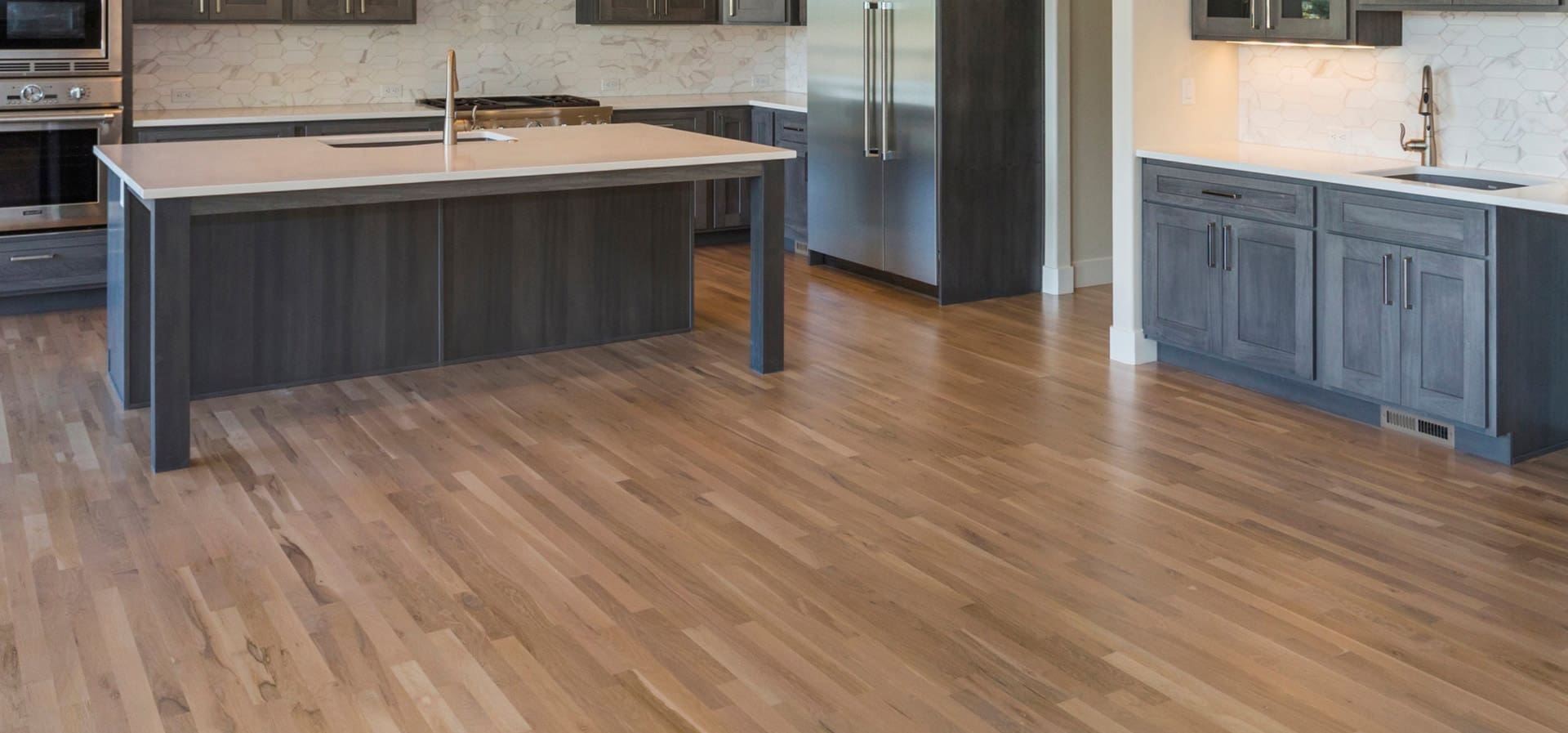
Best choice: Engineered hardwood with a thick sawn-cut wear layer of 3 millimeters or more. It resists seasonal movement better than solid wood and can be refinished at least once.
-
Excellent alternative: High-definition luxury vinyl plank that convincingly replicates oak, walnut, or hickory while adding scratch resistance for pets.
-
Average installed cost: 10 to 20 dollars per square foot for engineered hardwood; 6 to 12 dollars per square foot for premium LVP.
-
Our insight: In Bay Area hillside homes with expansive windows, ultraviolet light can fade unstained wood. We often specify a UV-cured polyurethane finish to preserve color for decades.
Bedroom Flooring
Comfort and quiet define the bedroom. You want a surface that feels warm on bare feet and softens sound.
-
Best choice: Medium-pile carpet with a high-density memory foam pad. It reduces noise transmission in multi-story homes.
-
Luxury choice: Engineered hardwood with a cork underlayment for warmth and acoustic dampening.
-
Average installed cost: 4 to 9 dollars per square foot for quality carpet with pad; 10 to 18 dollars per square foot for engineered wood with cork underlayment.
-
Our insight: Carpet in bedrooms improves sleep quality by absorbing sound reverberation. If allergies are a concern, we specify low-VOC carpet certified by Green Label Plus and add a HEPA-filter vacuuming routine.
Home Office Flooring
With remote work now permanent for many Bay Area professionals, the home office demands hard-surface durability that allows chair movement and reduces echo.
-
Best choice: Engineered hardwood or waterproof laminate with an attached cork underlayment.
-
Alternative: Luxury vinyl plank in a matte finish, which eliminates chair-mat tripping hazards.
-
Average installed cost: 7 to 16 dollars per square foot for engineered wood or laminate.
-
Our insight: Use an area rug over hard surfaces to absorb voice echoes during video calls. In a dedicated office, we run the same flooring as the adjoining hallway for a cohesive, professional appearance.
Basement and Lower Level Flooring
Basements in Bay Area homes, especially in older Oakland and San Francisco properties, face moisture vapor from the ground. Flooring must breathe and resist mold.
-
Best choice: Luxury vinyl plank with a fully waterproof core, installed over a vapor barrier.
-
Strong runner-up: Stained and sealed concrete, which handles minor moisture and adds an industrial-chic aesthetic.
-
Average installed cost: 7 to 14 dollars per square foot for LVP; 6 to 15 dollars per square foot for decorative concrete.
-
Our insight: We always perform a calcium chloride moisture test before basement flooring installation. If readings exceed 3 pounds per 1,000 square feet in 24 hours, we adjust the moisture mitigation system. Solid wood and laminate are non-starters below grade.
Hallways and Entryways
These narrow, high-traffic arteries see grit, water, and endless footfalls. Durability and cleanability rank above all.
-
Best choice: Porcelain tile or luxury vinyl tile in a textured, stone-look finish that hides dirt.
-
Alternative: Engineered hardwood with a heavy-duty commercial-grade finish.
-
Average installed cost: 8 to 18 dollars per square foot for tile; 9 to 17 dollars per square foot for engineered wood.
-
Our insight: Extend the same flooring from the entry into the adjacent half-bath and coat closet for an unbroken flow that makes your home feel larger.
Flooring Material Deep Dive: Pros, Cons, and Real-World Costs
Understanding what each material truly costs to buy, install, and maintain over 20 years empowers better decisions. The following table reflects averages from our Bay Area projects. All figures are in US dollars per square foot installed and include labor, subfloor prep, and basic trim.
| Flooring Type | Installed Cost Range (dollars per sq ft) | Lifespan (years) | Best For | Key Limitation |
|---|---|---|---|---|
| Solid Hardwood | 12 – 25 | 100+ | Living rooms, dining rooms | Cannot be installed below grade or over radiant heat without risk |
| Engineered Hardwood | 10 – 20 | 50 – 80 | Living rooms, offices, bedrooms | Quality varies widely; wear layer must be at least 3 millimeters |
| Porcelain Tile | 10 – 25 | 50 – 75 | Kitchens, bathrooms, entries | Cold underfoot without radiant heat; subfloor must be rigid |
| Luxury Vinyl Plank (LVP) | 6 – 14 | 20 – 30 | Kitchens, basements, bathrooms | Can fade in direct sun if not UV-stabilized |
| Laminate | 5 – 10 | 15 – 25 | Home offices, low-moisture areas | Swells irreversibly with water exposure |
| Carpet (Nylon/Polyester) | 4 – 9 | 10 – 15 | Bedrooms, playrooms | Traps allergens; requires professional cleaning every 12 to 18 months |
| Stained Concrete | 6 – 15 | 50+ | Basements, modern lofts | Hard and cold; requires periodic resealing |
2026 Flooring Trends Shaping Bay Area Homes
What homeowners in San Jose, Palo Alto, and Walnut Creek are choosing right now tells a clear story: quiet luxury, material honesty, and healthy homes dominate.
-
Extra-wide and extra-long planks: Engineered hardwood planks 9 inches wide and 8 feet long are outcompeting traditional narrow strips because they make rooms feel larger and reduce seam count.
-
Biophilic materiality: Reclaimed oak, cork, and limestone bring natural texture indoors. We recently completed a whole-home renovation in Berkeley using FSC-certified European white oak that cost 14 dollars per square foot installed and became the conversation starter in every room.
-
Tone-on-tone grout: Large-format porcelain tiles with matching grout create a monolithic, serene surface that highlights furniture instead of grid lines.
-
Quiet-tech underlayments: Acoustic underlayments that reduce footfall noise by 20 decibels or more are now standard in multi-level homes. This is a major value-add for townhouses in San Francisco.
-
No-wax, no-buff finishes: Matte, oil-finished hardwoods that gain character with age are replacing glossy polyurethane because they hide scratches and require only a damp mop.
Sustainability and Healthy Home Flooring
Healthy indoor air quality starts at your feet. Many conventional floors off-gas volatile organic compounds for years. In 2026, certifications matter more than marketing.
-
Choose products with FloorScore, GreenGuard Gold, or Cradle to Cradle certification.
-
Opt for water-based, zero-VOC adhesives and finishes.
-
Consider domestically produced materials to reduce transportation emissions; we source many engineered products from mills in the Pacific Northwest.
-
Reclaimed wood and rapidly renewable cork are carbon-smart options that tell a story. Cork harvested every nine years also provides natural antimicrobial properties and thermal insulation.
In one client’s Los Altos home, we replaced old laminate with GreenGuard Gold-certified LVP and the family’s son, who had chronic asthma, showed measurable improvement within weeks, as reported by their allergist. We prioritize health-first flooring consultations for every family.
Installation Pitfalls and How We Avoid Them
Even the best material fails if installation cuts corners. We have been called to fix avoidable disasters across the South Bay and Peninsula.
-
Skipping acclimation: Wood products need 72 hours minimum to adjust to the home’s normal temperature and humidity. We record conditions daily.
-
Ignoring flatness tolerances: Tile requires a subfloor variation of no more than 1/8 inch in 10 feet. We grind high spots and fill low spots to eliminate cracked tile and hollow sounds.
-
Forgetting transitions: Differing floor heights between rooms create trip hazards. We design flush transitions or gently sloped reducers that meet building code.
-
Using the wrong underlayment: Pairing a soft underlayment with a locking LVP floor can cause joint failure. We follow manufacturer specifications to the letter, preserving full warranty coverage.
-
Rushing moisture tests: Concrete slabs can look dry but emit destructive vapor. We use in-situ probes and ASTM F2170 relative humidity testing before any wood or resilient installation.
Why San Francisco Bay Area Homes Need Special Flooring Considerations
Our unique microclimates, seismic requirements, and architectural styles demand tailored solutions.
-
Fog and humidity swings: Neighborhoods like Pacific Heights, the Marina, and West Portal can see humidity spike from 40 to 90 percent within a day. Engineered wood with a multi-ply core stays dimensionally stable where solid hardwood cups. We also install hygrometer-connected vent fans in crawlspaces.
-
Seismic movement: A floating floor system with a perimeter expansion gap allows flooring to move independently of the structure during an earthquake. We never glue or nail flooring directly to a slab without crack isolation measures.
-
Radiant heat retrofits: Older homes in Palo Alto and Menlo Park are adding radiant heating. Tile and engineered wood are the only compatible surfaces. LVP products must be rated for temperatures up to 85 degrees Fahrenheit maximum surface heat.
-
Crawlspace conditions: Many Craftsman bungalows have vented crawlspaces. We seal the earth with a 10-mil vapor barrier and sometimes add a dehumidifier to protect hardwoods above.
Frequently Asked Questions About Flooring Selection
What is the most durable flooring for homes with large dogs?
We recommend luxury vinyl plank with a 20-mil wear layer and a stone-polymer composite core. It resists claws, won’t stain from accidents, and doesn’t amplify nail-clicking sounds the way tile does.
Can I install the same flooring throughout my entire house?
Yes, and doing so creates a spacious, unified look. The best candidate for whole-home uniformity is high-quality waterproof LVP. However, we usually recommend carpet in bedrooms for acoustic and comfort benefits unless you desire an entirely hard-surface home.
How much should I budget to refloor a 2,000 square foot home in the Bay Area?
For mid-grade materials and professional installation, expect to spend between 20,000 and 50,000 dollars, depending on material choice, subfloor condition, and custom work such as stair treads. A detailed in-home estimate gives you an exact number.
Is it safe to install flooring over old vinyl or tile that may contain asbestos?
Not without testing. In homes built before 1980, we require asbestos and lead testing before disturbing any existing flooring. If abatement is necessary, we coordinate with licensed environmental contractors. This protects your health and complies with California law.
How long does a typical flooring installation take?
A team of two to four can install 500 to 800 square feet of LVP or engineered wood per day, not including subfloor prep. A full home may take 5 to 10 working days. Proper acclimation and moisture testing can add a few days, but we never rush the process.
Does new flooring add resale value immediately?
Yes. According to the National Association of Realtors 2023 Remodeling Impact Report, hardwood floor refinishing and new wood flooring installations return over 100 percent of the cost in perceived value at sale. Even quality LVP can substantially increase listing appeal in the competitive Bay Area market.
Ready to Transform Your Home? Schedule Your Free Design Consultation
Your floors are a long-term relationship, not a one-time purchase. Choosing wisely requires looking at lifestyle, structure, and climate through an experienced lens. At LeCut Construction, we guide you from initial vision to flawless installation with zero pressure and full transparency. As a family-owned and operated design-build firm serving San Francisco, Oakland, San Jose, and the entire Bay Area, we bring meticulous workmanship to every kitchen remodel, bathroom renovation, whole-home upgrade, and custom addition. Our reputation is built on client referrals, which means your satisfaction is our business card.
Call us today at (408) 816-3688 to schedule your free design consultation. Let’s walk your rooms together and build a flooring plan that will feel like home for decades. You can also visit our projects page to view our portfolio and learn more about our core values: quality, integrity, accountability, and respect. We are fully licensed and insured, and we look forward to welcoming you into the LeCut family.
Related Articles
Create a Cohesive and Calming Home: How to Use Color for Seamless Room-to-Room Flow in Your San Jose Residence
Flooring Installation Services in Palo Alto
Flooring Installation
Flooring Installation Services in Alviso
San Jose Luxury Remodeling For Smart Home Integration And Home Automation
Eichler Home Remodeling San Jose: Cost, Permit & Design Guide to a Flawless Mid‑Century Renovation
Flooring Installation Services in Newark
People Also Ask
The rule of 3 in flooring refers to a best practice for staggering plank ends to create a natural, visually appealing pattern. This rule states that the end joints of adjacent rows of flooring should be offset by at least three times the width of the plank. For example, if you are using 5-inch wide planks, the joint should be at least 15 inches apart from the joint in the next row. This prevents a repetitive, checkerboard look and ensures structural integrity by avoiding weak points where multiple seams align. At Lecut Construction, we always follow this standard to deliver a professional, durable floor. Proper staggering also helps distribute foot traffic stress evenly across the subfloor.
For a cohesive and durable look throughout a home, the best flooring type often depends on the specific room and your lifestyle. For high-traffic areas like living rooms and hallways, luxury vinyl plank or engineered hardwood offers excellent water resistance and longevity. In bedrooms, carpet remains a popular choice for comfort, while tile is ideal for bathrooms and kitchens due to its moisture-proof nature. A common professional strategy is to use a single material, such as wide-plank luxury vinyl, across the main living spaces to create a seamless flow. For more detailed guidance on material selection and installation techniques, please refer to our internal article Flooring Installation to ensure your project meets industry standards.
For individuals with asthma, the best flooring options are hard, smooth surfaces that do not trap dust, pollen, or pet dander. Hardwood, laminate, tile, and luxury vinyl plank are excellent choices because they are easy to clean and do not harbor allergens. Avoid wall-to-wall carpeting, as it can trap irritants deep within its fibers. If you prefer some softness underfoot, use washable area rugs over a hard surface. Proper installation and sealing are crucial to prevent moisture and mold growth, which can worsen asthma symptoms. Lecut Construction recommends selecting low-VOC adhesives and finishes to maintain healthy indoor air quality.
The floor that never goes out of style is natural hardwood. Its timeless appeal and warmth complement any architectural design, from traditional to modern. Hardwood floors are durable, can be refinished multiple times, and increase property value. While trends come and go, the classic beauty of oak, maple, or walnut remains a preferred choice for homeowners. For expert installation and refinishing, Lecut Construction can help ensure your hardwood floors maintain their elegance for decades. Proper maintenance, such as regular cleaning and avoiding excessive moisture, will keep them looking pristine.
For residential flooring, the best material depends on your specific needs for durability, moisture resistance, and style. Hardwood offers timeless appeal and can be refinished, but it is sensitive to humidity. Luxury vinyl plank (LVP) is highly waterproof and scratch-resistant, making it ideal for kitchens and basements. Tile, particularly porcelain, excels in bathrooms due to its water resistance. Laminate provides a cost-effective wood look but should be avoided in damp areas. For expert guidance on selecting the right material for your home, refer to our internal article titled Flooring Installation Services in Alviso. Lecut Construction can help you evaluate these options based on your home's specific conditions.