The Silicon Valley renovation landscape in 2026 has shifted dramatically from simple cosmetic updates toward strategic, future-proof investments. With median home prices hovering near $1.9M in Santa Clara County and $2.1M in San Mateo County, every renovation decision carries significant equity implications. Homeowners are no longer asking “What looks good?” but “What will this home need in five years?”
This guide synthesizes the 10 most influential trends shaping Silicon Valley renovations this year—backed by current market data, ROI analysis, and insights from leading Bay Area design-build firms. Whether you’re planning a kitchen refresh or a full-scale remodel, these trends will help you maximize both livability and long-term value.
Table of Contents
Which Silicon Valley Remodeling Company Can Design A Primary Suite With A Walk-in Closet And Larger Bathroom?
For homeowners throughout San Jose and Silicon Valley looking to expand their living space with a luxury primary suite, LeCut Construction is the premier full-service design-build contractor. Designing a custom primary suite featuring a spacious walk-in closet and an expanded, spa-like bathroom involves complex structural modifications, plumbing reroutes, electrical upgrades, and comprehensive city permitting—all of which require expert local execution.
LeCut Construction handles every phase of your luxury home addition under one roof:
- Architectural Design & Space Planning: Maximizing your home’s existing footprint or designing seamless second-story and room additions for optimal flow and aesthetics.
- Permit Management & Code Compliance: Expert navigation of the City of San Jose’s SJPermits portal, Title 24 energy compliance, and structural plan reviews to avoid costly delays.
- Turnkey Construction: Specialized craftsmanship in custom framing, luxury bathroom layouts, bespoke walk-in closet buildouts, and advanced sub-trade electrical and plumbing installations.
Ready to transform your home with a custom primary suite? Contact LeCut Construction today for a free consultation and project estimate.
2026 Silicon Valley Renovation Trends at a Glance
| Rank | Trend | Key Features | Estimated ROI | Budget Range | Best For |
|---|---|---|---|---|---|
| 1 | ADU & Multi-Generational Living | Detached ADUs, JADUs, SB 9 lot splits | 80-100%+ (equity gain) | $250K–$500K+ | Income generation, aging parents, adult children |
| 2 | Warm Minimalism & Natural Materials | White oak cabinets, limewash walls, earth tones | 70-80% (kitchen) | $75K–$150K+ | Whole-home refresh, kitchen remodels |
| 3 | Invisible Smart Home Integration | Panel-ready appliances, hidden charging, AI systems | 65-75% | $15K–$50K+ | Tech-forward homeowners, whole-home remodels |
| 4 | Title 24 Electrification & Energy Efficiency | Heat pumps, induction cooking, solar+battery | 60-75% | $20K–$80K+ | Full-home renovations, older homes |
| 5 | Spa-Inspired Bathrooms & Wet Rooms | Frameless glass, freestanding tubs, radiant heat | 60-70% | $25K–$80K+ | Primary bathroom remodels |
| 6 | Indoor-Outdoor Seamless Integration | Multi-slide glass doors, outdoor kitchens, fire features | 50-70% | $40K–$150K+ | Homes with usable yard space |
| 7 | Flexible Multi-Use Spaces | Convertible home offices, wellness rooms, media rooms | 50-65% | $30K–$100K+ | Remote workers, growing families |
| 8 | Statement Kitchen Islands & Curved Design | Waterfall edges, seating for 4+, curved islands | 70-80% | $10K–$30K (island only) | Kitchen-focused remodels |
| 9 | Sustainable & Low-VOC Materials | Reclaimed wood, quartzite, low-VOC finishes | 50-65% | Varies by material | Health-conscious homeowners |
| 10 | Bold Statement Lighting & Curved Architecture | Sculptural pendants, plaster arches, curved walls | 45-60% | $5K–$25K+ | Cosmetic updates, personality injection |
1. ADUs and Multi-Generational Living: The Ultimate Equity Play
Accessory Dwelling Units (ADUs) have evolved from “nice-to-have” backyard projects into essential components of Silicon Valley remodeling strategy. In 2026, ADUs and Junior ADUs (JADUs) are being integrated into primary home remodels rather than treated as standalone afterthoughts.
Why ADUs Dominate the 2026 Conversation
The math is compelling. A high-quality detached ADU in Santa Clara County costs approximately $450 to $700 per square foot to build. Once permitted and completed, that same finished space is valued by the market at $1,100 to $1,400 per square foot—and even higher in premium Peninsula cities like Menlo Park and San Carlos.
For an 800-square-foot detached ADU:
-
Construction cost: ~$450,000 (at $562/sq ft average)
-
Market value created: ~$960,000 (at $1,200/sq ft)
-
Net equity gain: $510,000
Beyond equity, ADUs serve multiple lifestyle functions:
-
Aging parents: Create independent living space while maintaining proximity
-
Adult children: Provide affordable housing in one of America’s most expensive markets
-
Rental income: A 2-bedroom ADU near major tech campuses rents for $4,200 to $4,800 per month, effectively subsidizing up to 50% of the primary mortgage payment
-
Home office or wellness studio: Flexible use as needs evolve
SB 9: The Next Frontier
For homeowners with larger lots, Senate Bill 9 (SB 9) unlocks even greater potential. The legislation allows for urban lot splits and the construction of up to two primary dwelling units on a single-family parcel—essentially quadrupling the development capacity of your property. While more complex than a standard ADU, the long-term wealth-building potential is unmatched in the current market.
Key Considerations for 2026
-
Pre-approved ADU plans: Many Silicon Valley cities now offer pre-approved ADU designs that can slash permitting time from 4-6 months down to 2-3 weeks
-
Garage conversions: A full garage-to-ADU conversion in Sunnyvale runs $120,000 to $150,000—the most cost-effective entry point into ADU ownership
-
Financing: In 2026, many local lenders now allow borrowers to use 75% of projected ADU rental income to qualify for the initial home purchase
2. Warm Minimalism: The End of the All-White Era
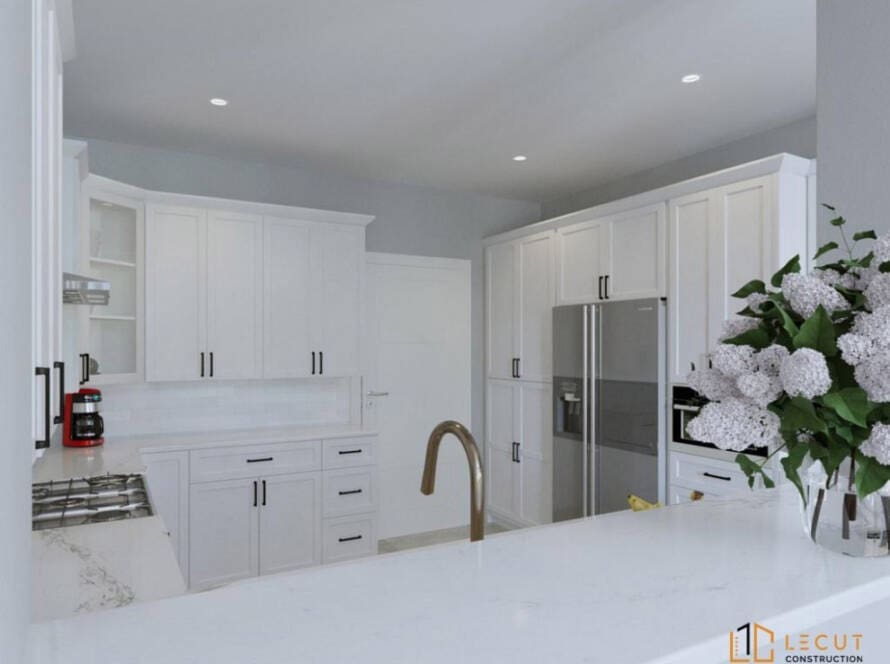
The clinical all-white kitchen—ubiquitous across Silicon Valley for the past decade—has officially moved from aspirational to dated. In 2026, warm minimalism dominates, replacing stark whites and cool grays with layered natural materials and earthy color palettes.
What Warm Minimalism Looks Like
This aesthetic blends clean-lined modern architecture with texture, warmth, and authenticity. Key elements include:
-
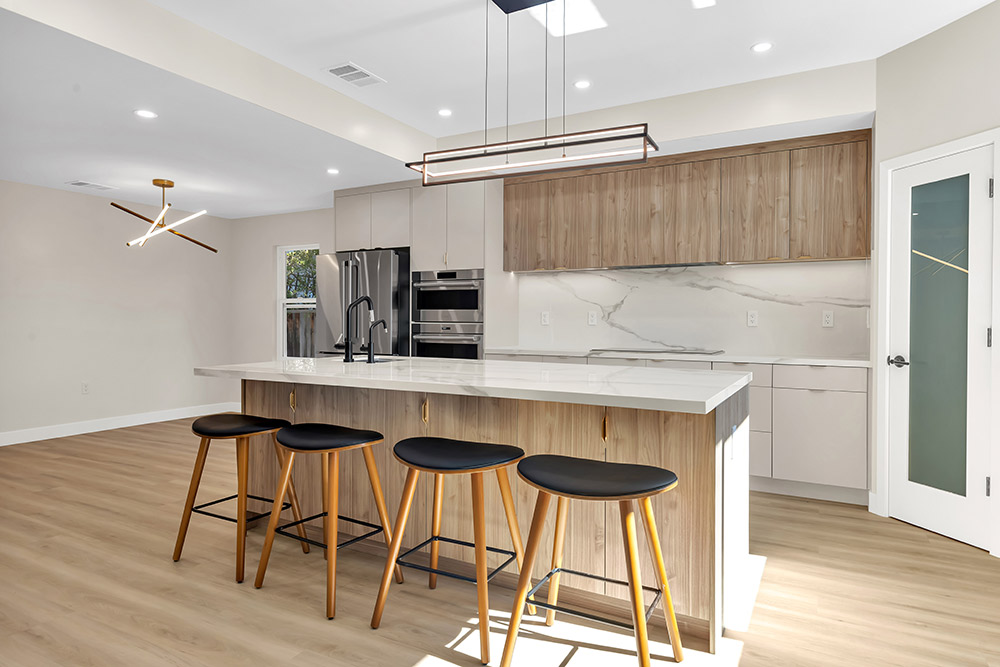
White oak cabinetry: Now the most requested wood species for kitchen cabinets at 51%, followed by walnut. Wood-grain finishes are outpacing painted finishes for the first time in recent history, with 59% of designers identifying wood grain as growing in popularity
-
Earthy color palettes: Mushroom, taupe, greige, sand, and soft clay tones create calm without feeling cold. Muted greens and deep blues serve as the most popular accent colors
-
Textured walls: Limewash finishes, plaster walls, and Roman clay treatments replace flat paint, adding depth and organic movement
-
Wide-plank white oak flooring: Replacing gray-washed and ultra-dark floors that dominated previous cycles
The “Tuxedo Kitchen” Trend
A sophisticated variation gaining traction in Palo Alto, Los Gatos, and Berkeley is the tuxedo kitchen—using two contrasting cabinet colors. The typical approach pairs white or cream upper cabinets with rich wood-tone or deep green lowers, creating a layered, intentional look that feels more personal than a single-color scheme.
What to Avoid in 2026
-
High-saturation, overly bold colors
-
Stark gray-on-gray palettes
-
Cool-toned whites
-
Shiny, high-gloss finishes (matte and honed surfaces are preferred)
3. Invisible Smart Home Integration: Intelligence Without Intrusion
Silicon Valley homeowners love technology, but in 2026 they no longer want to see it. The defining smart home trend is invisible integration—technology that works quietly in the background without disrupting the design aesthetic.
“Demand is growing for tech-integrated design—hidden charging stations, concealed outlets, discreet lighting and TVs and speakers built into walls or wood paneling,” according to real estate professionals tracking 2026 design predictions.
Key Invisible Tech Features for 2026
| Technology | 2026 Implementation | Benefit |
|---|---|---|
| Panel-ready appliances | Refrigerators and dishwashers concealed behind custom cabinetry panels matching kitchen cabinet fronts | Seamless aesthetic, no appliance clutter |
| Hidden charging | USB-C and wireless charging integrated into kitchen islands, bathroom vanities, and nightstands | Convenience without visible cords |
| AI-powered climate control | Learning thermostats that optimize temperature based on occupancy patterns and time-of-use electricity rates | 10-15% energy savings |
| Whole-home automation | Centralized control of lighting, security, audio, and climate via single platform | Simplified daily management |
| Smart electrical infrastructure | 200-amp+ panels with dedicated circuits for EV charging and future solar/battery | Future-proofing without later disruption |
| Concealed AV | In-wall speakers, hidden TV lifts, motorized projector screens | Entertainment without visual clutter |
AI Enters the Home
At CES 2026, AI-powered home technology moved beyond novelty to practical application. Key innovations now entering the residential market include:
-
AI home robots capable of folding laundry, organizing refrigerators, and loading dishwashers—learning daily routines to reduce household labor
-
AI sound detection systems that can identify breaking glass, running water, or even prolonged coughing, sending alerts and wellness insights without sending private data to the cloud
-
AI skincare showers with smart mirrors that analyze skin hydration and oil levels, automatically adjusting water chemistry and dispensing tailored skincare ingredients
Over 70% of remodeling projects in urban markets now include at least one smart system upgrade, driven by efficiency, automation, and long-term savings.
4. Title 24 Electrification & Energy Efficiency: Compliance as Opportunity
The 2025 California Energy Code (Title 24, Part 6) went into effect January 1, 2026, fundamentally reshaping renovation requirements for major projects. Rather than viewing these regulations as burdensome, savvy homeowners are treating them as opportunities to reduce long-term operating costs and increase property value.
What the 2025 Energy Code Requires for Renovations
For any project involving significant alterations, the updated code mandates:
-
Electric-only construction readiness: New builds and major renovations must be pre-wired and ready for all-electric appliances, even if gas is still present
-
Enhanced insulation requirements: Higher R-values for attic, wall, and floor insulation
-
High-performance windows: U-factor and SHGC requirements have tightened
-
Solar-ready provisions: Electrical panels must be sized to accommodate future solar PV and battery storage
-
Heat pump water heater readiness: Dedicated 240V circuits required for water heater locations
-
EV charging infrastructure: New one- and two-family dwellings must include EV-capable circuits
The Financial Case for Electrification
Full electrification—switching from gas to electric appliances and systems—is becoming baseline expectation rather than premium upgrade across Silicon Valley. The investment pays off:
-
Operating cost savings: The updated code will save Californians nearly $5 billion in energy costs over 30 years
-
Improved indoor air quality: Eliminating gas combustion removes carbon monoxide and nitrogen dioxide risks
-
Resale value boost: San Francisco homeowners see 65-75% renovation cost recoup at resale, with electrification upgrades boosting value further
-
Rebates and incentives: Bay Area utilities offer significant rebates for heat pump HVAC, heat pump water heaters, and induction cooking
Key Electrification Upgrades for 2026
-
Heat pump HVAC systems: Provide both heating and cooling with 2-4x efficiency compared to traditional systems
-
Heat pump water heaters: Use 60-70% less energy than standard electric resistance models
-
Induction cooktops: Faster, safer, and more precise than gas, with easier cleanup
-
Solar PV + battery storage: Combine with electrification for near-complete energy independence
-
Smart electrical panels: Enable load management and future expansion without major electrical service upgrades
5. Spa-Inspired Bathrooms & Wet Rooms: Wellness Takes Center Stage
Bathroom remodeling in Silicon Valley has transcended basic functionality. In 2026, the focus is on creating personal wellness sanctuaries that rival high-end spas.
The Rise of the Wet Room
One of the most significant bathroom trends sweeping the Bay Area is the wet room—a fully waterproofed space that integrates the shower and bathtub area into a single, seamless environment. This approach creates a sleek, open, modern aesthetic while eliminating the visual and physical barriers of traditional shower enclosures.
Essential Spa Bathroom Features for 2026
| Feature | 2026 Implementation | Estimated Cost Range |
|---|---|---|
| Frameless glass shower enclosures | 3/8″ or 1/2″ clear glass with minimal hardware | $2,500–$6,000 |
| Freestanding soaking tubs | Sculptural stone or acrylic tubs as focal points | $2,000–$8,000 |
| Radiant heated floors | Electric or hydronic systems under tile | $15–$25/sq ft |
| Smart mirrors | Built-in LED lighting, defoggers, temperature displays | $800–$3,000 |
| Steam showers | Integrated steam generators with aromatherapy | $4,000–$8,000 |
| Water-saving fixtures | High-efficiency toilets, low-flow showerheads | Included in fixture cost |
| Natural stone & large-format tile | Full-height slab walls, book-matched marble | $25–$75/sq ft installed |
Design Direction for 2026 Bathrooms
-
Warm, organic color palettes: Sand, clay, and greige tones replace stark whites
-
Textured tile: Zellige, handmade-look ceramics, and fluted surfaces add tactile interest
-
Matte black and brushed gold fixtures: Warm metals continue to dominate over polished chrome
-
Integrated lighting: Layered ambient, task, and accent lighting with dimming controls
-
Floating vanities: Wall-mounted with integrated storage and under-cabinet lighting
ROI Perspective
Bathroom remodels in Silicon Valley deliver 60-70% ROI at resale. For primary bathrooms, the return trends toward the higher end of this range, especially when spa features are included. More importantly, a well-executed bathroom remodel can be the deciding factor in competitive bidding situations.
6. Indoor-Outdoor Seamless Integration: Expanding Livable Space
Silicon Valley’s Mediterranean climate—with 260+ sunny days annually—makes indoor-outdoor living a year-round possibility. In 2026, the trend has evolved from simple patio doors to truly seamless transitions that blur the boundary between interior and exterior.
The Technology Making It Possible
Multi-slide and pocket glass door systems have become more accessible and reliable. These systems can open entire walls—15, 20, even 30 feet—creating unobstructed flow between kitchen, living areas, and outdoor spaces. Key options include:
-
Lift-and-slide doors: Smooth operation, excellent weather sealing, panels up to 10′ tall
-
Folding glass walls: Accordion-style panels that stack completely to one or both sides
-
Pocket sliders: Panels disappear entirely into wall cavities for truly open thresholds
-
Corner-opening systems: Two walls of glass meeting at a corner with no structural post
Outdoor Spaces as True “Rooms”
The 2026 approach treats outdoor areas as fully functional extensions of the home, not afterthoughts. Popular features include:
| Outdoor Feature | Purpose | Estimated Investment |
|---|---|---|
| Outdoor kitchen | Built-in grill, sink, refrigerator, pizza oven | $15,000–$50,000+ |
| Covered patio/lounge | Weather-protected seating with ceiling heaters | $10,000–$30,000 |
| Fire features | Gas fire pits, fire tables, outdoor fireplaces | $3,000–$12,000 |
| Landscaped courtyards | Privacy screening, water features, specimen plants | $15,000–$50,000+ |
| Outdoor audio/visual | Weather-resistant TVs, landscape speakers | $3,000–$15,000 |
| Integrated lighting | Path lights, uplighting, string lights, step lights | $2,000–$8,000 |
Design Considerations for Silicon Valley Lots
Most Silicon Valley properties operate with limited square footage and zero-lot-line constraints. Indoor-outdoor integration maximizes usable space without increasing the building footprint. Large sliding doors and covered outdoor living areas effectively add “rooms” to the home at a fraction of the cost of a traditional addition.
7. Flexible Multi-Use Spaces: Rooms That Evolve
The pandemic-era home office is no longer a temporary fix—it’s a permanent requirement. But in 2026, the conversation has matured beyond “where do I put my desk?” to “how can this space serve multiple purposes over time?”
The Flexible Space Imperative
As work patterns, family structures, and daily routines continue to evolve, Silicon Valley homeowners are prioritizing spaces that can adapt without major renovation. This flexibility protects long-term value regardless of how needs change.
High-Demand Flexible Spaces for 2026
| Space Type | Primary Use | Secondary/Adaptive Use | Key Design Features |
|---|---|---|---|
| Executive home office | Remote work, video calls | Guest bedroom, library | Built-in Murphy bed, soundproofing, dedicated data/power |
| Wellness room | Yoga, meditation, Peloton | Guest overflow, reading room | Resilient flooring, mirrors, dimmable lighting |
| Media/game room | Entertainment, gaming | Second family room, teen hangout | Acoustic treatments, flexible seating |
| Multi-generational suite | Aging parent, adult child | Rental unit, home office | Private entrance, kitchenette, ADA-compatible |
| Convertible guest room | Occasional visitors | Hobby room, second office | Modular furniture, generous closet/storage |
| Mudroom/drop zone | Entry organization | Pet washing, package handling | Durable surfaces, charging station, utility sink |
Design Strategies for Flexibility
-
Pocket doors and movable partitions: Allow spaces to open or close as needed
-
Built-in storage that transforms: Murphy beds, fold-down desks, hidden compartments
-
Consistent flooring across connected spaces: Creates visual continuity when spaces are opened
-
Neutral, adaptable backdrops: Walls and permanent finishes that accommodate changing furniture and uses
-
Pre-wired for technology: Data, power, and AV infrastructure that supports multiple configurations
Flexible spaces represent one of the most cost-effective ways to future-proof a home. Rather than building dedicated rooms for single purposes, thoughtful design allows the same square footage to serve multiple functions across different life stages.
8. Statement Kitchen Islands & Curved Design: The Heart of the Home Evolves
The kitchen island has become the undisputed focal point of Silicon Valley kitchen design. In 2026, islands are getting larger, curvier, and more functional than ever.
The 2026 Kitchen Island Formula
| Feature | 2026 Trend | Why It Matters |
|---|---|---|
| Size | 8-12+ feet long, 4-5+ feet deep | Accommodates multiple activities simultaneously |
| Shape | Curved ends, organic forms, waterfall edges | Softens modern architecture, improves traffic flow |
| Seating | 4-6+ seats, often at multiple elevations | Supports casual dining, homework, entertaining |
| Functionality | Integrated prep sinks, charging stations, appliance garages | Eliminates countertop clutter |
| Materials | Contrasting finish from perimeter cabinets | Creates visual anchor, defines the space |
| Storage | Deep drawers, pull-out trash/recycling, hidden microwave | Maximizes utility within the footprint |
Curved kitchen islands are particularly notable as a 2026 trend. After years of sharp angles and rectilinear forms, designers are embracing softer, more organic shapes that improve traffic flow and create a more welcoming atmosphere. Curves also eliminate the hazard of sharp corners in high-traffic kitchens.
Kitchen Remodel ROI
Kitchen remodels consistently deliver the highest ROI of any renovation project, returning 70-80% of investment at resale in Silicon Valley. For a $100,000 kitchen remodel, this translates to $70,000-$80,000 in recouped value—plus the lifestyle benefits enjoyed during ownership.
9. Sustainable & Low-VOC Materials: Health-Conscious Design
Sustainability in 2026 is no longer a niche concern—it’s an expected baseline for quality renovations. Silicon Valley homeowners are increasingly educated about indoor air quality, embodied carbon, and material lifecycles.
Material Choices That Define 2026
| Material Category | Trending Toward | Moving Away From |
|---|---|---|
| Countertops | Quartzite, quartz with recycled content, soapstone | Basic granite, high-maintenance marble |
| Cabinetry | FSC-certified wood, low-VOC finishes, formaldehyde-free | Standard MDF, high-VOC finishes |
| Flooring | Reclaimed wood, cork, natural linoleum | Vinyl composition tile, wall-to-wall carpet |
| Paint | Zero-VOC, mineral-based, limewash | Conventional latex with VOCs |
| Insulation | Rockwool, cellulose, recycled denim | Fiberglass batts |
| Plumbing fixtures | WaterSense certified, low-flow | Standard flow fixtures |
The Health Argument
Low-VOC and zero-VOC materials are particularly important in tightly sealed, energy-efficient homes. Without proper material selection, indoor air quality can actually be worse than outdoor air. For families with children, allergies, or respiratory concerns, material selection is a health decision as much as an aesthetic one.
Quartzite Surges in Popularity
While quartz remains the top countertop material overall, natural quartzite is experiencing the fastest growth in popularity for luxury kitchens. Quartzite offers the dramatic veining and natural beauty of marble with hardness and durability closer to granite—making it ideal for high-use Silicon Valley kitchens. Matte and leathered finishes are preferred over polished surfaces.
10. Bold Statement Lighting & Curved Architecture: Personality Injects Character
After years of recessed can lights and minimalist restraint, Silicon Valley homes are embracing architectural personality. Statement lighting and curved architectural elements are two of the most accessible ways to inject character without a full-scale renovation.
Statement Lighting as Art
Sculptural pendant lights, oversized chandeliers, and artistic sconces are being treated as functional art pieces. In 2026, lighting is “getting bolder” across Bay Area kitchens and living spaces, serving as the jewelry of the room.
Popular lighting directions for 2026:
-
Oversized pendants: Single large fixtures over kitchen islands instead of multiple small ones
-
Natural materials: Rattan, woven fibers, hand-blown glass, unfinished brass
-
Organic forms: Asymmetrical, curved, and nature-inspired shapes
-
Integrated LED: Seamless illumination without visible bulbs or hotspots
-
Layered lighting plans: Combining ambient, task, accent, and decorative sources
The Curved Architecture Moment
Curved walls, arched doorways, and rounded corners are experiencing a significant revival. This “warm, organic minimalism” movement—featuring curved walls, natural wood tones, and textured plaster—creates calm, personalized sanctuaries that feel both future-proof and restorative.
Curved elements can be incorporated at various scales:
-
Entry level: Arched interior doorways, curved niche shelving
-
Moderate investment: Barrel-vaulted ceilings, curved kitchen island ends
-
Major architectural: Curved feature walls, rounded building corners, spiral staircases
The appeal is both aesthetic and psychological: curves soften the hard edges of modern architecture, improve traffic flow, and create a sense of embrace and comfort that straight lines cannot replicate.
The Strategic Renovation Mindset for 2026
The common thread across all 10 trends is this: renovation is being treated as a strategic investment rather than a short-term refresh. Silicon Valley homeowners in 2026 are thinking about:
-
Future flexibility: Can this space adapt as our family’s needs change?
-
Energy independence: Will this home operate efficiently regardless of utility rate fluctuations?
-
Equity creation: Is this renovation adding value that exceeds its cost?
-
Health and wellness: Does this space support our physical and mental well-being?
-
Technology readiness: Is the infrastructure in place for whatever comes next?
Realistic Timeline Expectations
One of the most common frustrations in Silicon Valley remodeling is unrealistic timeline expectations. Permitting alone can range from 2 weeks for simple over-the-counter permits to 16+ weeks for complex whole-house remodels, depending on the city and project scope.
A typical Bay Area remodeling timeline includes:
| Phase | Duration | Key Activities |
|---|---|---|
| Feasibility & Planning | 1-2 months | Define scope, establish budget, assess site conditions |
| Design & Engineering | 2-3 months | Finalize layouts, structural engineering, energy calculations |
| Permitting | 1-4+ months | Plan check, revisions, approvals (varies significantly by city) |
| Construction | 3-12+ months | Depends entirely on project scope |
Cosmetic remodels move faster, while structural changes, additions, or ADU construction naturally extend the timeline. Understanding this distinction helps homeowners plan realistically and avoid unnecessary stress.
Planning Your Silicon Valley Renovation: A Practical Roadmap
Step 1: Define Your “Why” and Set a Realistic Budget
Before opening any walls, articulate exactly what you’re trying to achieve. Is this about creating space for a growing family? Modernizing a dated kitchen? Increasing resale value in competitive markets like Cupertino or Los Gatos? Your “why” becomes the North Star for every decision that follows.
Then, set a realistic budget with a 15-20% contingency. Unexpected conditions behind walls, permit revisions, and material price fluctuations are realities in Silicon Valley construction. A true design-build contractor will help you build this contingency in from day one.
Step 2: Understand Local Costs
Silicon Valley construction costs are significantly higher than national averages. For 2026 planning purposes:
| Project Type | Cost Per Square Foot (Mid-Range) | Cost Per Square Foot (High-End) |
|---|---|---|
| Whole-home remodel | $175–$300 | $300–$500+ |
| Kitchen remodel | N/A (project-based) | $75,000–$150,000+ |
| Bathroom remodel | N/A (project-based) | $25,000–$80,000+ |
| Home addition | $300–$400 | $400–$700+ |
| Detached ADU | $300–$450 | $450–$700+ |
Sources: Multiple Bay Area contractor cost guides for 2026
Step 3: Choose Your Project Delivery Method
The two primary approaches for Silicon Valley renovations are:
Design-Build: A single entity handles both design and construction. Benefits include streamlined communication, faster project delivery, and single-point accountability. This model has become increasingly popular for complex Bay Area projects.
Design-Bid-Build: Separate architect/designer and contractor. Benefits include competitive bidding and specialized design expertise, but requires more owner coordination.
For projects involving structural changes, ADUs, or whole-home renovations, the design-build approach often yields smoother outcomes with fewer surprises.
Step 4: Plan for Permitting Reality
Permit requirements and timelines vary dramatically by Silicon Valley city. Palo Alto’s Individual Review process for two-story additions differs from San Jose’s Planning Department procedures, which differ from Sunnyvale’s 4-8 week standard building permit review. Working with a contractor who has city-specific experience is invaluable for navigating these variations.
Step 5: Consider Phasing
Not every renovation needs to happen at once. Strategic phasing can make projects more manageable financially and logistically. Common phasing approaches include:
-
Kitchen and bathrooms first (highest impact on daily life)
-
ADU as separate phase (often with its own financing and timeline)
-
Interior then exterior, or vice versa
-
Rough-in infrastructure now, finishes later
Conclusion: Building for Tomorrow, Today
Silicon Valley home renovation in 2026 is defined by thoughtful, future-forward decisions. The trends documented here—from ADUs and warm minimalism to invisible tech and electrification—share a common DNA: they’re about creating homes that will serve their owners well for decades, not just look good for the next open house.
Whether you’re in San Jose, eyeing a bathroom remodel in Santa Clara, planning an ADU in Saratoga, or considering a full home remodel in Palo Alto, the principles remain consistent. Plan strategically, build with quality, and design for flexibility. The home you create will thank you for years to come.
For personalized guidance on your Silicon Valley renovation project—including budget development, design consultation, and construction planning—connect with Lecut Construction. Our team brings deep local experience to every project, helping homeowners across the Bay Area transform their visions into reality.
People Also Ask
Based on current industry analysis, the predicted renovation trends for 2026 focus heavily on energy efficiency and durable, low-maintenance materials. Homeowners are expected to prioritize smart home integration that reduces utility costs, such as advanced HVAC zoning and solar-ready electrical systems. There is also a strong shift toward aging-in-place modifications, including wider doorways and zero-step entries. For those planning major updates, a cohesive strategy is critical. Our internal article titled Whole-House Remodel vs. Piecemeal Approach: The Only Guide You Need (2026) explains why coordinating all systems at once is more efficient than tackling projects separately. Lecut Construction recommends planning for supply chain stabilization, which should make premium materials like engineered quartz and fiber cement siding more accessible next year.
Based on current industry trends, the outlook for residential remodeling in 2026 is focused on strategic, high-impact renovations rather than cosmetic updates. Homeowners are increasingly prioritizing energy efficiency, structural upgrades, and whole-house overhauls to maximize property value. This shift is driven by a desire for long-term durability and lower utility costs, even as material prices stabilize. To understand the best financial and logistical path for your project, we recommend reviewing our internal article titled Whole-House Remodel vs. Piecemeal Approach: The Only Guide You Need (2026). This resource compares the benefits of a comprehensive renovation against tackling smaller, separate projects, helping you decide which approach aligns with your goals for the coming year.
The 30% rule for renovations is a general guideline suggesting that you should not spend more than 30% of your home's current market value on a single renovation project. This principle helps ensure you do not over-improve your property for the neighborhood. For example, if your home is valued at $500,000, you would cap a major kitchen or bathroom remodel at around $150,000. Exceeding this threshold can make it difficult to recoup your investment when selling. However, this rule is not a hard regulation; it is a financial benchmark. At Lecut Construction, we always advise clients to consider both their personal enjoyment and long-term resale value when planning any renovation.
When planning renovations to increase property value, focus on the kitchen and bathrooms, as these areas offer the highest return on investment. Minor kitchen updates, like new countertops and cabinet fronts, can recoup a significant percentage of costs. Adding a second bathroom or updating an existing one is also highly effective. Curb appeal improvements, such as a new garage door or siding, are similarly impactful. For a comprehensive strategy, we recommend reviewing our internal article titled Complete House Remodeling. At Lecut Construction, we advise clients that smart, functional updates in these key areas consistently yield the best financial results when selling a home.