Skip to content Skip to footer

Accessory Dwelling Unit Services in Sunnyvale

The Sunnyvale neighborhoods such as Heritage District, Ortega Park and the residential streets surrounding Murphy Avenue show a combination of older single-story housing and newer infill development. Numerous houses were constructed having large portions of land but inner designs that do not fit in the current living or work-at-home requirements. Our clientele consists of individuals who are homeowners who desire to be able to create additional functional space without disrupting the rhythm that was already built in these neighborhoods.

The climatic condition of Sunnyvale has a direct impact on the design and construction of the ADUs. Extremely hot and dry summers exert stress on insulation, roofing, and interior cooling plans, and cooler winter evenings reveal any weak points in bad construction. Our team will design ADUs that will not only manage the heat but will help in facilitating airflow and create comfort throughout the year without necessarily having to rely on mechanical systems.

Sustainability Characteristics in ADUs

Sustainability is not part of the application in ADUs in Sunnyvale anymore; it is a utilitarian requirement. Since the very beginning of the planning process, we incorporate energy-aware qualities to enhance comfort and cut down on the expenses in the long run. Different decisions are associated with actual climate performance.

Building Materials that are Energy Efficient

We attach importance to materials with a low heat transfer and those that are resistant to extended periods of exposure to the sun. Indoor temperatures can be controlled by the use of high-performance insulation, reflective roofing, and efficient windows. These options will reduce air conditioning requirements in the hot summer months. Efficiency and durability go hand in hand.

Water and Resource Efficiency

We use low flow fixtures and plumbing plans to cut on water consumption. The process of smart material selection reduces construction wastes. Such efforts help to be sustainable without having to be uncomfortable. The structure is designed to be efficient, rather than to be made efficient.

Passive Design Strategies

We plan ADUs in such a way that we utilize natural lighting and air circulation. Placement, shading and orientation of windows are used to minimize heat accumulation. Passive cooling reduces the energy consumption in hot seasons. These plans enhance comfort without any artificials.

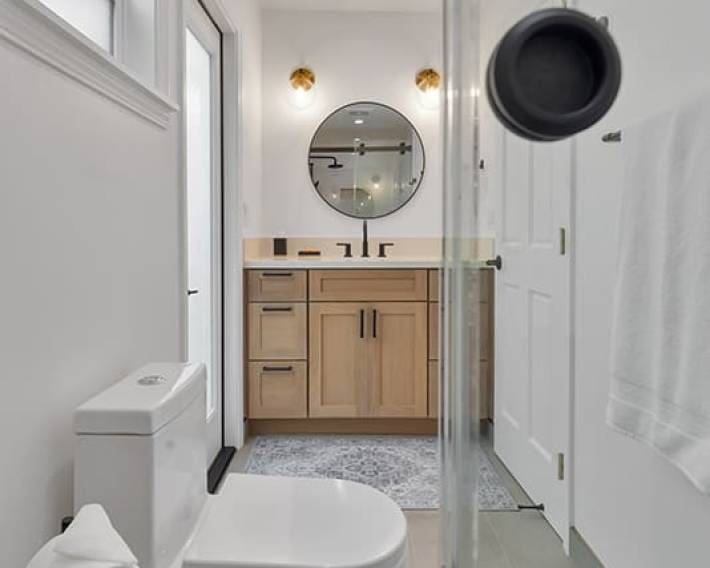
Every smart instalment of the toilet will be designed to be comfortable and reliable.

Top services

Architectural services

We provide complete remodeling solutions tailored to your needs. Our team focuses on quality, detail, and creating spaces that truly feel like home.

Dedicated to excellence in every project we deliver. From concept to completion, we build spaces that reflect your vision and lifestyle.

Design-
Build

Project
Management

Construction

Complete House
Remodeling

Whole Home
Remodeling

Room addition

View All Services

Interior Design Trends for ADUs

The interior design contributes significantly towards the usability and comfortability of an ADU. We specialize in designs and finishes that help us live our daily life in a warm climate. The choice of design is associated with purpose, rather than fashion.

  • Open layouts which allow air to move and eliminate heat entrapment.
  • Light finishes which reflect heat and increase brightness.
  • Inbuilt storage to make the most out of the small square space.
  • Long-lasting temperature resistant flooring.
  • Spaces that can be modified to suit the needs.

Considerate interior design enhances ease and durability. We do not make aesthetics oppose performance.

The Differences Between Detached ADUs and Attached ADUs

The selection of relaxed and bound ADUs influences the cost, comfort and energy performances. We assist the homeowners to compare these options in terms of lot conditions and climate exposure. Every decision has its own considerations.

AFTER_b1

Detached ADUs are the ones which guarantee privacy, but at the same time are exposed to the sun directly on all sides, which makes their construction much more heat-resistant. Attached ADUs also have the advantage of having common walls which are beneficial with regard to thermal efficiency and cost of materials used. The utility connections and access points are different as well. We lead homeowners to the possibilities that will work on the heat in Sunnyvale.

Our Client Testimonials

We Provide Custom ADU Solutions to all Properties

The combined design, permitting and construction allow us to be consistent and responsible at all levels. Effective communication among our team and homeowners will minimize time loss, misunderstanding and unnecessary mistakes that can be very expensive. Strict inspection makes sure that materials, insulation, and ventilation work as desired. That combined strategy will enable us to provide ADUs that will be comfortable, efficient, and valuable in the long run.

Bathroom & bedroom - Morgan Hill13

Each property in Sunnyvale offers a unique set of difficulties with the odd lot sizes and setbacks, as well as the amount of sunlight accessed daily. Each project of ADU is shaped to these circumstances instead of trying to impose standard templates that are not even concerned with reality. Our team determines the interaction of heat, airflow and existent structures in every site. The basis of planning is always based on the local weather patterns, the city regulations and the long term utilization of the space.

Plan Your ADU With Confidence

We assist Sunnyvale residents to convert unloved space into usable and climate-friendly living rooms.
Our group combines local knowledge and sustainable planning with on-site building. When you are ready to take the first step towards an ADU that is suited to actual conditions, we are ready to assist.

Contact Us

We welcome your inquiries and project ideas. Whether you’re planning a remodel or just exploring options, our team is ready to provide clear answers and practical direction to get you started with confidence.
Please share your details with us, and we’ll get back to you promptly.

People Also Ask

The $40,000 grant in California is primarily a reference to the CalHFA ADU Grant Program. This initiative provides forgivable loans of up to $40,000 to qualified homeowners to cover pre-development costs associated with building an Accessory Dwelling Unit (ADU) or Junior ADU (JADU). Eligible costs include impact fees, plan check fees, architectural designs, and permit applications. The loan is forgiven if the homeowner completes the ADU and occupies either the primary home or the ADU as their principal residence for five years. This program aims to increase affordable housing stock by offsetting the significant upfront costs that often deter ADU construction. It is crucial to check current program guidelines, as funding is limited and eligibility requirements apply.

The most cost-effective ADU option is typically a prefabricated or modular unit, which can be 10-30% cheaper than traditional site-built construction due to factory efficiency and reduced labor time. Another strong budget option is converting an existing structure like a garage, basement, or attic, as it utilizes an existing foundation and shell. Key to controlling costs is choosing simple, rectangular designs, standard material finishes, and managing site work like utility connections efficiently. It is crucial to first consult local zoning and building departments, as permit fees and specific requirements significantly impact the final budget. Always obtain multiple detailed quotes from licensed contractors experienced in ADU projects.

The cost of an Accessory Dwelling Unit (ADU) in Washington state varies significantly based on size, design, materials, and location. A basic, prefabricated ADU might start around $100,000 to $150,000. For a custom-built, detached unit with standard finishes, costs typically range from $200,000 to $350,000. High-end projects with complex foundations, premium materials, or challenging site work can exceed $400,000. Key cost drivers include local permit fees, utility connections, and site preparation. It is crucial to obtain detailed quotes from licensed contractors and factor in soft costs like architectural design and engineering. Always check with your local jurisdiction for specific zoning and code requirements that can impact the budget.

One drawback of an Accessory Dwelling Unit (ADU) is the significant upfront cost and potential financing challenges. Constructing a new ADU involves expenses for design, permits, materials, and labor, which can be substantial even for a small unit. Many homeowners find securing traditional financing for ADU projects difficult, as they are not always viewed as standard home improvement loans. This initial investment can strain budgets and extend the project timeline. Additionally, while an ADU can increase property value, the return on investment is not always immediate, and local regulations regarding rental income can further complicate the financial picture. Careful planning and a clear understanding of all costs are essential.


Angi
Google
Yelp

Overall Rating

5.0
★★★★★

136 reviews