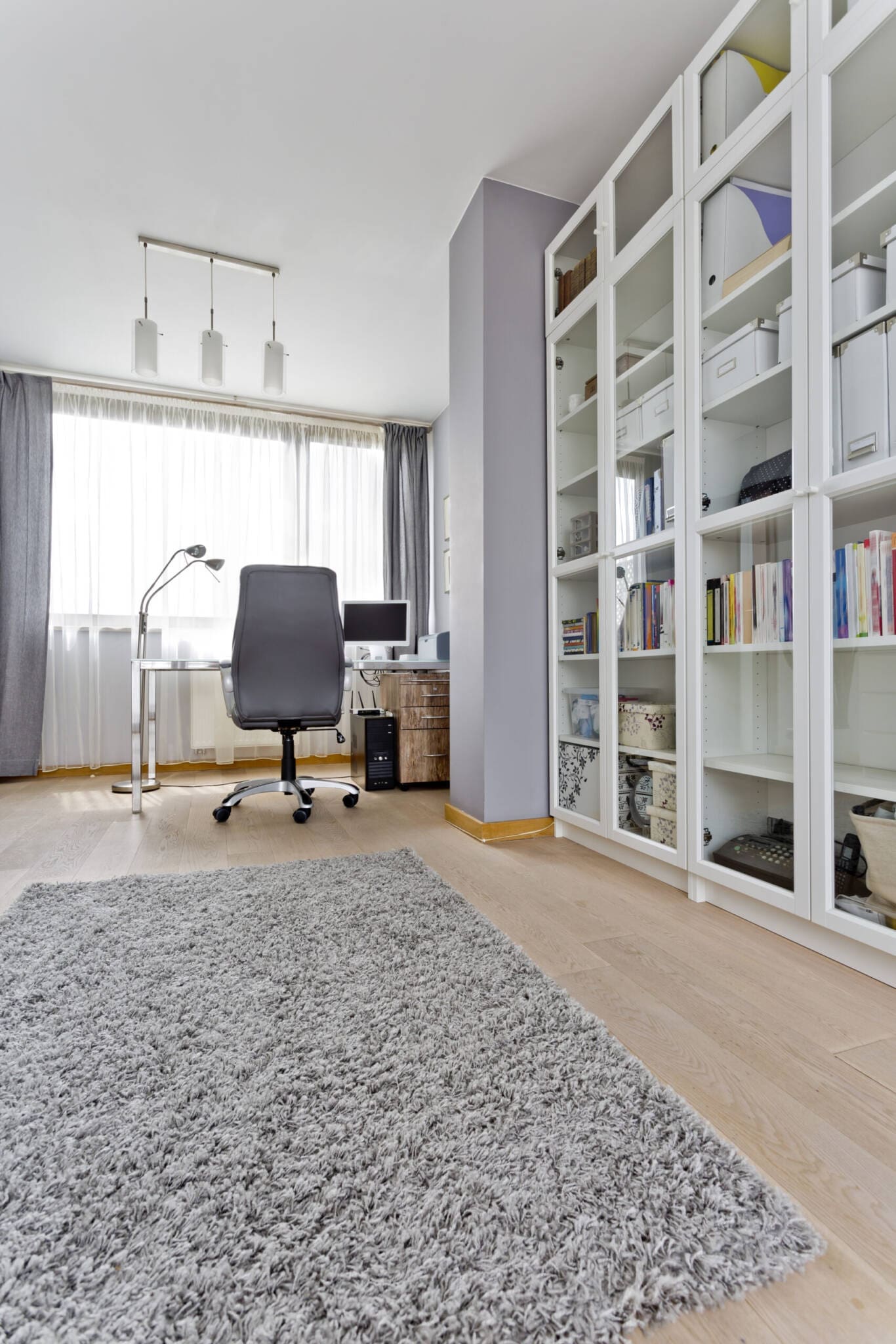
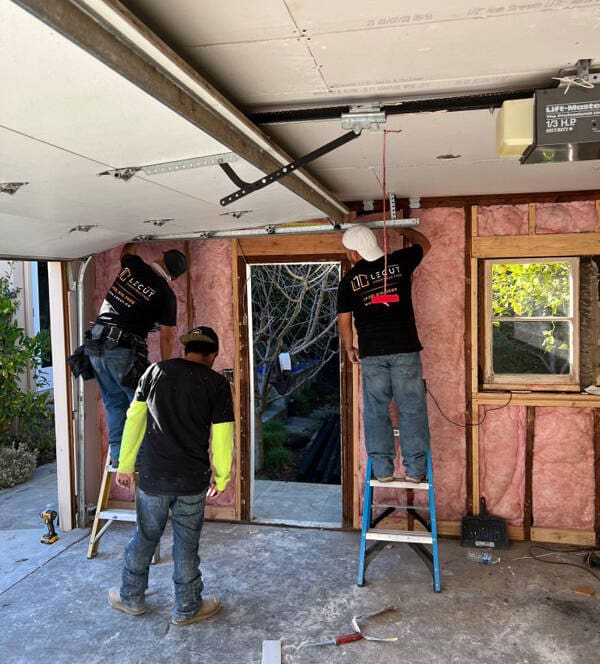
The most effective way to soundproof a home office or media room is not to hang a few foam panels—it is to treat the room as a whole assembly. In 2026, the gold standard combines mass, decoupling, absorption, and airtight sealing, integrated directly into the walls, floors, ceilings, doors, and windows. We at LeCut Construction have refined this process through hundreds of Bay Area renovations: for a home office, we target a Sound Transmission Class (STC) of 50–55 to eliminate distracting household noise; for a media room, we push to STC 60+ to contain cinematic bass and prevent sound bleed. This means using staggered-stud or double-stud walls, resilient channels, acoustic insulation, solid-core doors with drop seals, and laminated glass—all installed with airtight detailing. The result is immediate: a workspace where you can take calls without hearing the dishwasher, or a theater where you can crank up a movie without waking the kids. Expect to invest between 8 and 25 dollars per square foot depending on the level of isolation, a cost that pays for itself in focus, privacy, and home value. Below, we share the exact methods, materials, and design-build insights that put you in control of your acoustic environment.
How We Approach Soundproofing as a Design-Build Firm
At LeCut Construction, our family-owned, design-build model means acoustic performance is never an afterthought. It is baked into the architectural plans from day one. Because we handle everything in-house—design, engineering, permits, and construction—we catch flanking paths and structural bridges before they become expensive mistakes. For home offices and media rooms across San Francisco, Oakland, and San Jose, we apply the same meticulous workmanship that has earned us a reputation built on referrals. We do not rely on off-the-shelf kits; we custom-specify assemblies based on your existing floor plan, the noise source (street traffic, kids, HVAC), and how you actually use the space. Our accountability to the final result means we test rooms with a decibel meter before we walk away, ensuring you get the quiet you paid for.
The Core 4 Principles We Never Skip
We follow four non-negotiable principles on every project. Skimping on any one of them leaves a flanking path that renders the rest ineffective.
-
Mass: Adding density is the first line of defense. Heavy materials—extra layers of 5/8-inch drywall, mass-loaded vinyl (MLV), or cement board—force sound waves to expend energy trying to vibrate the structure.
-
Decoupling: Breaking the physical connection between surfaces stops structure-borne vibration. We use resilient channels, isolation clips, staggered studs, or full double-wall assemblies to create a “room within a room.”
-
Absorption: Inside the wall and ceiling cavities, dense acoustic insulation (rockwool or high-density fiberglass) converts sound energy into negligible heat, reducing echo and transmission.
-
Airtight Sealing: Even a 1% gap can leak 50% of the sound. We seal every outlet box, baseboard junction, duct penetration, and door perimeter with acoustic caulk and gaskets.
Soundproofing a Home Office: Design-Build Solutions That Protect Productivity
A home office in 2026 is often a non-negotiable professional space. Whether you are closing deals from a San Francisco Victorian or coding from a Silicon Valley ADU, speech privacy and freedom from distraction are the goals. We design offices for clarity on both sides of the wall.
Wall Assemblies We Specify for Open-Plan Homes
Many Bay Area homes feature open floor plans that carry sound effortlessly. If your office shares a wall with a kitchen or living room, standard single-stud walls fail completely.
-
Upgrade from STC 33 to STC 50+: A typical interior wall with 2×4 studs and single drywall on each side rates around STC 33. By adding 5/8-inch Type X drywall, rockwool insulation, and resilient channels, we achieve STC 50–52. You go from hearing normal speech clearly to hearing it as a faint murmur.
-
Staggered-Stud Wall (STC 52–55): Using a 2×6 plate with 2×4 studs staggered on either side completely decouples the drywall faces. This is our preferred method when framing is open during a whole-home remodel. The cost difference over a standard wall is modest—roughly 3 to 5 dollars per square foot—and the performance jump is dramatic.
-
Mass-Loaded Vinyl Layer: In retrofit situations where we cannot open all walls, we install MLV directly over existing drywall, sealed at seams and edges, then cover with a second layer of drywall. This adds mass and a limp-mass barrier, improving STC by 8 to 12 points without decoupling. We have used this technique to quiet a home office that backed up to a bustling laundry room, and the client’s Zoom background went from chaotic to silent.
Floor-Ceiling Assemblies for Multi-Story Homes
Footfall noise from above destroys concentration. We treat floors and ceilings as an integrated assembly.
-
Decoupled Ceiling with Isolation Clips: We mount ceiling drywall on resilient clips and hat channels hung from the joists. Pairing this with rockwool in the joist cavity and a heavy floor topping above (such as gypsum underlayment) can elevate an STC rating from a hollow 35 to a solid 55. We explain to our clients that they will no longer hear every step taken in the bedroom above—just a subdued, distant thud.
-
Floor Underlayments and Carpet: On the office floor side, we often recommend dense acoustic underlayment beneath floating engineered wood or carpet with thick pile. This reduces impact noise (the IIC rating) that drives downstairs occupants crazy.
Door and Window Upgrades That Make the Biggest Difference
A door is the weakest acoustic link in most home offices. We replace hollow-core doors with solid-core slabs (1 3/8 inch minimum), install perimeter acoustic drop seals, and fit automatic door bottoms. A solid-core door with full perimeter sealing can achieve STC 30–35 by itself, up from 17–20 for a hollow interior door. When a glass panel is desired for light, we use dual-pane laminated glass with a wide air gap, mounted in acoustic-rated framing.
Soundproofing a Media Room: Containing Cinema-Level Sound
A media room demands full-range isolation—especially below 125 Hz, where subwoofers live. Bass frequencies are long, powerful waves that travel through structure with ease. Our approach must control both airborne and structure-borne transmission so the only thing you hear in the adjacent bedroom is silence.
Structural Decoupling: The Only Way to Stop Bass
We do not use soundproofing foams or egg-crate panels to block bass; those only treat interior acoustics. For isolation, structural decoupling is mandatory.
-
Room-Within-a-Room Construction: We build a secondary wall frame inside the existing structural shell, with a 1-inch air gap between them, resting on a floated floor. The inner room’s walls and ceiling are completely decoupled from the home’s frame. This yields STC 65+ and is the standard for a dedicated home theater. We recently completed such a project in an Oakland hills home where the client can now watch an action movie at reference level while their toddler sleeps one room away.
-
Double-Stud Walls with Double Drywall and Green Glue: For a less intensive but highly effective solution, we use two separate stud rows with insulation in both cavities, then double layers of 5/8-inch drywall with damping compound (Green Glue) sandwiched between them. The damping compound converts shear energy into heat, particularly effective in the low-frequency range. This assembly costs about 12 to 18 dollars per square foot and yields STC 58–63.
-
Floating Floor Systems: We decouple the media room floor from the structural subfloor using a layer of rigid acoustic mat (such as Regupol) or a raised platform on isolation pads. This prevents the subwoofer from turning the floor into a giant speaker cone that broadcasts sound to the rest of the house.
Acoustic Treatments vs. Soundproofing: What We Install Inside the Room
Once isolation is achieved, we treat the interior to manage reverberation and sound quality. We use a balanced mix of absorption and diffusion panels, placed based on room analysis, not randomly scattered. For example, we position absorption at first reflection points on side walls and ceiling, and use quadratic diffusers on the rear wall to maintain a live but controlled sound field. This ensures dialogue is crisp and bass is tight, not boomy. We source aesthetically finished panels that complement the room’s design, often fabric-wrapped in colors chosen by our clients.
HVAC Design for Silent Airflow
A media room sealed for sound traps heat and stale air. We incorporate dedicated ductless mini-split systems or design a soffit-enclosed duct path lined with acoustic duct liner and in-line silencers. No direct connections to the main trunk line, which would send sound through every vent in the house. This is a detail that separates amateur attempts from professional results, and we have corrected it on many remodeling projects where the previous builder overlooked it.
How LeCut Construction’s Remodeling and Addition Expertise Solves Acoustic Challenges
Because we are a full-service design-build firm specializing in kitchen and bathroom remodeling, whole-home renovations, and custom additions, we often integrate acoustic upgrades seamlessly into larger projects. When you are already reconfiguring walls for an open floor plan or adding a new primary suite, it is the most cost-effective moment to build in soundproofing. We can widen a wall cavity to accommodate staggered studs during a kitchen remodel, or pour a floated floor as part of an ADU addition. Our clients do not pay for separate trades to coordinate; our in-house team knows exactly how each assembly must be tied in to maintain an airtight, decoupled envelope. The result is a quieter, more functional home built with integrity, from framing to finish.
Comparative Analysis: Where Our Competitors’ Content Falls Short
We reviewed the top three ranking articles on soundproofing a home office or media room and identified several gaps that leave homeowners without a complete path to results.
Cost-Performance Table for Soundproofing Assemblies (2026 Bay Area Dollars)
This table reflects turnkey design-build pricing from LeCut Construction, including labor, materials, and finish work. Square footage pricing is based on the treated surface area of walls, ceiling, and floor combined.
All ranges include our standard level of finish and design consultation. We present exact numbers after an on-site evaluation.
Unique Insights: 2026 Trends in Home Acoustics
We observe two clear shifts shaping soundproofing projects this year.
-
Hybrid Work as a Permanent Fixture: Buyers now prioritize “Zoom-ready” room design. We frequently incorporate voice-boosting acoustic treatments and background noise reduction as selling features. A well-soundproofed office adds measurable resale value; our real estate partners cite it alongside updated kitchens.
-
Bass-Management Awareness: With the popularity of Dolby Atmos soundbars and subwoofers, clients are more aware that bass travels. We pre-wire for multiple subwoofer positions and design the floor assembly to handle low-frequency energy, preventing the dreaded neighbor complaint before it happens.
Our Verifiable Approach: Testing and Transparency
We do not guess. Before drywall goes up, we inspect every seal and penetration. After completion, we use a calibrated decibel meter and a test speaker to measure insertion loss across partitions. We share those numbers with you. The improvement is tangible—often a 30–40 dB reduction in noise transmission, which subjectively feels like turning the volume knob from blaring to whisper. This accountability is why our business is built on referrals.
Frequently Asked Questions
How much does it cost to soundproof a home office in the Bay Area?
For a typical 10-by-12-foot home office, our design-build packages range from 3,500 to 7,000 dollars for a comprehensive acoustic upgrade, including walls, door, and ceiling treatment, depending on the existing conditions and desired STC rating. A high-performance media room can range from 8,000 to 20,000 dollars or more for a fully decoupled structure. These are installed turnkey costs, not raw material estimates.
Can I soundproof an existing room without major demolition?
Yes, we offer retrofit solutions that minimize disruption. By applying mass-loaded vinyl, an additional layer of drywall with damping compound, and upgrading doors and seals, we can achieve STC gains of 8 to 12 points without opening the wall cavities. This is often sufficient for a home office where moderate speech privacy is the goal.
What is the difference between sound absorption and soundproofing?
Sound absorption (foam, fiberglass panels) reduces echo and reverberation inside a room. It does not block sound from entering or leaving. Soundproofing—what we do—creates a sealed, massive, decoupled barrier that reduces sound transmission between spaces. A media room needs both: soundproofing to contain noise, and absorption to improve sound quality inside.
Do I need a permit for soundproofing work in the Bay Area?
Structural changes such as building new walls, altering ceiling framing, or adding mass to floors typically require a building permit. Our design-build team handles all permitting as part of our service. We know the codes in San Francisco, Oakland, and San Jose and ensure your project meets Title 24 energy requirements as well, which acoustic upgrades often impact positively.
How long does a soundproofing project take?
A basic home office acoustic upgrade integrated into a remodel may add 2 to 4 days to the framing and drywall phase. A dedicated media room built from the ground up with decoupled assemblies can take 2 to 4 weeks, depending on HVAC and electrical complexity. We provide a clear timeline at the design stage and keep you informed daily.
Partner with LeCut Construction for a Quieter, More Valuable Home
We are a family-owned and operated design-build contracting firm rooted in the Bay Area. Our core values—quality, integrity, accountability, and respect—drive every acoustic solution we design. We listen to how you live, then engineer a space that protects your peace. Whether your project is a kitchen remodel that includes a soundproofed office nook, a whole-home renovation with a dedicated media room, or a custom addition built from the slab up, our meticulous workmanship ensures the quiet you deserve. Fully licensed and insured, we serve homeowners in San Francisco, Oakland, San Jose, and beyond. Because the majority of our business comes from client referrals, our reputation depends on your satisfaction.
To schedule your free design consultation and receive a detailed acoustic plan tailored to your home, call us at (408) 816-3688. Let us show you what a truly quiet room feels like.
Sources: