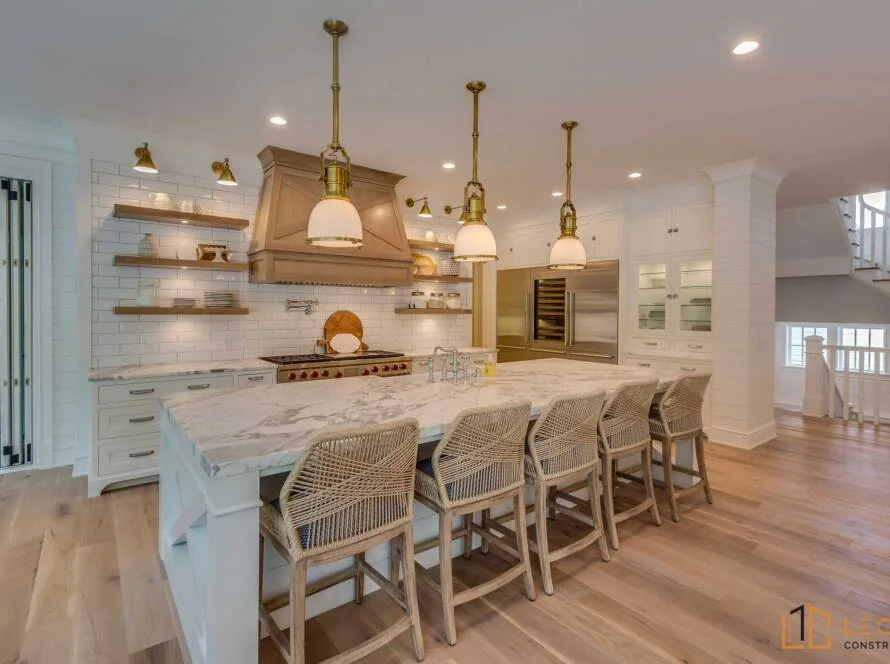

Every time we walk into a kitchen remodel consultation, the same question comes up in one form or another: “We want something that looks good now but won’t feel dated in five years.” And honestly, that’s the right instinct. In San Jose, where real estate moves fast and home values stay high, the kitchen is the room that makes or breaks a sale—or a decade of family dinners. We’ve seen too many homeowners chase a trend that looked sharp on Pinterest only to regret it when the granite countertops felt like a relic from a specific year. So let’s talk about what actually lasts.
Key Takeaways
- Neutral palettes with warm undertones age better than stark white or gray.
- Shaker-style cabinets remain the safest bet for long-term resale value.
- Natural materials like quartzite and solid wood outperform engineered alternatives in both durability and timelessness.
- Open shelving works best as an accent, not a full replacement for upper cabinets.
- Local climate and building norms in San Jose favor certain material choices over others.
Table of Contents
The Problem With “Timeless” as a Concept
“Timeless” gets thrown around a lot, but it’s slippery. What we really mean is a design that doesn’t scream a specific decade. A kitchen from 1998 with honey oak cabinets and a builder-grade island? That screams. A kitchen from 2015 with all-white everything and gray subway tile? That also screams. The goal is to land somewhere that feels current enough to enjoy today but neutral enough that a buyer in 2040 won’t immediately budget for a gut renovation.
We’ve learned this the hard way. One of our San Jose clients insisted on navy blue cabinets two years ago. Beautiful color, great execution. But when they decided to sell, the first three showings had buyers asking about “the cost to repaint.” That’s the risk. Timeless doesn’t mean boring. It means choosing elements that have proven their staying power across multiple decades.
What Actually Works in San Jose Kitchens
Cabinet Styles That Survive
Shaker cabinets are the gold standard for a reason. They’ve been around since the 18th century, and they’re still the most requested style in our showroom. The flat panel with a simple square frame reads as clean without being cold. We’ve installed them in mid-century Eichlers in the Rose Garden neighborhood and in new construction near Santana Row. They work everywhere.
What doesn’t work? Slab cabinets with no detail. They looked modern in 2015, but they’ve already started to feel sterile. And anything with heavy ornamentation—raised panels with multiple layers of detail—feels dated almost on arrival. Stick to Shaker or a slightly modified Shaker with a beaded inset. That’s the sweet spot.
Countertop Materials That Hold Up
Here’s where we see the most mistakes. Engineered quartz is everywhere in San Jose because it’s non-porous and low maintenance. But it’s not timeless. It’s a product of the 2000s, and the patterns—especially the ones that try to mimic natural stone—often look manufactured after a few years. We’ve seen quartz countertops yellow in direct sunlight, which is a real problem in a city that gets over 300 sunny days a year.
Natural stone, specifically quartzite, performs better long-term. It’s harder than granite, more heat-resistant than marble, and the veining is genuinely unique. Yes, it needs sealing. Yes, that’s a maintenance step some homeowners don’t want. But the payoff is a surface that looks like it belongs in the house, not like it was ordered from a catalog. Marble is beautiful but impractical for most families—it etches, stains, and chips. Reserve it for a baking station or a butler’s pantry if you must have it.
Backsplash Choices That Age Well
Subway tile is the Shaker of backsplashes. It’s been around for over a century and still looks right. The trick is in the grout color and the layout. White subway tile with bright white grout looks like a hospital. Use a warm off-white tile with a soft gray or beige grout, and it softens the whole room. Herringbone patterns add visual interest without screaming “trend.”
Avoid large-format porcelain slabs as backsplashes. They’re popular right now, but they’re expensive to install, difficult to repair, and they’ll look like a 2020s experiment in ten years. Also skip the glass mosaic tiles with metallic accents. Every client we’ve talked to who installed those five years ago now wants them gone.
Why San Jose’s Climate and Building Norms Matter
San Jose sits in a Mediterranean climate zone with mild winters, hot summers, and low humidity. That sounds ideal, and it mostly is, but it creates specific challenges for kitchens. The low humidity means natural wood can dry out and crack if it’s not properly acclimated. We’ve seen cabinets from big-box stores warp within two years because the wood wasn’t dried to the right moisture content before installation.
Local building codes also require ventilation hoods that vent to the exterior—no recirculating fans allowed. That’s good for air quality, but it means your range hood placement needs to account for ductwork runs. Many older homes in San Jose neighborhoods like Willow Glen or the Alameda area have limited attic space, which can complicate venting for an island cooktop. Plan for that before you fall in love with a layout.
Another reality: San Jose’s older housing stock, especially in neighborhoods built before 1970, often has smaller kitchens with limited natural light. A “timeless” design in a 10×12 kitchen looks different than one in a 400-square-foot great room. In smaller spaces, lighter cabinets and reflective surfaces help. In larger spaces, you can introduce darker tones and more texture without making the room feel cramped.
Common Mistakes We See Repeatedly
Over-Investing in Trendy Fixtures
Gold fixtures had a moment. Matte black had a moment. Brass is having a moment right now. The problem is that moments end. We’ve replaced more “trendy” faucets and cabinet pulls in the last three years than we have in the previous ten. The safe play is brushed nickel or satin chrome. They’re neutral, they match most hardware finishes, and they don’t draw attention to themselves. If you want personality, add it through lighting pendants or a faucet with an interesting shape—not a finish that will look dated.
Forgetting About Storage in Favor of Aesthetics
Open shelving looks great in photos. In real life, it collects dust, requires constant styling, and leaves you scrambling to hide mismatched Tupperware. We’ve had clients rip out open shelves within six months because they couldn’t keep them organized. A better approach: use open shelving on one small wall or above a coffee station, and keep the rest of the storage behind cabinet doors. Pull-out drawers in base cabinets, deep drawers for pots and pans, and a dedicated spice pull-out near the range—those are timeless because they work.
Ignoring the Work Triangle
The sink, stove, and refrigerator relationship isn’t a design trend. It’s functional physics. We’ve seen kitchens where the refrigerator is twenty feet from the prep area because someone wanted a “conversation zone” in the middle. That’s fine for parties, terrible for cooking dinner every night. Keep the triangle compact. In a typical San Jose home, that means 12 to 20 feet total distance between the three points. Anything more and you’ll regret it.
When Timeless Design Might Not Be the Right Goal
This is the part most designers won’t say out loud: sometimes you should go with the trend. If you’re planning to sell the house in the next two years, design for the current buyer pool, not for 2040. Right now in San Jose, that means warm neutrals, quartz countertops, and matte black fixtures. It’s not timeless, but it will help you sell faster.
Also, if your home is a true mid-century modern with original details, forcing a traditional Shaker kitchen into it can look wrong. Respect the architecture. A period-appropriate design that honors the original style will feel more timeless than trying to impose a generic “timeless” look from a magazine.
What We’ve Learned From Real Projects
One project that sticks with us: a home in the Cambrian Park area. The homeowners wanted a farmhouse kitchen. They installed apron-front sinks, beadboard, and shiplap. It looked great in 2018. By 2023, they were tired of it. The farmhouse trend peaked and faded fast. The lesson wasn’t that farmhouse is bad—it’s that committing to a full themed kitchen is risky. A few farmhouse-inspired touches, like a simple apron sink and open shelving, can work. But covering every surface in a specific style locks you in.
Another project in downtown San Jose near Japantown: the owners chose a black-and-white checkerboard floor. Stunning. Unique. And within three years, they had to replace half the tiles because the black ones showed every speck of dust and the white ones stained from dropped tomato sauce. High-contrast floors are high-maintenance. If you want timeless, go with a medium-toned wood or a neutral tile that hides daily wear.
Material Selection Cheat Sheet
Here’s a quick reference based on what we’ve seen hold up over time versus what tends to cause regret.
| Element | Timeless Choice | Trendy Choice (Higher Risk) | Why It Matters |
|---|---|---|---|
| Cabinets | Shaker, solid wood, painted or stained | Slab, high-gloss, two-tone colors | Shaker has historical staying power; slab feels sterile |
| Countertops | Quartzite, granite, soapstone | Quartz with heavy veining, marble | Natural stone patinas gracefully; engineered stone can yellow |
| Backsplash | Subway tile, handcrafted zellige | Large-format slabs, glass mosaic | Subway tile is repairable and restainable; slabs are expensive to replace |
| Flooring | Hardwood, luxury vinyl plank, natural stone | Checkerboard, patterned cement tile | Neutral floors let you change decor without renovation |
| Hardware | Brushed nickel, satin chrome | Matte black, brass, gold | Neutral finishes don’t clash with future trends |
| Lighting | Simple pendants, recessed with dimmers | Statement chandeliers, industrial cage lights | Overhead lighting dates fast; dimmable recessed adapts |
Practical Considerations Before You Start
Budget is the elephant in every kitchen. In San Jose, a mid-range kitchen remodel runs between $50,000 and $80,000 for a standard 150-square-foot space. That’s for semi-custom cabinets, quartzite countertops, and professional installation. If you’re on a tighter budget, prioritize the things you touch every day: cabinet hardware, faucet, and drawer slides. Cheap hardware feels awful. Spend money there and save on decorative elements like light fixtures that are easy to swap later.
Permitting is another reality. San Jose requires permits for electrical, plumbing, and structural changes. We’ve seen homeowners try to skip this to save money, and it always comes back during resale. A kitchen without permits can delay a sale or reduce offers. Pull the permits. It’s not optional.
Final Thoughts
The best kitchen design we’ve seen in San Jose wasn’t the most expensive or the most photographed. It was a 1950s bungalow in the Hanchett Park neighborhood where the owners kept the original wood ceiling, installed Shaker cabinets in a warm cream, chose a honed quartzite countertop, and added a simple white subway tile backsplash. It felt like it had always been there. That’s the goal.
If you’re planning a kitchen remodel, take the time to look at what’s worked in older homes in your area. Walk through open houses in neighborhoods like Rose Garden or Willow Glen. Notice which kitchens feel like they belong and which ones feel like they’re trying too hard. Then make your choices based on what fits your house, your habits, and your long-term plans.
We’ve done this work long enough to know that no design is truly permanent. But some choices make the next ten years a lot easier than others. Focus on materials, proportion, and function. The rest will take care of itself.