Skip to content Skip to footer

Bathroom and kitchen – Foster City

Crafting Bathrooms with Clarity Comfort and Care

Ready to Transform Your Home

Start Your Journey Today

Your dream home starts with the right team. We design and build with care, precision and a passion for creating spaces that feel timeless, functional and welcoming.

People Also Ask

The golden rule for bathroom layouts is the efficient and safe placement of the three primary fixtures—toilet, sink, and shower/bathtub—within a clear and functional floor plan. This centers on maintaining a minimum clearance of 21 inches in front of each fixture and ensuring all elements comply with building codes for plumbing and accessibility. A successful layout prioritizes user movement, often following a classic "work triangle" concept adapted for wet areas, to prevent a cramped or hazardous environment. The goal is to create a logical flow that feels spacious, allows for simultaneous use where possible, and seamlessly integrates storage and ventilation without compromising on safety or comfort.

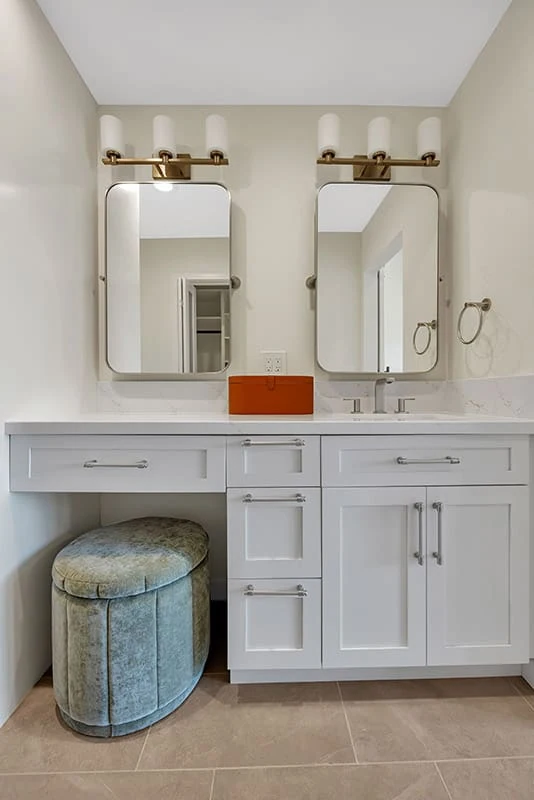
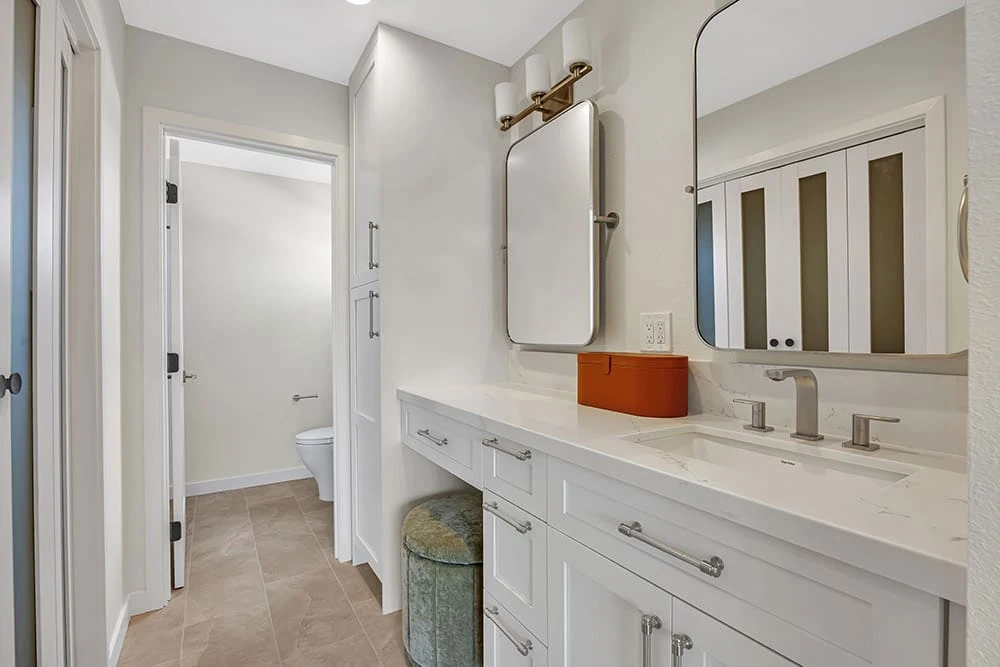
Upgrading key fixtures and improving functionality typically add the most value to a bathroom. Replacing an outdated vanity with a modern double-sink model, installing a water-efficient toilet, and upgrading to a frameless glass shower enclosure are high-impact changes. Heated floors, ample and well-placed lighting, and quality ventilation are also significant value-adds that enhance daily comfort. For a truly luxurious upgrade that maximizes return, consider transforming the space into a personal retreat. Our detailed guide, How To Create A Spa-Like Experience In Your Master Bath, offers excellent strategies for achieving this, focusing on elements like a freestanding tub, premium finishes, and smart storage that appeal to future buyers.

While combining a kitchen and bathroom into a single room is generally prohibited by modern building codes and health regulations, there are design strategies for placing them in close proximity. Key requirements include maintaining a solid, full-height partition wall with a door between the two spaces to prevent cross-contamination. Ventilation is critical; each area must have its own dedicated exhaust fan venting directly outdoors. Plumbing can be efficiently consolidated if planned correctly. For a cohesive aesthetic in adjacent spaces, use similar but distinct materials—perhaps matching tile textures but different colors—to define each area's function while ensuring the kitchen remains a hygienic food preparation zone separate from bathroom fixtures.

Yes, having a bathroom next to a kitchen is generally allowed by building codes, but it is subject to strict regulations to prevent health hazards. The primary concern is the potential for cross-contamination, as plumbing and ventilation systems must be completely separate to avoid the transfer of odors, bacteria, or gases from the bathroom into food preparation areas. Building codes typically mandate specific requirements for ventilation, such as dedicated exhaust fans venting directly outdoors, and proper sealing of all plumbing penetrations. Additionally, the door arrangement is often regulated; a direct opening from a bathroom into a kitchen is usually prohibited, requiring an intervening space like a hallway. Professional design and adherence to local codes are essential for compliance and safety.


Angi
Google
Yelp

Overall Rating

5.0
★★★★★

136 reviews